Reverse Panda Dial: Meaning and Differences
In this article
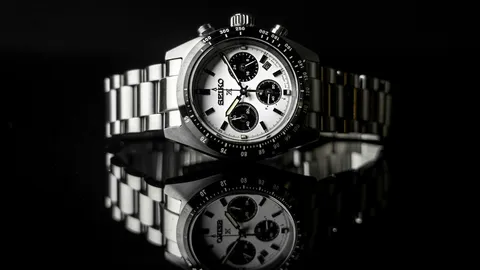
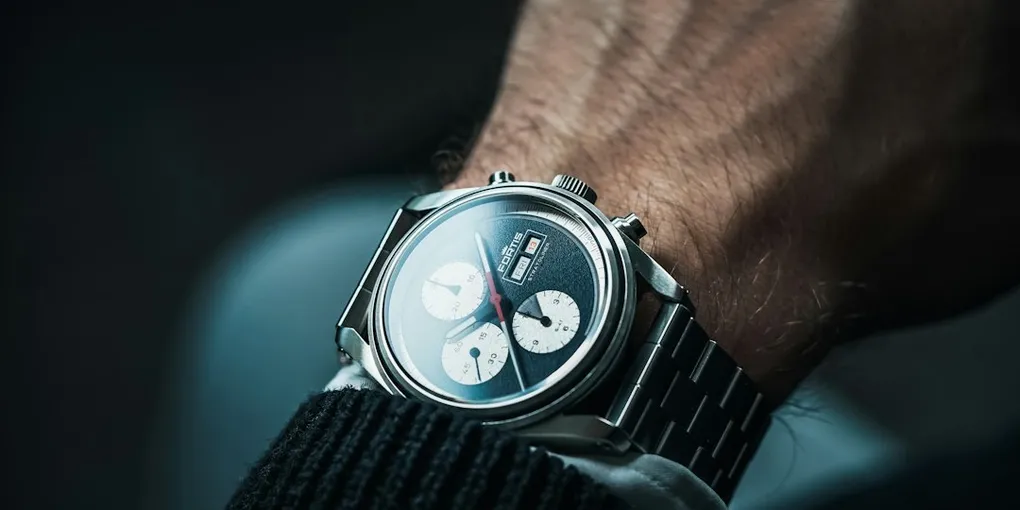
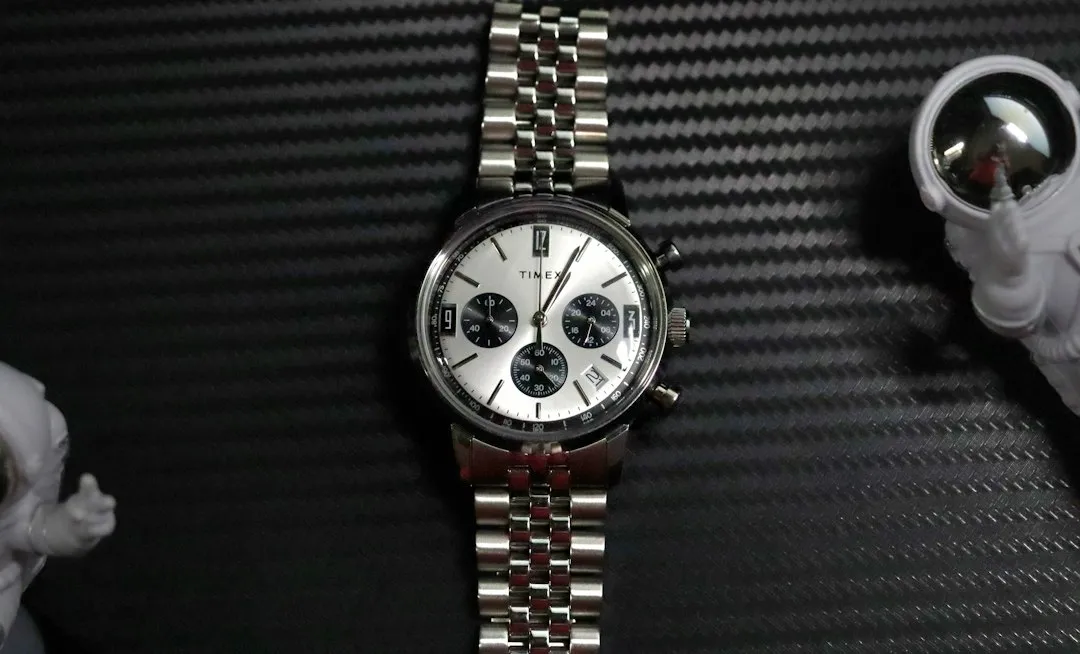
A reverse panda dial is a chronograph configuration with a dark main dial and contrasting light-coloured sub-dials. It reverses the traditional panda layout, a colour flip that changes both readability and character.
What Defines A Reverse Panda Dial
The name comes from the visual resemblance to the face of a giant panda, but with the traditional colour arrangement reversed. The defining characteristic is contrast rather than any specific colour. White, silver or light grey sub-dials can sit against a black, dark blue or charcoal background. This is why the style is recognised as a distinct design language associated with racing chronographs, professional tool watches and modern sports watches.
In practice, the term describes a relationship between two zones of the dial: the main surface and the chronograph counters. The main dial sets the mood, while the counters carry the timing information. When those counters are lighter, they pop forward. The same chronograph can feel vintage or technical depending on which way the contrast runs.
Panda And Reverse Panda: A Study In Contrast
A traditional panda dial uses a light main dial with dark sub-dials. For a deeper look at the opposite arrangement, see what a panda dial watch is. That configuration became particularly popular during the 1960s and 1970s, and its lighter background often creates a more vintage-inspired appearance, recalling many racing chronographs produced during the 1960s. The reverse panda flips that formula: a darker background gives the watch a more contemporary, technical and often more aggressive appearance.
Collectors often use the two terms as quick shorthand. One glance tells you whether the watch leans warm and classic or cool and modern. The colour flip also changes how the watch reads on the wrist. A light dial tends to dominate a wrist shot, while a dark dial with bright registers keeps the timing elements visible without making the whole watch feel bright.
Readability And Visual Hierarchy
The layout separates the chronograph registers from the rest of the dial through colour rather than additional decoration. Because the sub-dials are lighter than the surrounding dial, they become stronger visual focal points. Contrasting colours improve readability by distinguishing elapsed time from current time. The high contrast between the main dial and chronograph registers improves visual organisation. If you prefer dials that rely on engraved patterns rather than colour blocking, the principles behind guilloché on a watch dial offer a different route to texture and legibility.
Texture can do some of that work, but engraving adds decoration and depth. The reverse panda does the opposite, using flat colour contrast to organise the dial. That simplicity is part of its appeal. It does not need extra markings or ornament to make the chronograph counters feel distinct.
From Racing Chronographs To Modern Sports Watches
The configuration evolved naturally from early chronograph design during the middle of the twentieth century rather than being introduced as a separate style. The Rolex Daytona arrived in 1963 as a steel, automatic Swiss chronograph, and such watches help explain why the reverse panda look is tied to racing and tool-watch history. Audemars Piguet launched the Royal Oak Chronograph in 1997 as a steel, automatic Swiss watch, and it was released in both panda and reverse panda dial versions of the 41mm Royal Oak Chronograph. The reverse panda version uses black and silver contrast. TAG Heuer’s 2446 Mark 3 “Rindt” was produced as a reverse panda based on the vintage model after a fan vote. The Swiss context behind such watches is worth understanding in detail, as explained in Swiss Made: What It Actually Means.
Reverse Panda Chronographs You Can Buy Now
If you want the look on a current watch, several references make the configuration concrete. The Baltic Scalegraph Classic Reverse Panda Ref. TR111REVE12 is priced at €1,957.55 and uses a Sellita SW510-M manual winding calibre with a 63-hour power reserve. Its case diameter is 39.5 millimetres, and water resistance is rated to 50 metres. The Hamilton American Classic Intra-Matic Chronograph H Ref. H38429130 costs €2,495 and runs the H-51 manual winding calibre with a 60-hour power reserve. It measures 40 millimetres across, 14.35 millimetres thick, offers 100 metres of water resistance, and comes on a stainless-steel Milanese mesh bracelet. Hanhart’s 415 ES Reverse Panda Ref. H703.211-6428 is priced at €2,740, uses a Sellita SW510 M manual winding calibre, measures 39 millimetres in diameter and 13.5 millimetres thick, and is water resistant to 100 metres. Its dial layout is a black dial with two white subdials. For help comparing movements and layouts, the chronograph buying guide for first-timers is a useful companion.
Each of these watches treats the reverse panda formula differently. The common thread is a manual-winding movement and a case sized for everyday wear. Prices sit in the low four figures in euros, making the style accessible beyond vintage-only collecting. These are not one-off curiosities; they show that the reverse panda remains a production choice for brands today.
Collector Language And Strap Pairing
For resizing or swapping a strap, a strap replacement kit covers the basics.
The phrase reverse panda lives in collector vocabulary, grouping watches by appearance rather than a formal feature. Because the dial already carries strong contrast, strap choice can either echo the sub-dial colour or let the main dial dominate. A guide to choosing a watch strap color for your dial can help you decide whether to lean into the black-and-white graphic effect or soften it. A black strap can make the dial feel more formal, while a lighter strap can pick up the sub-dials and make the contrast feel more playful. The goal is not to match every colour exactly but to decide which part of the dial you want to lead. If you enjoy testing your eye for these layouts, the daily challenge at Watchdle asks you to identify watches from their dials.
FAQ
Do brands officially use the panda or reverse panda nickname?
No brand officially uses these nicknames. The terms are not an official technical classification adopted by manufacturers, which is why they appear in collector discussions rather than in technical documentation.
Which vintage chronographs helped popularise the reverse panda look?
Vintage Rolex Daytona reverse panda references range from 6239 to 6265. Rolex also offered a reversed variation of the Paul Newman Daytona as Reference 6262. Heuer’s Autavia Jochen Rindt 2446 used three white sub-dials on a black dial, and Universal Geneve’s Evil Nina was a black reverse panda model with three sub-registers at 3, 6 and 9 o’clock.
Did Omega ever offer a reverse panda Speedmaster Professional?
Omega never released a reverse panda Speedy Pro before the Speedy Tuesday model. That makes the configuration a notable exception within the Speedmaster line.
What colour combinations count as reverse panda?
Common combinations include black with white sub-dials, matte charcoal with silver registers, dark blue with white chronograph counters, anthracite with light grey sub-dials, and dark green with cream or ivory registers.
As an Amazon Associate we earn from qualifying purchases.