Ébauche Watch Movement: What It Is
In this article
An ébauche watch movement is an unfinished movement sold by a movement factory to an outside watch brand for finishing and assembly. In modern usage, the same word often describes a white label or private label movement produced by a movement factory and sold to outside brands.
A Movement Sold Before It Is Finished
At its most literal, an ébauche is an unfinished movement sold as such. The buyer is not receiving a cased watch, nor a movement ready to drop into a case. The transaction is a manufacturing step: a specialist factory produces the base, and an outside brand takes over the finishing and assembly. That arrangement explains why the word appears in discussions of movement sourcing, where the line between maker and assembler can blur. It also explains why the same base can appear in watches from different names without those watches being identical.
The term does not automatically describe every shared movement, but it does describe a specific commercial stage. A movement factory can sell the same base to multiple brands, and each brand can complete it according to its own needs. This is why an ébauche is often discussed less as a technical object and more as a supply-chain reality. The base may be shared, while the finished watch is not. Collectors who care about in-house versus outsourced movements often end up arguing about exactly this point: where does making end and assembling begin?
An ébauche also forces a useful distinction between origin and execution. A movement can start in one factory and finish in another. The first factory may build the plates, bridges, wheels, and barrels; the second brand may add the parts that make the movement complete. That division of labor is not a modern accident. It has deep roots in watchmaking, and it remains one of the reasons a movement’s family tree can be more interesting than its marketing label.
What a Modern Ébauche Still Needs
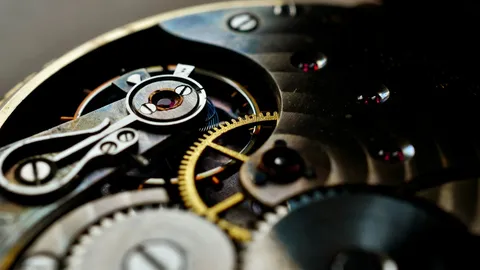
A modern ébauche is a watch movement, with or without jewels, but always without its regulating organ, mainspring, dial and hands. That definition matters because those missing parts are not decorative. The regulating organ governs the rate; the mainspring stores energy; the dial and hands turn the mechanism into something readable. Without them, the ébauche is a base waiting for completion. Another name for it is blanc roulant. The phrase sounds technical, but it simply signals a movement that can be moved through production before it becomes a finished caliber.
For readers who want to understand how the regulating organ fits into the larger picture, the balance wheel’s role is a useful place to start: the balance wheel. Once that organ is present, the movement can begin to keep time. Until then, the ébauche remains a carefully made assembly of parts rather than a functioning watch movement. That is the key distinction between a movement that runs and a movement that can be finished into one.
A modern ébauche sits on the side of potential. It may already contain jewels, but it still lacks the parts that make it a complete timekeeping system. That is why two watches with the same base can feel entirely different once the final brand has done its work. The ébauche is the starting point, not the final signature. It is also why the word should not be read as a quality judgment. It describes a stage, not a grade.
The Blancs of the Pre-1850 Workshop
The historical meaning of ébauche is even more partial. Until about 1850, a watchmaker’s ébauche could consist of two plates with pillars and bars, the barrel, fusée, index, pawl and ratchet-wheel, along with a few assembling screws. Another description of the period narrows it to the plate, bridges, fusee and barrel. The difference reflects how workshop practices and terminology varied, but the principle holds: an ébauche was a skeleton of parts, not a finished movement.
This older world belonged to hand finishing, not industrial batch production. The base moved from one specialist to another, and the final watch emerged only after considerable work. For anyone interested in the long shift from pocket watch to wristwatch, this period shows how watchmaking was already divided before modern factories existed. How the wristwatch won over the pocket watch is a useful companion story, because it traces the same movement from craft networks to broader production. The ébauche was one of the ways that division became visible. It was not a brand’s product in the modern sense; it was a stage in a chain of craftsmen.
What stands out is how little the finished watch resembles the starting kit. The ébauche provided structure, but the identity of the final piece came from everything added later. That pattern never fully disappeared. Even in modern production, the base can be one thing and the completed movement another. The vocabulary changed, the scale changed, and the factories changed, but the idea of a movement being sold before it is finished survived.
Why the Same Word Causes Different Expectations
Today, the word can still surprise people because it sounds like a complete answer when it is only a beginning. A factory can produce the base; an outside brand can finish and assemble it. The final result may carry a familiar name, but the origin story includes a supplier. That does not make the watch less interesting. It makes the supply chain more legible. It also gives collectors a more precise question to ask: not simply who made the movement, but who made which part of it, and at what stage.
When a collector reads a caliber number or hears that a movement is based on a known ébauche, the question should be what happened after the base left the factory. Was it finished with care? Was it assembled into a watch that suits its purpose? The ébauche itself does not answer those questions. It only tells you where the story started. For a deeper look at how movement numbers can reveal family relationships, see how to read a watch caliber number.
This is also why ébauche is a term worth knowing even if you never plan to service a watch. It appears in buying discussions, brand histories, and forum debates because it touches on originality, value, and craft. A watch can be beautiful and reliable while using a base that began life in another factory. The ébauche does not cancel that beauty or reliability. It simply places the movement in a longer chain of work. If you enjoy testing that kind of recognition, Watchdle’s play page at Watchdle’s play page offers a quick way to match watches and movements.
FAQ
Which well-known movements are modern ébauches?
The ETA 2824-2 and the ETA/Unitas 6497-1 are well-known examples. They often appear in discussions that compare movement families, such as ETA, Miyota, and Ronda.
How does Merriam-Webster describe an ébauche?
It defines an ébauche as an incomplete watch movement consisting of plates, bridges, wheels, and barrels, to be finished and fitted with jewels, escapement, mainspring, hands, and dial.
What was an ébauche called before the mid-19th century?
It was known as a blanc and was finished at the établissage.