How To Choose A Watch Strap Color For Your Dial
In this article
Choose the case metal first, then judge the dial as warm or cool: cream, champagne, gold, brown, earthy green, and orange pull toward tan, warm brown, warm grey suede, or khaki, while black, white, silver, blue, and grey sit best with black, navy, grey, or dark green. That order prevents the common mistake of buying a beautiful strap that fights the watch head.
Case Metal Is The First Filter
The buckle should match the case metal, crown, and caseback. Steel takes a steel buckle. Yellow gold takes a gold buckle. Rose gold takes a warm-toned buckle. Two-tone cases give flexibility, but the dominant metal should still guide the finish.
Steel cases look most coherent with black, navy, or cool brown straps. A strap that leans too warm can look mismatched unless you are deliberately breaking the rule. Yellow gold cases, by contrast, have a strong yellow tone. Warm brown and tan work well; cognac, tan, or chestnut are specific options. Grey and blue straps look cold beside gold.
Rose gold is trickier. Its soft pink tone can look washed out fast, so oxblood and dark green are reliable choices. Once the metal is settled, a strap change is quick; here is how to swap a watch strap in two minutes.
Warm Dials Want Warm Straps
Warm dials include cream, champagne, gold, brown, earthy green, and orange. They respond to tan, warm brown, warm grey suede, and khaki nylon. The goal is not to match the dial exactly; it is to keep the temperature consistent.
A cream dial is open and soft. Bright white rubber looks harsh; warm brown or black leather, navy nylon, and black rubber keep it calm. Champagne and gold dials benefit from warm brown or oxblood leather, tan or khaki nylon, and warm brown rubber. Cool grey and navy are the colors to avoid here because they drain the warmth.
Brown and chocolate dials are easier than they look. Tan, cognac, and oxblood leather all work, as do olive and khaki nylon. Brown or black rubber grounds it. Cool grey is the main trap. If you choose leather, care matters as much as color; this collector’s guide to caring for a leather watch strap covers the practical side.
Cool Dials, Blue Faces, And The Brown-Strap Shortcut
Cool dials include black, white, silver, blue, and grey. They suit black, navy, grey, and dark green straps.
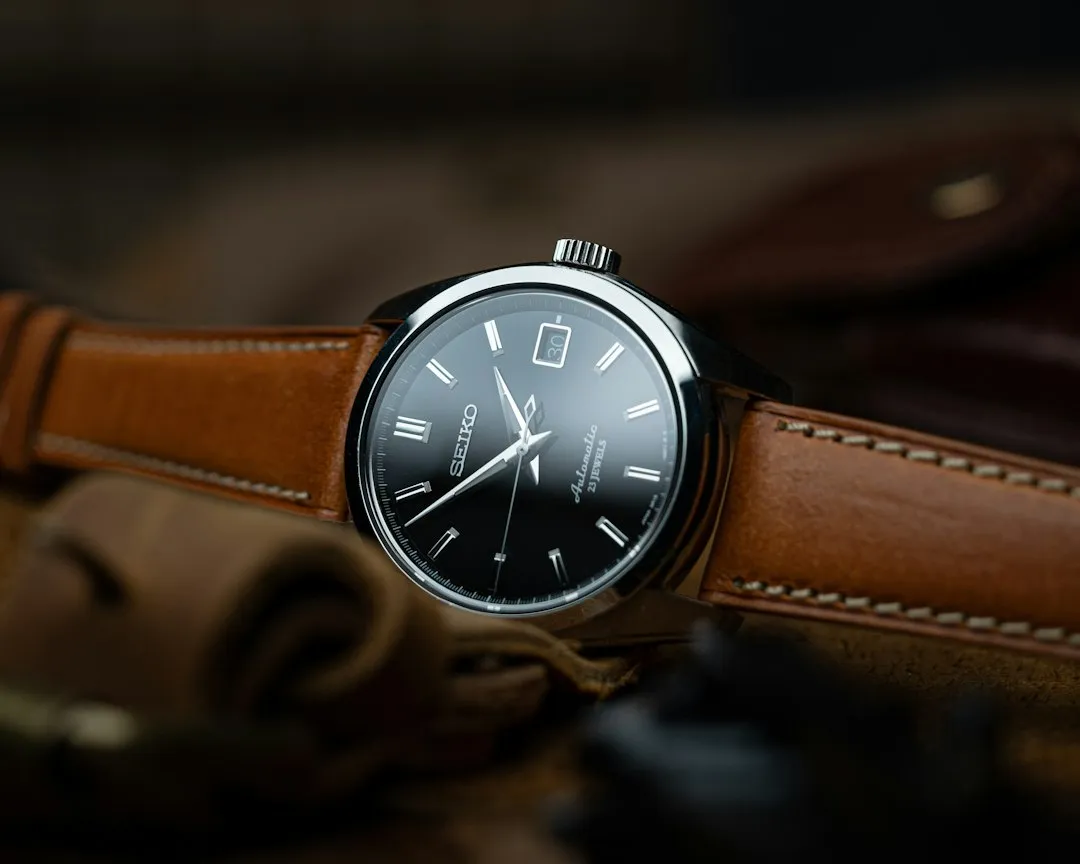
Blue is the most widely produced and collected dial color in modern watchmaking. A cognac leather or warm brown strap is the classic pairing, and collectors have used a warm brown strap with blue dials for 60 years. Brown is a dark shade of orange, and orange sits across from blue on the color wheel. Navy works for a quieter look. A near-black strap is the one to avoid because it can flatten the blue.
For materials, blue dials pair well with warm brown or tan leather, navy or black nylon, and navy or black rubber. Orange is best reserved for non-formal contexts, and dark green is another color to leave out. A blue strap can also enhance the look when the watch has a blue dial or bezel. For active weeks, rubber versus leather is the comparison that matters.
Black, White, And Grey: The Neutral Dial Playbook
Black is the most formal and most versatile dial. Almost any color works, which makes it the easiest dial to match. Dark brown or black leather is the safest leather choice. Navy or olive nylon adds utility. Orange or grey rubber brings a sportier edge. Muddy dark brown or grey straps are the ones to avoid, and very light tan can feel wrong in formal contexts. A vibrant red or orange strap can work as deliberate contrast.
White and cream dials are the most open to strap color; almost any color works because the light dial creates a neutral canvas. Black, navy, or cognac are all easy recommendations. Warm brown or black leather, navy nylon, and black rubber are reliable combinations. Orange is best avoided in formal settings, and cream dials should skip bright white rubber.
Grey dials can look clinical if you choose the wrong texture. Grey suede or black leather gives them depth. Navy or grey nylon keeps them casual. Grey rubber is a natural match. Bright colors are the main risk in formal contexts.
Green Dials Need A Different Kind Of Restraint
Green dials have defined watch collecting in the 2020s, and the range is wider than many people expect: deep forest green, military olive, and bright sport green all exist under the same label. Tan and olive usually work better than black. A green strap can also complement a green dial, provided the shades are close enough to feel intentional.
Military green dials have their own logic. Tan suede or canvas leather, OD green or khaki nylon, and olive rubber all fit. Navy is the color to avoid in formal contexts. If you want to measure your wrist before ordering a new strap, use this guide to measure your wrist for a watch, because a great color still fails if the length is wrong.
Leather, Nylon, Rubber: Let The Occasion Decide
Leather straps belong in the office and at dinner. Nylon and rubber straps belong on weekends and during sport. Formal events call for black, brown, or tan leather. Casual wear opens the door to bold colors such as blue, red, or green. Active lifestyles suit vibrant rubber straps. Rubber also has neutral choices: black, grey, or white.
Popular strap colors for 2025 include scarlet red, marine blue, olive green, polar white, and charcoal grey. Those shades are useful when you want the strap to carry the visual weight. A steel Rolex Submariner, first released in 1953 as an automatic Swiss watch, has a classic strap look in black or marine blue rubber. That example shows how a historic steel tool watch can stay coherent with a narrow rubber palette. If you want to practice these pairings, the daily game at Watchdle gives you a low-stakes way to compare dial and strap combinations.
Contrast With A Purpose
Contrast works when it is intentional. A black dial can take a vibrant red or orange strap. A silver or white dial can take tan or olive green. A blue dial or bezel is enhanced by a blue strap. A green dial is complemented by a green strap. The mistake is accidental contrast: a cool grey strap on a warm gold case, or a near-black strap on a blue dial.
The most reliable method is still sequential. Pick the case metal. Decide whether the dial is warm or cool. Choose a material for the occasion. Then select a color that either stays within that temperature or crosses the color wheel with a clear reason. The strap should make the dial easier to read and more pleasant to wear, not busier.
FAQ
Which strap colors flatter a champagne or gold dial?
Warm brown or oxblood leather works well, along with tan or khaki nylon and warm brown rubber. Cool grey and navy tend to fight the warm tone, so leave them out unless you want a deliberate clash.
What should I avoid on a green military dial?
Navy is the color to avoid in formal contexts. Tan suede or canvas leather, OD green or khaki nylon, and olive rubber are the combinations that keep the military character intact.
How do I handle a grey dial without making it dull?
Use grey suede or black leather for depth, navy or grey nylon for casual wear, and grey rubber for sport. Bright colors are the main risk in formal settings, so keep them for relaxed outfits.
Do strap materials change the color decision?
Yes, because leather suits office and dinner while nylon and rubber suit weekends and sport. A color that feels right on rubber may feel too casual on leather, and a formal leather shade may look out of place on a rugged weekend strap.