Chapter Ring On A Watch Dial: What It Is
In this article
A chapter ring is the outermost ring on a watch dial, carrying scales, markings, or minute divisions that help you read time precisely. It can sit on the edge of the dial or on the rehaut, and while the two terms are sometimes used interchangeably, they describe slightly different parts of the watch.
Look straight at a watch and the outermost band of print or metal is easy to overlook. It frames the center, but it also organizes the dial. That band can carry a simple minute track, a tachymeter, or nothing at all. Its job changes with the watch, yet the basic idea stays the same: the chapter ring gives the hands a readable perimeter.
The Outer Band That Organizes The Dial
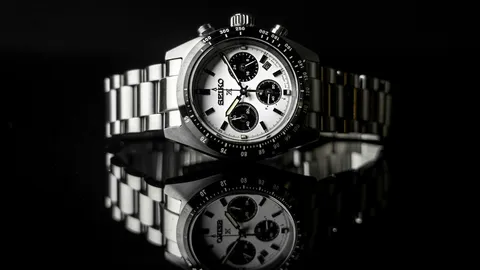
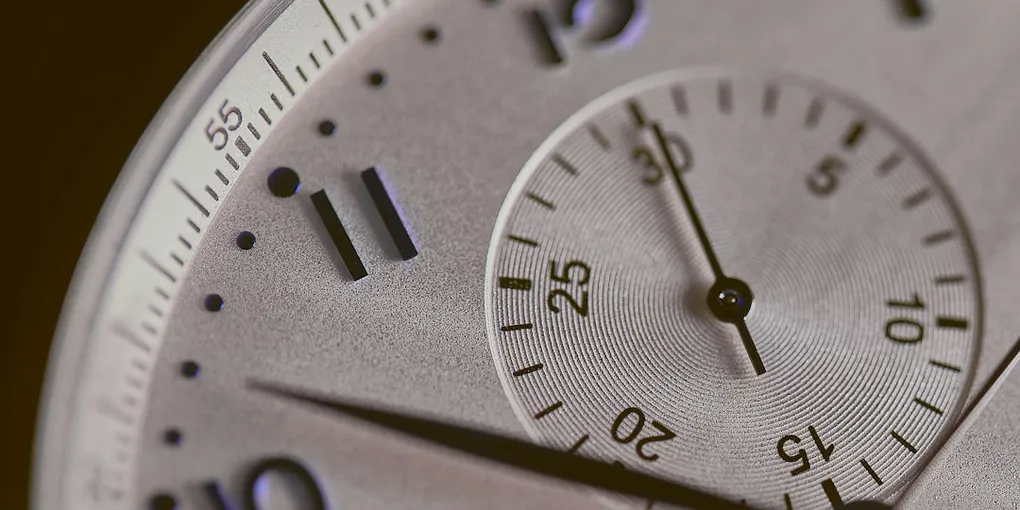
The chapter ring is often the bridge between dial and case. Its main purpose is to organize the visual structure of the dial so the wearer can read time precisely and intuitively. On many watches it carries printed or engraved markings that correspond to seconds or minutes, guiding the position of the hands. Most have a simple minute track and may have a circle connecting the marks. The markings can be lines, numbers, or other symbols, and their purpose is straightforward: they help you read the time.
That sounds minor until you remove it. A dial with no outer scale can feel loose, especially when the central design is busy. The chapter ring tightens the composition. It also gives the eye a consistent reference point when the hour hand sits between two markers or when a seconds hand sweeps past a fine division.
Where The Ring Sits: Dial Edge Or Rehaut
Location is where the vocabulary gets slippery. A chapter ring can be on the edge of a watch’s dial or on the rehaut. The rehaut forms the angled or vertical wall around the dial and meets the crystal. In some watches, that wall doubles as the chapter ring, particularly when it features printed or engraved markings. In others, the chapter ring lies flat on the dial surface while the rehaut provides an architectural step leading toward the bezel.
That distinction matters more to collectors than to casual wearers, but it explains why two people can point at the same watch and use different words. In Seiko modding, the term chapter ring is often used for the rehaut. Seiko SKX divers have minute markers on the rehaut, which makes that usage feel natural. Elsewhere, the chapter ring is typically the flat or slightly raised portion of the dial where minute or hour markings are applied.
The alternative names tell the same story: minute track, rehaut, and minute chapter. They overlap, but they are not identical. A minute track is a scale; a rehaut is a physical ring; a chapter ring can be either a surface zone or a separate part, depending on the watch. If you want a comparison point for dial-edge geometry, the faceted layout of a pie pan dial shows how much character the outer edge can add without carrying a full scale.
A History From Pocket Watches To Wristwatches
The idea traces back to the 16th and 17th centuries, during the development of early clocks and pocket watches. On early pocket watch dials, the chapter ring was used to improve precision and structure.
Early enamel dials often contained Roman numerals for the hours and were separated from the center of the dial by a decorative circular border. That border did more than decorate. It gave the numerals a defined home and kept the center from bleeding into the hour scale. When wristwatches emerged in the early 20th century, chapter rings began to include minute markers, graduations for seconds, and additional scales for chronographs or tachymeters. The ring had moved from pocket-watch structure to wristwatch utility.
Printed, Applied, And Engraved Construction
The most common type is the printed chapter ring. Minute or second markers are printed directly onto the outer edge of the dial. This approach is typical of dress watches, minimalistic designs, and many vintage models. The scale is part of the dial surface rather than a separate piece.
An applied or raised chapter ring is a separate component attached above the dial, often made of metal. Its markers can be engraved, filled, or embossed. This gives the ring physical presence: the edge rises above the dial, and the markings can look deeper than print. The finish changes the mood as much as the construction does.
Engraved or etched chapter rings are found in tool and professional watches. They are precision-engraved for durability, and the markings are often filled with paint or luminous material to ensure visibility in low light. Engraving is not automatically better than printing, but it suits a watch that expects contact and glare. Decorative engraving on a dial follows different rules; guilloché patterns are about texture and craft, while a tool-watch chapter ring is about readable intervals.
When The Ring Does Extra Work
Functional watches rely on the chapter ring for legibility in divers, pilots’ watches, and chronographs. The scale allows for accurate timing of short intervals. That is why the outer edge often carries more than a minute track. Certain watches integrate additional scales such as pulsometers, telemeters, or countdown tracks.
A tachymeter on the perimeter is the clearest example of the chapter ring hosting a scale that belongs to the watch’s job rather than its decoration. For anyone shopping for a diver, what actually matters often comes down to exactly this kind of outer-edge legibility. A chronograph buying guide will show you why extra scales belong on the perimeter, where the hand can pass them cleanly.
The Structural Job Beyond Markings
The chapter ring can play a role in aligning the movement and dial within the case, particularly in watches with modular construction. It sometimes conceals the edges of the dial or acts as a spacer, contributing to the overall structural integrity of the watch. That side of the chapter ring is invisible in photos, but it helps explain why the part exists as a distinct element rather than just a printed line.
A collector might notice the chapter ring first for its finish. A watchmaker sees it as part of the dial-case interface. Both views are correct. The ring is a visual organizer and, in some constructions, a physical one.
Taking one along? A watch roll keeps it protected in the bag.
If you want to test how quickly you spot a well-structured dial, Watchdle’s daily game at watchdle.com/play/ gives you a reason to look at the outer edge instead of just the logo.
FAQ
Where does the name chapter ring come from?
It comes from the ring being divided into sections, much like chapters in a book. Each section represented a specific portion of time, which made the outer scale easier to describe and organize.
What colors can a chapter ring come in?
Available finishes include sandblasted gold, polished rose gold, polished gold, orange, and brushed gold. Those options change the dial’s appearance while the ring keeps its timing function.
Which watch puts a tachymeter on its chapter ring?
The Audemars Piguet Royal Oak Offshore, introduced in 1993, does exactly that. It is a Swiss steel automatic watch, and its chapter ring carries a tachymeter scale.
Do all chapter rings have markings?
No. Some are blank and lack markers entirely. That variant leaves the outer edge clean, but it also removes the timing references that a marked chapter ring provides.
As an Amazon Associate we earn from qualifying purchases.