Chronograph vs Chronometer: What Is The Difference?
In this article
The short answer: a chronograph is a watch with a stopwatch function, while a chronometer is a watch that has passed precision tests. One is about an extra timing capability on the wrist; the other is about certified timekeeping performance—and a single watch can be both.
The One-Letter Difference That Does All the Work
At first glance, the words look like siblings. They share a root sense of time measurement, but the suffix “graph” means to write or record something. That is the clue. A chronograph records elapsed time. It is, at its core, a watch that features a stopwatch. A chronometer, by contrast, is defined by testing. It is a watch that has passed a variety of precision tests. The chronograph tells you what a stopwatch is doing; the chronometer tells you how well the watch keeps time.
This is why the terms get mixed up. Someone sees pushers on the side of a case and says “chronometer.” Someone sees the word “Chronometer” on a dial and assumes the watch has a stopwatch. Both mistakes miss what each word actually controls or certifies.
What Makes a Chronograph a Chronograph
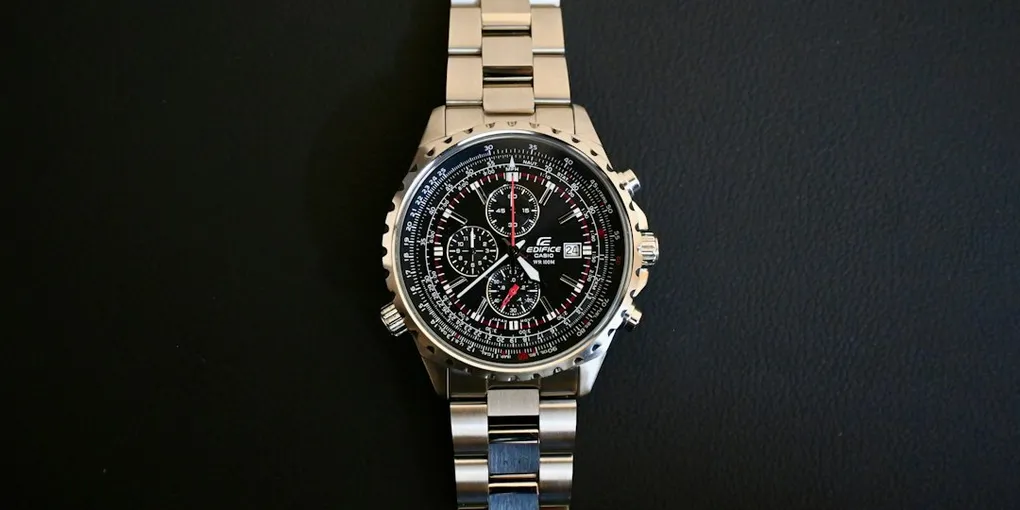
A chronograph is not just a watch with extra numbers on the dial. It is a watch equipped with a stopwatch function. That stopwatch is usually operated by pushers, and the pushers have specific jobs. The top pusher starts and stops the timing. The bottom pusher resets to zero. They are usually at 2 and 4 o’clock. On many chronographs, a return-to-zero pusher sits on the side of the watch case. For a closer look at the mechanism behind those presses, what actually happens inside a chronograph breaks down the sequence.
Subdials Are the Scoreboard
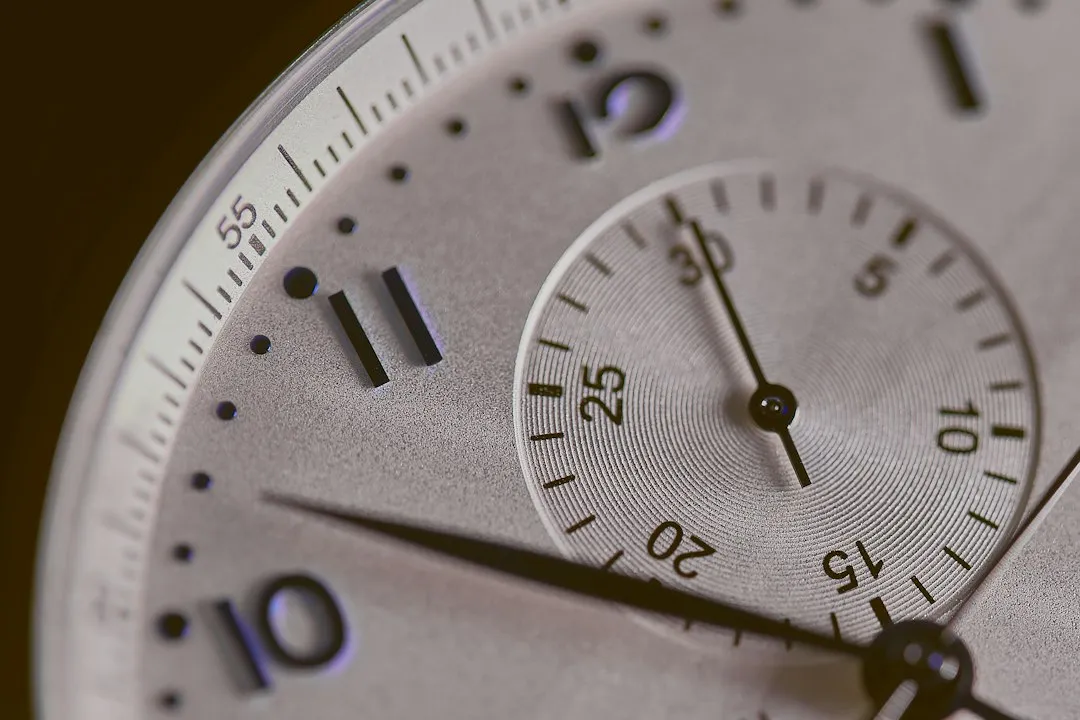
Watches with a chronograph complication usually have subdials to show the seconds, minutes, and hours elapsed. Those subdials do not all track the same thing. One may track elapsed minutes, often 30 or 60. Another may track hours, up to 12. Another may show running seconds. The layout can look busy, but each subdial has a job: turning the stopwatch into a readable record of time.
Flyback and Rattrapante: Variations on the Same Idea
The basic start-stop-reset sequence is familiar, but not every chronograph works exactly that way. A flyback chronograph can reset and restart instantly with one push. There is no need to hit stop, reset the timer, and start again. A rattrapante, or split-seconds chronograph, has two central seconds hands for timing multiple events. One hand can stop while the other continues, then the two resynchronize. For the historical path from dedicated stopwatches to wrist-mounted chronographs, the birth of the chronograph traces that shift.
What Makes a Chronometer a Chronometer
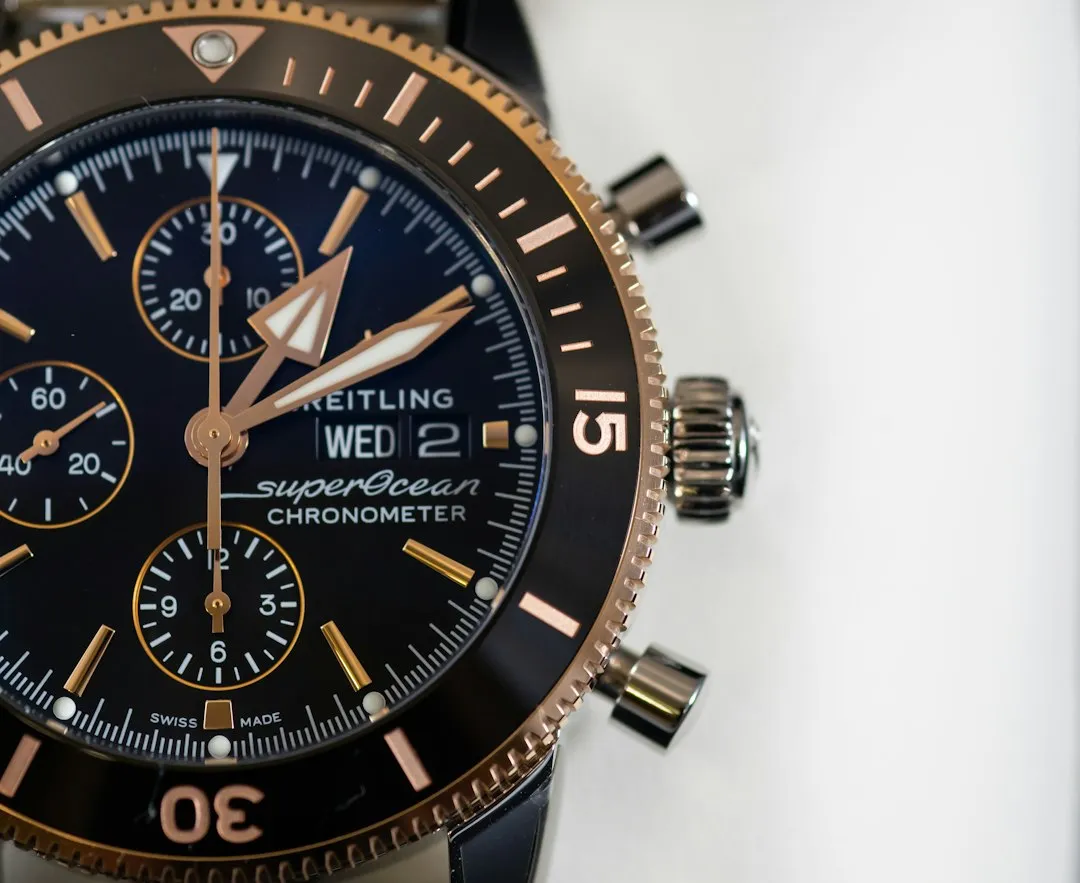
A chronometer is not defined by pushers, subdials, or a stopwatch. It is a watch that has passed a variety of precision tests. The term is about measured accuracy, not an extra function you operate. Certified chronometers often have the word “Chronometer” displayed on the dial, which is why the label feels like a feature. But the label represents a testing result.
The most familiar standard is COSC, a Swiss certification. COSC tests are static tests undergone in a laboratory for 15 days in 5 positions and 3 temperatures. That detail matters. The tests are applied to timekeeping instruments, not finished watches. The accuracy requirement for a chronometer is between -4 and +6 seconds per day.
COSC, METAS, and Superlative Chronometer
Not all chronometer certifications are identical. METAS certification has a prerequisite: the watch must have already undergone selective COSC tests. METAS testing lasts ten days. It requires accuracy between 0 and +5 seconds per day. It also tests water resistance, magnetic exposure, rate deviation, and power reserve. A METAS Master Chronometer has anti-magnetic resistance up to 15,000 gauss. Then there is Rolex Superlative Chronometer certification, rated at -2/+2 seconds per day on the finished watch. For a deeper look at the certificate itself, chronometer: a certificate, not a complication explains why the word describes testing rather than a mechanism.
They Overlap More Than People Think
The question “chronograph vs chronometer” suggests a rivalry, but these categories can coexist. A chronograph can also be a chronometer if it has passed tests of high accuracy. A chronometer can have a chronograph function. Nothing about a stopwatch prevents a movement from being tested for precision, and nothing about precision testing prevents a watch from having pushers and subdials.
So the real answer is not either-or. A watch can be a chronograph, a chronometer, both, or neither. A chronograph without certification is still a chronograph because it has a stopwatch. A chronometer without pushers is still a chronometer because it passed precision tests. The terms describe different questions: What can the watch do? How accurately has it been shown to keep time?
How to Tell Them Apart on the Wrist
The quick visual check is mechanical. Look for pushers, usually at 2 and 4 o’clock, and subdials for elapsed seconds, minutes, and hours. That points to a chronograph. Look for the word “Chronometer” on the dial, which certified chronometers often display. That points to a chronometer. A watch can have both sets of clues.
If you are learning to spot these details quickly, a daily guessing game like Watchdle can sharpen your eye for case shapes, pushers, subdials, and dial text. For buyers comparing real watches, the chronograph buying guide for first-timers can help separate useful stopwatch features from ones you will rarely use. And if you want the underlying mechanism before you shop, how a chronograph actually works breaks down the sequence from pusher to gear train.
The Short Version You Can Remember
A chronograph measures. A chronometer certifies. The chronograph is a stopwatch built into a watch. The chronometer is a watch—or timekeeping instrument—that has passed precision tests. Accuracy for a chronometer is between -4 and +6 seconds per day. METAS raises the requirement to 0 to +5 seconds per day and adds tests for water resistance, magnetic exposure, rate deviation, and power reserve. Rolex Superlative Chronometer is rated at -2/+2 seconds per day on the finished watch.
Those numbers are not the same as a chronograph’s measurements. A chronograph can time a lap, a meeting, or a roast. A chronometer can tell you how closely the watch itself is expected to run. Both are useful. They answer different questions.
FAQ
Is a chronograph the same as a chronometer?
No. A chronograph is a watch equipped with a stopwatch function. A chronometer is a watch that has passed a variety of precision tests. A watch can be both.
What accuracy does a chronometer need?
A certified chronometer is accurate between -4 and +6 seconds per day. METAS certification requires 0 to +5 seconds per day, and Rolex Superlative Chronometer is rated at -2/+2 seconds per day on the finished watch.
Can a chronograph be a chronometer?
Yes. A chronograph can also be a chronometer if it has passed tests of high accuracy. A chronometer can also have a chronograph function.
What do chronograph pushers do?
The top pusher starts and stops the stopwatch. The bottom pusher resets it to zero. They are usually located at 2 and 4 o’clock.