What Is A Panda Dial Watch?
In this article
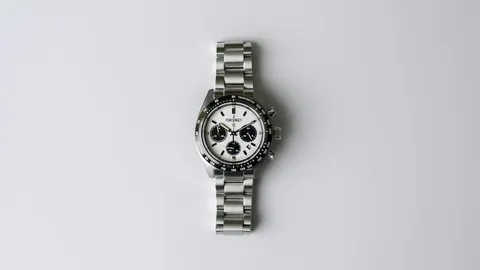
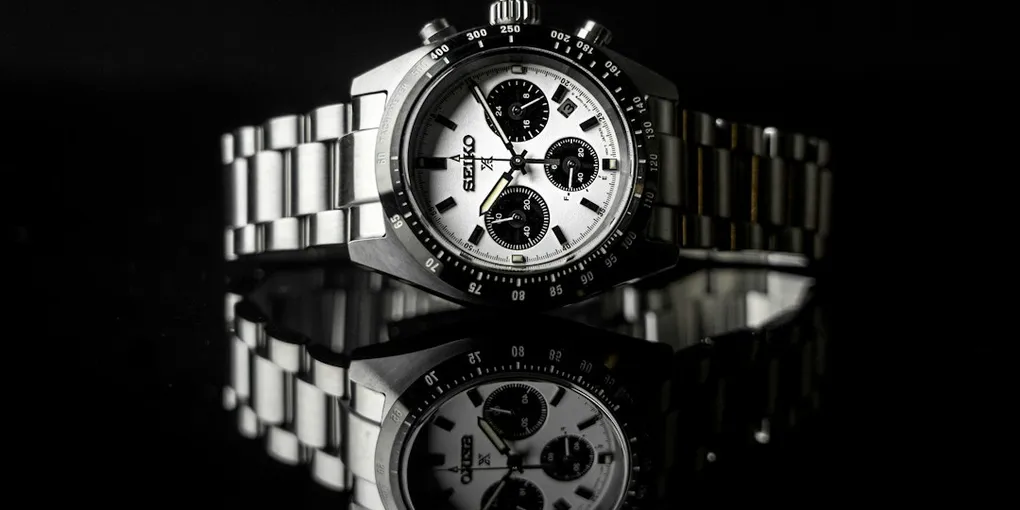
A panda dial watch is a watch whose main dial is white and whose subdials are black. The nickname comes from that two-tone colorway, not from any literal panda imagery.
The Black-And-White Formula Behind The Name
The term belongs to the informal vocabulary of watch collecting. It is not a technical specification or a movement classification. It describes a visual pattern that collectors recognize immediately: a light background interrupted by dark circular registers. Because the subdials are smaller and sit within the main dial, they read as separate discs. That separation creates a graphic, almost printed effect. The name is a shorthand for the contrast, not a claim about materials, origin, or complexity. A watch can be simple or extravagant, steel or gold, and still carry the same nickname if the dial follows the formula.
This is why the panda label can be slippery. It tells you how a dial looks, but it does not tell you how the watch was made. Two watches can share the nickname and have nothing else in common. One might be a straightforward tool chronograph, while another might be a precious-metal showpiece. The label is a starting point for conversation, not a complete description. In that sense, it works like many other collector nicknames: it compresses a visual impression into a few syllables and lets enthusiasts discuss a style without listing every design detail.
Reverse Panda: White Subdials, Black Background
Flip the colors and you get the reverse panda: white subdials on a black dial. The reverse version is not a different watch type; it is the same visual idea turned inside out. Some collectors prefer it because the darker main dial can make the lighter subdials appear to float. Others prefer the standard panda for its brighter, more open face. The two terms are often used together, and the distinction is entirely about which color occupies the larger surface and which color fills the smaller registers. Once you know the pattern, you can identify either version in a second.
The reverse panda also changes the mood of the watch. A standard panda tends to feel crisp and airy, as if the dial has been bleached by sunlight. A reverse panda tends to feel deeper and more instrument-like, because the dark background absorbs more visual space. Neither is inherently better. The choice comes down to whether you want the watch to feel light on the wrist or anchored by a darker face. Because the color relationship is the only thing that changes, the two versions can appeal to very different tastes while sharing the same underlying layout.
Why Chronographs Are The Natural Home For Panda Dials
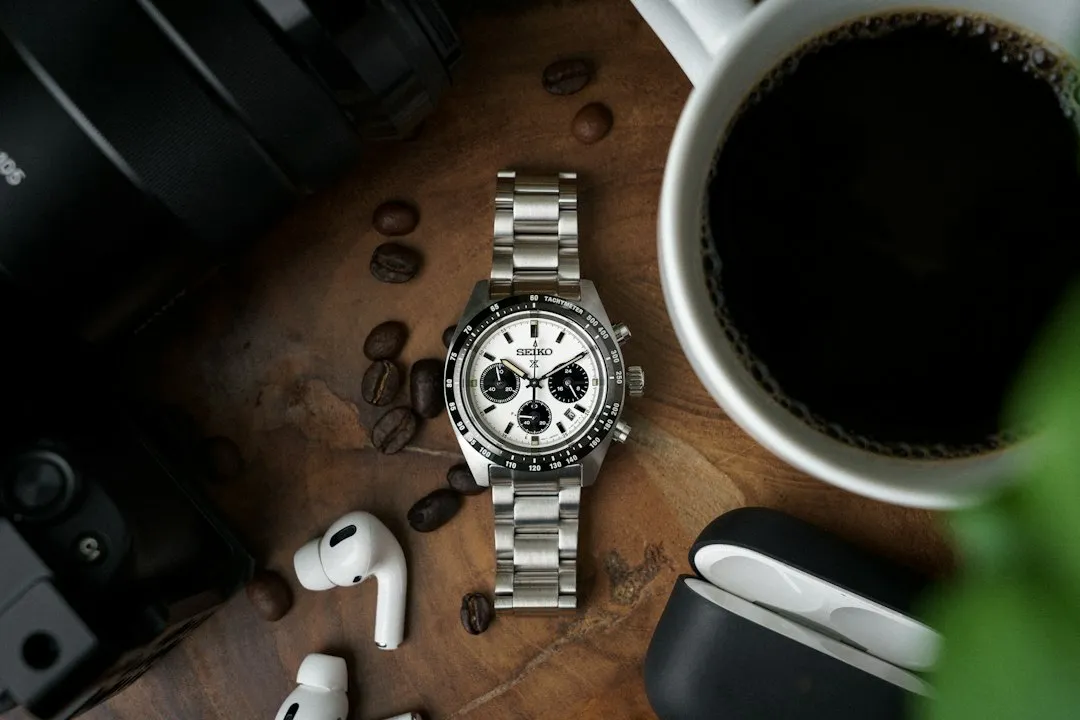
Panda-dial watches belong to the chronograph category. That makes sense visually: a chronograph typically has subdials to display additional information, and those subdials need to be readable without forcing the eye to hunt. A strong color break between the main dial and the registers helps. The chronograph layout often includes multiple subdials, and the panda treatment turns them into distinct targets. The result is a dial that communicates elapsed-time information quickly, even when the hands and markers are busy. This is why the panda look is so often discussed alongside chronograph design.
Legibility is not only about color. Glare can flatten contrast, which is why anti-reflective coating matters on any dial where the subdials are meant to pop. If you want a broader look at how chronograph layouts are organized, this chronograph buying guide covers the essentials. But even without technical details, the principle is simple: the eye finds dark circles on a light field faster than it finds subtle shifts in tone. The panda layout takes advantage of that perception.
Reading A Panda Dial In The Metal
When you see a watch described as a panda, the first thing to check is which color dominates. The larger surface defines the base; the smaller circles define the registers. The label follows that relationship. If the base is light and the registers are dark, you are looking at the standard version. If the base is dark and the registers are light, you are looking at the reverse. The nickname does not tell you about case size, movement, or strap. It is a dial-first description, and it should be treated as such.
Dial geometry can change how that contrast feels. A pie pan dial uses facets to play with light, while a panda dial uses flat color separation. One is about surface angles; the other is about graphic blocks. When both ideas appear in the same watch, the dial can become very busy, which is why most panda designs keep the rest of the face relatively clean. The best examples let the color pattern do the work without adding unnecessary decoration.
Strap Choices That Let The Dial Speak
Because a panda dial is already high contrast, the strap can either echo that contrast or calm it down. A black strap can tie into the subdials; a white or light strap can extend the main dial. A colored strap can add a third accent, but it risks competing with the dial’s graphic clarity. The goal is usually to frame the face, not to fight it. This guide to choosing a strap color for your dial covers the broader principles.
For resizing or swapping a strap, a strap replacement kit covers the basics.
The case metal also affects the overall impression, though the nickname itself says nothing about it. A bright metal can make the white base feel even more luminous, while a darker or warmer metal can soften the contrast. The strap and case are supporting actors. The dial is the lead. If you want to sharpen your eye for dial variations, the daily challenge at Watchdle is a low-stakes way to practice spotting details.
What The Nickname Does Not Tell You
Panda and reverse panda are aesthetic labels. They do not promise a particular level of finishing, a specific movement, or a certain price bracket. They simply describe how two colors are distributed across a dial. That is why the terms appear in conversations about affordable watches and six-figure pieces alike. The nickname is a useful shorthand, but it should not be mistaken for a full specification. When you evaluate a watch, look past the nickname to the things that actually matter to you: how it wears, how it reads, and whether the design keeps you looking at it.
The curiosity of the panda dial is that it turns a simple color decision into a recognizable identity. It does not require a logo, a special case, or a rare complication. It only requires contrast. That is probably why the name has stuck for so long: it is easy to say, easy to see, and easy to remember. A dial with black subdials on a white background becomes a panda. Flip the colors and it becomes a reverse panda. The rest is up to the watchmaker.
FAQ
What Is The Richard Mille RM 26-01 Tourbillon Panda?
It is a limited edition of 30 timepieces priced at $880,500. The model shows how far the panda theme can travel into high horology.
Which Precious Metals Are Used For The RM 26-01 Tourbillon Panda?
The watch is available in 18K red gold and white gold.
What Material Forms The Baseplate Of The RM 26-01 Tourbillon Caliber?
The RM 26-01 tourbillon caliber uses a black Onyx baseplate.
As an Amazon Associate we earn from qualifying purchases.