Why Are Watch Hands Blued? The Science And Tradition
In this article
Blued watch hands are steel hands heated until a protective oxide layer forms, turning them deep blue against pale dials while shielding the metal from rust. The color is a byproduct of protection, but it also makes the hands stand out clearly on the dial.
A Corrosion Barrier That Happens To Look Superb
The practice dates back to the 17th century, and the original purpose was preventing rust. When steel is heated, it creates a thin layer of magnetite—Fe3O4—on its surface. That magnetite layer serves as a barrier against corrosion, so a blued hand is not merely decorated steel. It is steel with a treated surface that resists moisture and corrosion.
The color is not a separate coating. It has a depth that comes from the way the thin magnetite layer forms on the steel itself. Traditional watchmakers valued that combination: a part that looked refined while doing a practical job. The blue was never just a fashion choice. It was a visible sign that the steel had been treated.
Shape, Polish, Then A Controlled Burn
A steel hand is first shaped and polished before being heated to a specific temperature. Polishing matters because the oxide layer will reveal every scratch and every uneven patch. A clean surface produces a cleaner color. This is one reason traditional watchmaking pays attention to small steel components that many owners never see, a habit explored in why mechanical watch movements are decorated.
The bluing process is typically done using a flame. Temperature determines the color of the final product. Lower temperature results in a lighter blue, while higher temperature produces a darker shade. Different alloys vary in the temperature at which they blue, so a method that works on one batch of steel may produce a different result on another. Heat-treating watch hands is therefore beneficial to judge color by eye rather than aim for a specific temperature. The maker watches the surface shift and decides when the blue has arrived.
That judgment is part of the craft. A hand can pass through attractive colors and then keep going. Stop too early, and the blue looks weak. Stop too late, and it loses the brightness that makes it legible. The flame gives control, but it also demands attention.
Why Blue Hands Read So Well
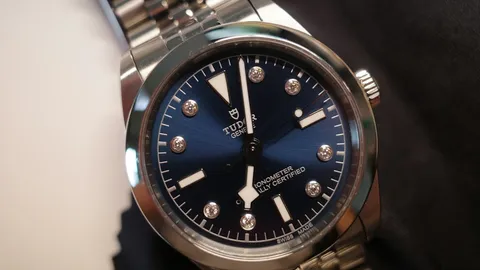
Blued steel hands were used in Swiss watches as a means of enhancing readability. The contrast between blue hands and white or silver dials makes it easier to read the time, even in low light conditions. A different set of legibility questions is covered in lumed hands vs lumed indices.
Legibility is always a negotiation between contrast, reflection, and the eye’s ability to find the relevant information. Crystal reflections can interfere with that contrast, a problem discussed in anti-reflective coating. Hand design also raises questions about direction and reading order, explored in why do watch hands move clockwise.
The Names That Made Blue A Signature
Thermal bluing steel has long been associated with fine watchmaking. Blued hands were a common feature of fine watchmakers such as Breguet and John Arnold. Their use of the technique helped turn a corrosion treatment into a mark of quality. The same family of heat treatment appears on other steel parts; one related discussion is why some watch screws are blue.
A blued hand can be elegant without being fragile. It sits on a dial as a dark, precise line, and it does not need to shout. On a restrained dress watch, that quiet contrast is often more effective than a brighter or more elaborate hand would be.
Hardness, Strength, And The Oxide Advantage
Tempering steel to blue had practical advantages beyond appearance. It gives the metal a good balance between hardness and strength, and the oxide layer that forms helps to protect the steel from rust. For a watch hand, that balance matters because the part is thin and exposed. It must hold its shape, resist corrosion, and remain light enough to move with the movement’s power. Bluing helped makers achieve those goals.
The color also acts as a visual certificate. When you see a genuine thermal blue, you are looking at evidence of a process that required heat, timing, and a trained eye. That is why the finish persists on high-end watches and remains a marker of traditional finishing.
Reading The Color Like A Watchmaker
The blue of a watch hand is not a single fixed shade. It shifts with temperature, alloy, and the maker’s decision about when to stop. That variability is exactly what makes the process interesting. A watchmaker cannot simply set a timer and walk away. The steel announces its state through color, and the maker responds. The final hand is the record of that exchange.
To read more about the story behind watches, try a watch history book.
If you want to train your eye for dial legibility and hand shapes, a few rounds on Watchdle can make you notice these details faster. The game asks you to read a watch face under time pressure, which is exactly the skill that a well-blued hand was designed to support.
FAQ
Which Swiss watchmakers are especially associated with blued steel hands?
Patek Philippe, Vacheron Constantin, and Jaeger-LeCoultre are known for using them. Patek Philippe’s Calatrava collection often features blued steel hands, and Vacheron Constantin’s Patrimony collection includes watches with them.
At what temperature does steel turn blue?
Steel must reach approximately 280–300 degrees Celsius to turn blue. As it heats, its color moves through soft straw, brown, and purple before finally becoming blue.
Why was bluing useful for wristwatch mainsprings?
Bluing carbon steel mainsprings was particularly useful before modern alloys became available. It was one of the places where the treatment mattered for the material itself, not only for the look of the finished watch.
How do watchmakers apply heat during bluing?
The traditional alcohol lamp is the slowest way to apply heat, a gas torch is a little faster, and an electric hot plate is the fastest. Steel components are placed on a bed of brass filings to distribute heat evenly.
As an Amazon Associate we earn from qualifying purchases.