Why Are Some Watch Screws Blue?
In this article
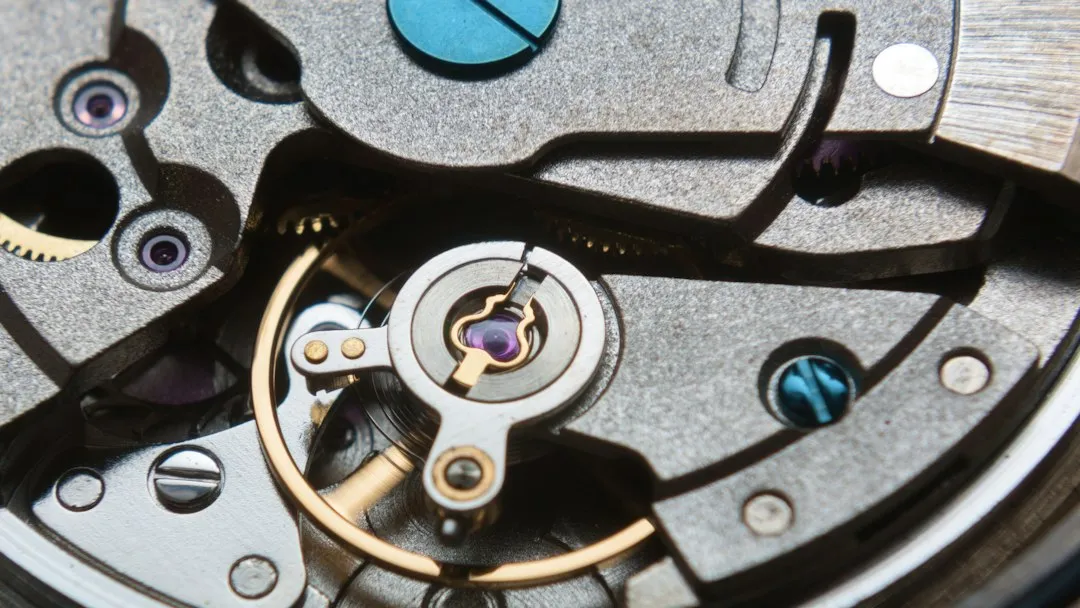
A blue screw in a watch movement is steel that has been heated until a surface oxide forms, changing its colour and signalling that it has been tempered. The blue is a visible record of a heat-treatment step that helps the screw do its job without becoming brittle.
What Bluing Does to Steel
In high-end watch movements, blued steel screws are a familiar detail. They appear because the steel has gone through a deliberate sequence. Hardening a steel part makes it very hard, but it also makes it brittle. A screw in that state might hold its shape, yet it can crack or snap when stressed. Tempering, often called bluing when the target colour is blue, is the corrective step. Its primary purpose, beyond aesthetic motivation, is to soften the part after hardening. The process is not simply about making steel look old or precious; it corrects an earlier stage that would otherwise leave the part too fragile for service.
The colour itself is an oxide layer on the surface of the steel. That layer appears when the metal is heated to a specific temperature. The hue develops from the steel’s own surface. Because the colour is a surface phenomenon, it also tells you the part reached a particular temperature. In the heat-treatment procedure, bluing or tempering a steel screw usually comes last. By then, the screw has been shaped and prepared, and the final colour is the visible result of the last controlled heating step.
Why Blue Is a Practical Target
Tempering colour is more than decoration. It indicates how hard the steel part is. That makes the colour a kind of gauge. Steel tools such as drills and cutters are often tempered to straw or brown, because those colours correspond to a greater degree of hardening than bluing achieves. A drill bit needs to cut; a watch screw needs to hold. The same steel can be pushed in different directions depending on the heat treatment.
A straw-coloured drill and a blue screw have both been heated, but they are not asked to do the same work. The drill’s edge benefits from greater hardness, while the screw’s threads and head benefit from a softer, tougher condition. Watch screws require a balance between strength and resilience. They must tolerate the small, repeated loads inside a movement, and their surfaces must stand up to wear over time. Bluing gives the maker a way to dial in that combination while leaving a clear visual marker.
The colour sequence when heating a screw runs from straw, then yellowish, followed by brown, purple, dark blue, blue, light blue, and grey blue. Different tempering temperatures also produce straw, brown, and purple, among other shades. A watchmaker watches for the exact moment the steel reaches the desired hue. The window is narrow, and the appearance shifts as the temperature climbs. The sequence gives the maker a visual scale. There is no need to guess whether the steel has changed; the surface announces it.
How Bluing Is Done
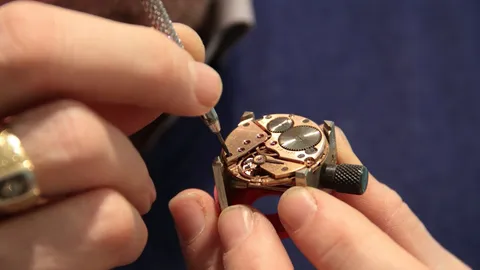
The traditional way of bluing screws is by hand. That method suits restoration and watches produced in small quantities, because each screw can be treated individually. It is not a process that scales easily to mass production. A maker can temper parts over a flame, on top of an electric heater, in bluing salts, inside an oven, or with a heat gun. The equipment varies, but the principle remains the same: controlled heat, a clean surface, and a close watch on colour.
Hand bluing demands attention because each screw is treated alone. The maker cannot simply dump a batch into a basket and expect every piece to reach the same colour at the same instant. The heat source may be simple, but the judgment is not. Even the choice of method affects control. A flame, an electric heater, bluing salts, an oven, and a heat gun each offer a different relationship between the maker and the colour change.
Preparation matters as much as the heating. Before a screw is heated, it must be spotless and free of anything that could interfere with the oxide layer. Cleanliness is part of the craft. For a broader look at how steel choice affects a watch, see why watch cases are made of 316L steel; the same attention to material and finish shows up throughout a well-made watch.
Why Watchmakers Still Bother
A blued screw is a small thing. In a movement packed with wheels, levers, and springs, it is easy to overlook. Yet it represents an extra step that is not strictly necessary for basic function. A plain steel screw can hold a bridge or a lever. A blued screw has been taken through a process that requires time, temperature control, and a clean workspace. That is why blued steel screws are associated with high-end watch movements rather than everyday mechanisms.
The aesthetic motivation is real. A deep blue screw against a silver-toned movement catches the eye and suggests handwork. But the colour is not only cosmetic. The colour tells a story about the steel’s condition. It says the part was hardened, then softened to a useful level, and finished with a surface that can wear well over time. In that sense, the blue is both a signature and a specification. The result is a movement that looks more finished, but the finish is not false; the blue is a byproduct of a real metallurgical step.
Mechanical watchmaking has many such details. Some are visible, like the screws and the regulating organ discussed in the balance wheel explained. Others are hidden in the choice of power source, a distinction covered in automatic vs quartz: the real difference. A blue screw belongs to the visible side of that tradition, but it only exists because of a functional need.
If you enjoy noticing these small clues, the daily challenge at Watchdle can put that eye for detail to use. The next time you see a blue screw, you will know it is not a random flash of colour. It is a tiny record of heat, timing, and steel.
FAQ
Does a blue screw mean the steel is harder?
No. A screw heated to blue is actually softer than one tempered to straw. Watch components like screws are usually tempered to medium to dark blue so they are strong enough not to break under stress, with surface hardness that wears well over time.
What temperatures create the different tempering colours?
A steel part heated to 240 °C turns dark yellow, while 270 °C produces purple. At 290 °C the colour becomes dark blue, and 320 °C gives a grey blue. These temperatures show how closely the final shade is tied to the heat applied.
How should a screw be prepared before bluing?
It must be polished and cleaned carefully, with no grease on the steel surface. A tissue paper soaked with isopropanol is one way to clean the component before heat is applied.
Why does timing matter when bluing a screw?
A screw cools almost immediately after it is removed from the heater, retaining the colour it had the moment it was pulled. That makes the exact moment of removal critical, because a few seconds can decide whether the blue is right or past its target.