Rolex Sea-Dweller History: 1665, Saturation Diving, Helium
In this article
The Rolex Sea-Dweller arrived in 1967 as a 610-metre saturation-diving instrument, following the Submariner and created for helium-rich commercial and military work. Its defining technical answer was a one-way helium escape valve on the case side, a solution to the pressure imbalance that could force a crystal from its case during decompression.
The Submariner’s 200-Metre Ceiling
Rolex introduced the Submariner in 1953, a steel automatic from Switzerland with an initial depth rating of 200 metres. That rating later rose to 300 metres. The ref. 6200 followed in 1954 and holds a particular place as the world’s first commercially produced dive watch. By the early 1960s, the ref. 5513 was rated to 660 feet or 200 metres and used the 1530 movement. Those numbers were serious for recreational and professional diving, but they sat far above the kind of work that would define the Sea-Dweller. In 1961, man had yet to explore more than 70 metres beneath the ocean surface, even as Yuri Gagarin orbited at no less than 350 kilometres above Earth. Rolex’s experiment goal was a deep saturation dive commercial watch able to submerge up to 2,000 feet. The Sea-Dweller debuted after the Submariner, and the earlier model’s evolution is traced in The Rolex Submariner Through Six Decades.
Saturation Diving’s Long Exposure Problem
Saturation diving is an ambient pressure technique that allows a diver to remain at working depth for extended periods while body tissues become saturated with metabolically inert gas from the breathing gas mixture. The duration can stretch across long stretches of time at extreme depths, often weeks. Once saturated, the time required for decompression to surface pressure will not increase with longer exposure. That is why saturation divers only need to decompress at the end of long-term dives, with a single decompression to surface pressure after several days to weeks. The depth range goes below 300 metres, and 701 metres stands as the record. Saturation divers breathe helium and oxygen, and they descend in a pressurized chamber.
From Milwaukee To Genesis
The first intentional saturation dive took place on December 22, 1938, when Edgar End and Max Nohl spent 27 hours breathing air at 101 feet sea water, or 30.8 metres sea water, in the County Emergency Hospital recompression facility in Milwaukee, Wisconsin. Albert R. Behnke proposed in 1942 that humans could be exposed to increased ambient pressures long enough for blood and tissues to become saturated with inert gases. George F. Bond ran the Genesis project at the Naval Submarine Medical Research Laboratory in 1957. Commercial work arrived in 1965, when Westinghouse replaced faulty trash racks at 200 feet, or 61 metres, on the Smith Mountain Dam. That same year, Jacques Cousteau and a group of divers spent three weeks at 100 metres during Conshelf III. Later, Peter B. Bennett invented trimix breathing gas as a method to eliminate high pressure nervous syndrome, and in 1981 Atlantis III at Duke University Medical Center subjected volunteers to pressure of 2250 feet sea water, or 686 metres sea water, then slowly decompressed them over a period of over 31 days.
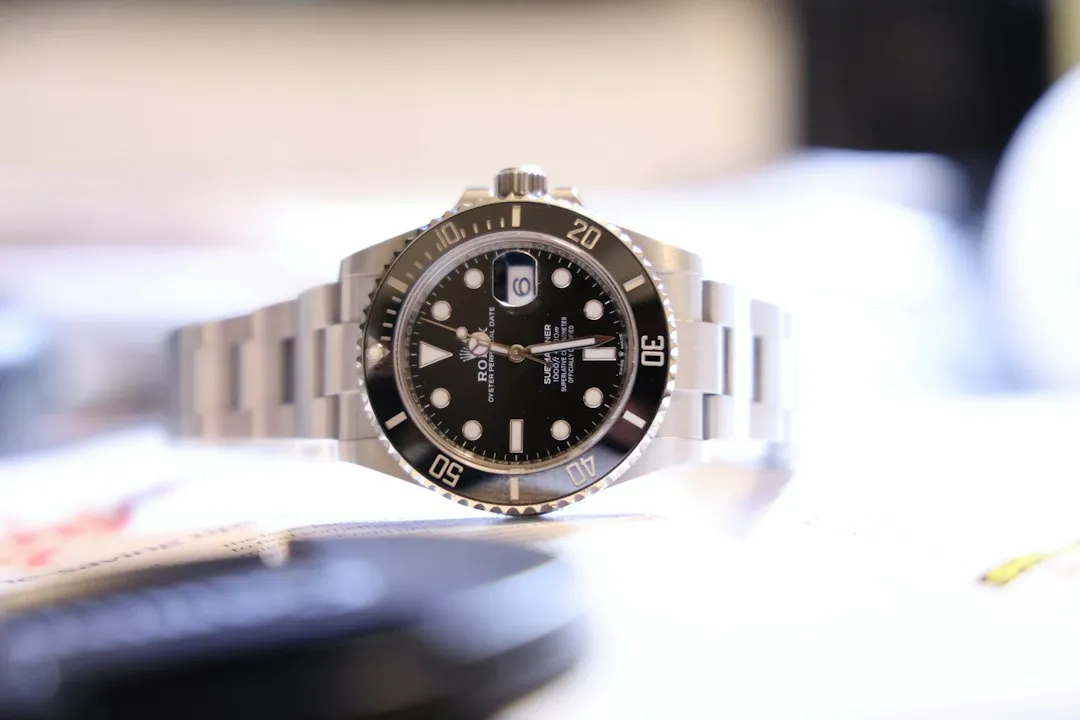
Helium Gets Inside, Then Blows The Crystal Out
Helium’s small molecular size lets it penetrate watches during descent. Once inside, helium molecules force their way past watch seals and equalize pressure inside the watch with the chamber. During decompression, that helium expands within the watch and builds internal pressure. The pressure in the chamber diminishes faster than the pressure inside the watch, and the watch crystal can be forced out at high speed. The failure mode is specific: the crystal can pop off where the crystal meets the case. For a broader look at why lab pressure and real depth behave differently, see Water Resistance Ratings: Lab Pressure, Not Diving Depth.
Single Red Prototypes And The 1665’s Dial Language
The Sea-Dweller 1665 began as the Single Red models, or SRSD, during a prototype period in 1966–1967. On these dials, SEA-DWELLER was printed in red without a second red line underneath. The Single Red prototypes used a second depth line in white, reading SUBMARINER 500 M – 1650 FT. Production Double Red ref. 1665 dials carried SUBMARINER 2000. The bezel was black, a bidirectional rotating diving bezel with a detailed 15-minute scale. Large tritium indices were identified by SWISS – T < 25 printed just above 6 o’clock. The hands were Mercedes hands, the date window sat at 3 o’clock, and there was no cyclops lens. A white Rolex coronet sat above ROLEX and OYSTER PERPETUAL DATE. These prototypes were certified chronometers. They were designated for U.S. Navy SEALAB 3 Aquanauts. T. Walker Lloyd, Oceanographic Consultant for Rolex, personally chose professional divers to test the prototypes.
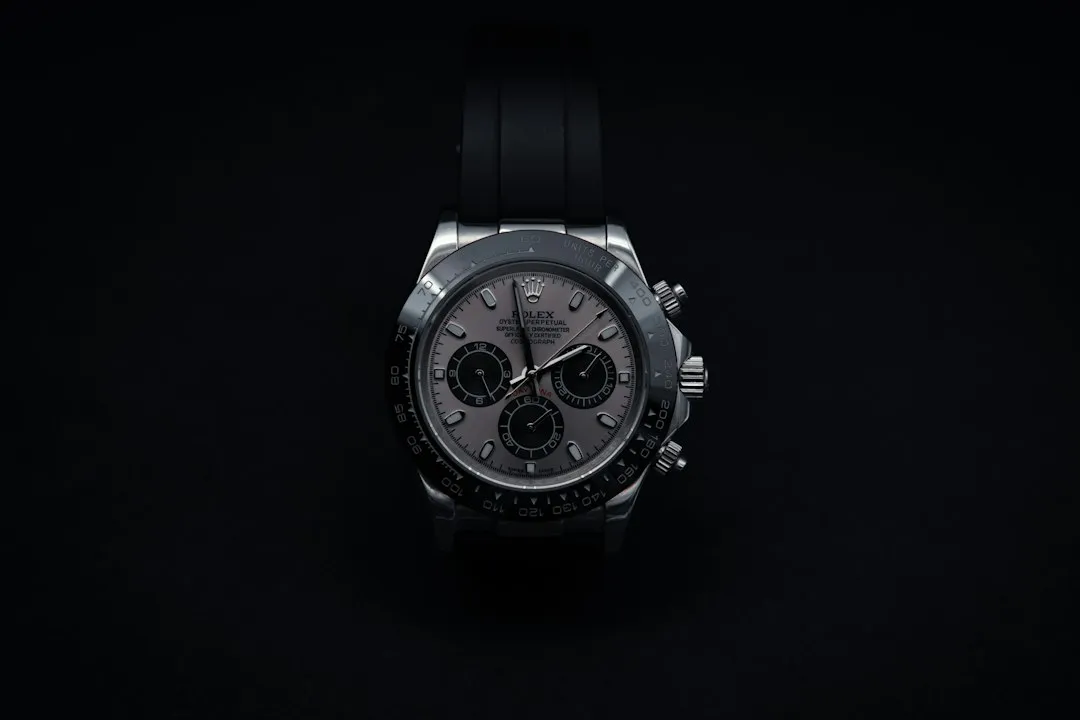
Case Back Markings And The Valve’s Patent Trail
Prototypes with gas escape valves carried Patent Pending on the case back. Production watches carried Rolex Patent, while very early production models still had Patent Pending in 1967. Bob Barth, a saturation diving pioneer in the 1950s and 1960s and a former US Navy Aquanaut, conceptualised the use of escape valves to prevent crystals from popping off. Rolex was first to file the patent for the helium escape valve, Swiss patent CH492246. The design became a standard for many dive watches with high depth ratings. Some historians discuss Doxa as a company that could have first developed the helium escape device. For civilian timepieces, the helium escape valve was first fitted on the Sea-Dweller, a steel, automatic, Swiss-made watch.
COMEX, The 5514, And A Lineage With Branches
Rolex and COMEX, a French industrial deep-sea diving company, partnered to create the helium escape valve. COMEX saturation divers breathed a mix of hydrogen, helium and oxygen. They only went through lengthy decompression once at the end of their entire dive schedule. Whistler, Superintendent and Caisson Master at COMEX Marseilles, was present at the latter end of a series of trial dives to depths up to 610 metres using Oxy/Helium to monitor physical and mental changes and HPNS. Rolex first used a helium release valve on standard ref. 5513 Submariners refitted with the valve, dubbed ref. 5514. A Rolex Comex Sea-Dweller ref. 5514 exists. Yet the Sea-Dweller’s lineage is not wholly a descendant of the COMEX 5514. The Rolex Sealab II watch had depth capability up to 1500 metres and managed without a helium release valve. That commercial-diving ecosystem is part of the larger story told in The History Of The Dive Watch: From Tool To Icon.
The Sea-Dweller’s deeper modern descendants and siblings are covered in Rolex Deepsea: The Full History. If you want to test how well you remember references like the 1665, the daily guessing game at Watchdle offers a quick diversion.
FAQ
Which Single Red Sea-Dweller is known as Bob Bradley?
SRSD number 1602913 carries the alias Bob Bradley. Only approximately 12 Single Red 1665 examples are known.
Did every early Single Red prototype include a helium escape valve?
No. Many Single Red prototypes did not have a helium escape valve. Prototype #1820177 was the first to feature a gas escape valve, and its owner was Dr. Ralph Brauer.
When did the Sea-Dweller first get a cyclops lens?
The cyclops lens first appeared on the Sea-Dweller on the most recent models from 2017. The ref. 126600, a 50th anniversary model, added a date bubble.