Rolex Explorer 1 History: Everest, 1016, and 14270
In this article
The Rolex Explorer turned the 1953 Everest achievement into a lasting production model: a steel, automatic, Swiss-made Rolex with the 3-6-9 dial that became its signature. Its line runs from a white-dial “Pre-Explorer” to later references, always within the Oyster Perpetual collection.
Everest, the Pre-Explorer, and the January 1953 Trademark
Rolex had already been involved with Everest before the successful climb. In 1933, it provided watches to pilots who made the first expedition flight over Mount Everest. Two decades later, the 1953 expedition led by Colonel John Hunt for Great Britain reached the summit on May 29. Tenzing Norgay and Sir Edmund Hillary were the first men to stand there, and Rolex and Smiths were the watch providers. A Rolex watch provided to Hillary is now kept at Zurich’s Beyer Watch & Clock Museum.
The Ref. 6098 bridged that achievement and the production Explorer. It is described as a white-dial Rolex chronometer generally considered a “Pre-Explorer.” The 6098 and 6298 are considered prototypes for the modern Rolex Explorer, and the 6098 series added the Super Oyster Crown. The Explorer name was trademarked in January 1953, the same year Rolex unveiled the first Submariner, the Turn-o-Graph, and the first-generation Explorer. For readers tracing that sibling line, the Submariner’s own evolution is covered in The Rolex Submariner Through Six Decades.
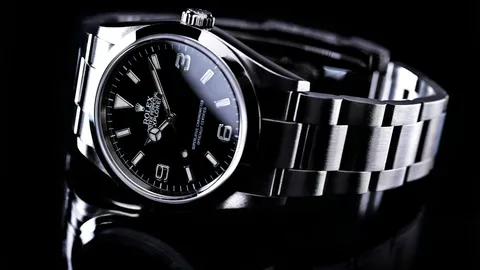
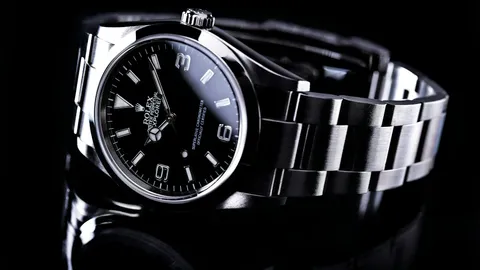
References 6150 and 6350 arrived in 1953; the automatic A296 links them to the Pre-Explorer, appearing without COSC certification in the 6150 and finely adjusted to chronometer certification in the 6350. The 6150’s dial placed an inverted triangle at 12 o’clock, numerals at 3, 6, and 9 o’clock, and bar indexes at the other hour positions. Both references shared a 36mm steel Oyster case, 50 metres of water resistance, black dials, and Roman numerals at 3, 6, and 9 o’clock. The 6150 came with a Mercedes hour hand and a pencil-shaped minute hand. The 6350 offered Mercedes, pencil, or syringe-style hands plus a “honeycomb” textured dial. In an era when water resistance was still a meaningful tool-watch specification, that rating placed the Explorer within the broader history of the dive watch rather than apart from it.
The Long Tool-Watch Middle Age
The 1960s brought a shift in the line’s technical heart, while the 3-6-9 dial design stayed central. The 5020 series, nicknamed “Ovettone,” shared the 36mm case size. The Oyster case dates to 1926, the Perpetual movement to 1931, and the Explorer belongs to the Oyster Perpetual collection, a lineage that runs through the wristwatch’s rise over the pocket watch.
Sapphire, White Gold, and Reference 14270
Today the Explorer is associated with 904L stainless steel, a case material that gives the line its particular sheen and corrosion resistance. The luminescence on its dials has moved from radium to tritium to Chromalight technology. Collectors who chase early references, textured dials, or period-correct hands often need a different checklist than buyers of modern examples; what to look for when buying a vintage Rolex is a useful companion when evaluating those details. If you want a low-stakes way to test how well you know references and dial details, the daily Watchdle game is built for exactly that kind of recall.
FAQ
What separates the 6150 from the 6350?
The 6150’s dial usually read “Precision” above 6 o’clock, with only a small number carrying “Explorer.” The 6350 is widely regarded as the first official Explorer, or Explorer I, and had “Explorer” printed below 12 o’clock on every dial.
Which references and calibers defined the middle decades?
Caliber 1030 arrived in 1956 and powered the Ref. 6610. The 1960s Ref. 1016 used Caliber 1560 and later 1570, carrying the line into the period before sapphire-crystal references.
When did the Explorer gain the Twinlock crown and Paraflex shock protection?
Rolex adopted the Twinlock crown mechanism in the 1960s. The Explorer also uses the Paraflex shock absorber system.
What did the 14270 bring to the Explorer?
Introduced in 1989, the Ref. 14270 added a sapphire crystal and applied white gold hour markers. It ran on Caliber 3000.