Rolex Daytona: The Full History
In this article
- Before the Daytona Name: Oyster Chronographs and Speed Records
- First Phase: Reference Codes and Dial Details
- Paul Newman, Eric Clapton, and the Auction Era
- Second Phase: Zenith Movement and a Larger Case
- Third Phase: An In-House Rolex Movement
- Fourth and Fifth Phases: Ceramic Bezel and the 126500
- Why Collectors Track Each Phase
- FAQ
The Rolex Daytona is a Swiss steel chronograph introduced in 1963 as the Cosmograph, the year Rolex adopted the Daytona name, though the word did not appear on the dial until 1965; five distinct phases shaped it from a manually wound racing tool into an automatic icon. Its story runs through references such as the 6239, 16520, 116520, 116500, and 126500, and it remains tied to Rolex’s long association with speed and the Daytona Speedway.
Before the Daytona Name: Oyster Chronographs and Speed Records
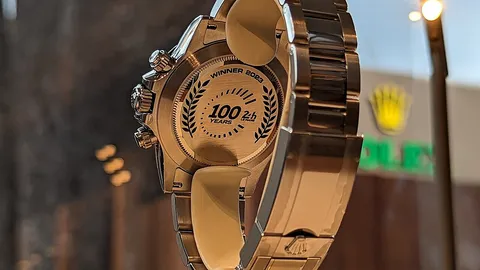
Rolex’s chronograph story reaches back to the 1930s, when the Ref. 6234 appeared as the Oyster Chronograph with three sporty sub counters at 3, 6, and 9 o’clock. That layout established a sporty chronograph template long before the Daytona name existed. Sir Malcolm Campbell, a Rolex ambassador, set a world speed record of 301.13 mph in 1935—more than 396 km/h—linking the brand to land-speed racing. In 1962 Rolex became official timekeeper at the Daytona Speedway and began sponsoring the Daytona race. The Cosmograph Daytona arrived a year after the inaugural Daytona Continental motor race, and Rolex became the official timepiece of Daytona. Winners of the Rolex 24 received a specially engraved Cosmograph. That mix of racetrack timing and steel tool-watch design echoed Rolex’s other icons, including the Submariner’s own evolution.
First Phase: Reference Codes and Dial Details
The First Phase ran from 1963 to 1987, and its reference list includes 6238, 6239, 6240, 6241, 6262, 6264, 6263, 6265, 6269, and 6270. That list shows how many variations Rolex cycled through during the manual-winding era.
The 6239
The Ref. 6239 was produced from 1963 to 1969, with a black face and silver sub-counters. Its tachymetric scale sat on the bezel, a racing tool rather than decoration. In 1967, the “Daytona” text moved from 12 o’clock to above the sub counter at 6 o’clock, changing the dial’s balance. The original 1963 Cosmograph Daytona used a high-contrast face and an outer bezel tachymetric scale, and its defining feature was the tachymeter complication.
The 6240, 6241, and Later References
The Ref. 6240 and Ref. 6241 both ran from 1965 to 1969. In 1965, Rolex added screw-down pushers, the Oyster designation, and a black plexiglass bezel. The Ref. 6262 lasted from 1970 to 1971, the Ref. 6264 from 1970 to 1972, while the Ref. 6263 and Ref. 6265 both ran from 1971 to 1988. Exotic dials for the Daytona were created by Singer.
Paul Newman, Eric Clapton, and the Auction Era
The Paul Newman Rolex Daytona Reference 6239 sold for $17.8 million in 2017. Eric Clapton’s yellow-gold Cosmograph Ref. 6239 brought $1.74 million in May 2022; it is the only yellow-gold 6239 known with a pulsations dial. Those results turned vintage Cosmographs into a category collectors watch closely, but the mechanical story continued underneath.
Second Phase: Zenith Movement and a Larger Case
The Second Phase ran from 1988 to 2000 with the reference 16520. It used a Zenith movement, and Rolex moved to a self-winding movement. The case size increased from 36mm to 40mm, a significant jump that changed the watch’s wrist presence. Shoulders were added to protect the stem, and the bezel became metallic, replacing the earlier black plexiglass type. The Ref. 16523 and 16528 appeared in the 1990s, broadening the range. For a closer look at the chronograph that supplied that era’s engine, see the history of the Zenith El Primero Sport.
Third Phase: An In-House Rolex Movement
From 2000 to 2016, the Third Phase was built around the reference 116520 and a Rolex movement, ending the Zenith era. Other references from the 2000s to the present include the 116503, the 116509/116505/116508, the 116515/116518/116519, and the 116506. These references show how far the Daytona range expanded beyond the core 116520.
Fourth and Fifth Phases: Ceramic Bezel and the 126500
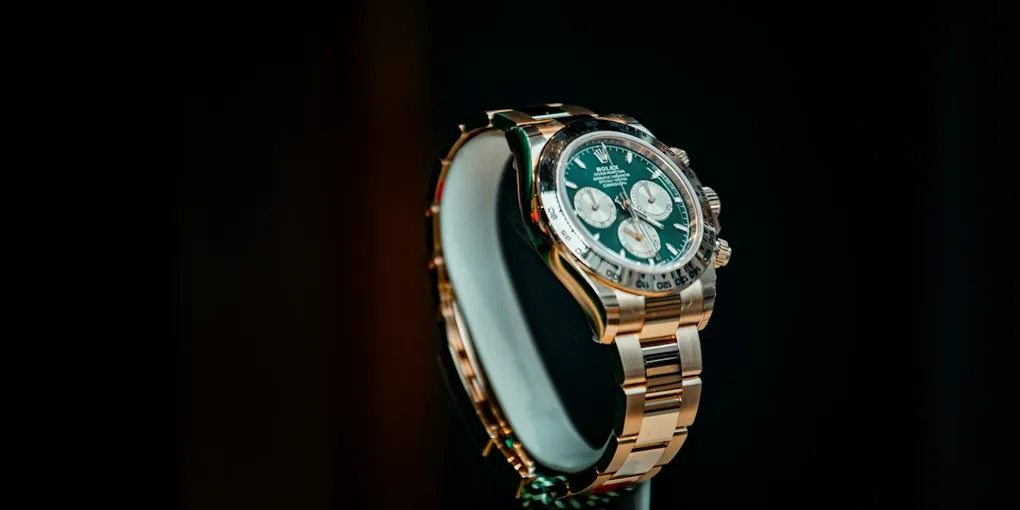
The Fourth Phase spanned 2016 to 2023 with the reference 116500, which featured a ceramic bezel. The 116500LN has been produced from 2016 to the present day, keeping the ceramic look in the catalog. The Fifth Phase is the reference 126500, listed among the latest models from 2020 onwards. For the technical appeal of ceramic, see why modern bezels are ceramic.
Why Collectors Track Each Phase
The Daytona’s five phases give collectors clear markers: manual winding in the First, Zenith inside the Second, an in-house Rolex movement in the Third, ceramic in the Fourth, and the 126500 in the Fifth. First-time chronograph buyers can compare those milestones against other mechanical stopwatches in a chronograph buying guide. If you want to test how well you know the references, the game at https://watchdle.com/play/ offers a quick challenge.
FAQ
How many Ref. 6238 were made?
Around 2,000 models were produced in the 1960s.
What did the 4130 movement change in 2000?
In 2000, it replaced the 4030 mechanism, used 60% fewer components, and extended the power reserve from 50 hours to 72 hours. Daytona was engraved on the oscillating weight.
What distinguishes the 2016 ceramic bezel?
It was platinum bound on ceramic.