Rolex Explorer II History: From Spelunking Tool to Icon
In this article
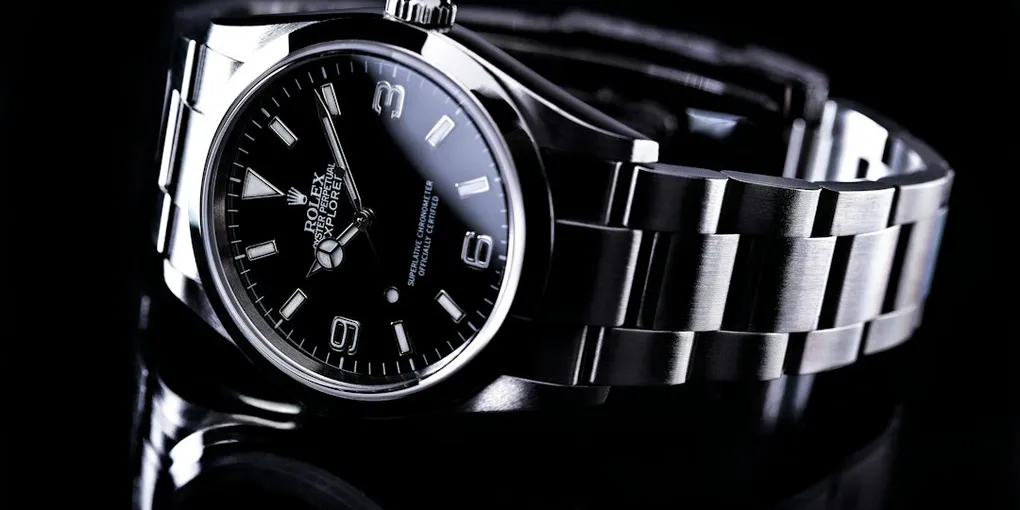
The Rolex Explorer II is a Swiss automatic tool watch created for spelunkers and defined by a fixed 24-hour bezel and a stainless steel case. It debuted in 1971 as the 39 mm ref. 1655 and has evolved through several references while keeping its caving brief intact.
A Different Kind Of Explorer
The Explorer II did not appear in a vacuum. The Explorer I had arrived in 1953 with a 36 mm case, and Rolex’s Oyster case already dated to 1926. The new model was aimed at spelunkers, people who spend long hours underground and need a watch that can be read when the sun is irrelevant. A fixed 24-hour bezel made sense because it does not rotate. There is no chance of knocking the scale out of alignment. The original ref. 1655 was rated to 100 metres, placing it among Rolex’s robust steel sports watches rather than fragile dress pieces. For a deeper look at how depth ratings work in practice, the water resistance ratings guide is useful.
Ref. 1655: The First Explorer II
The first reference established the visual language. Its 24-hour hand was orange on early examples, then later replaced with red. That change alone gives collectors something to study. The crystal was acrylic, not sapphire, and inside sat the COSC-certified Caliber 1575. It carried 25 jewels, ran at 19,800 vibrations per hour—2.75Hz—and had a 48-hour power reserve. Rolex documented at least five Mark dials, so early Explorer II collecting is not a simple one-dial affair. The dial featured 24 tritium marks, and the hands used a simple stick setup with tritium on about 90% of black surfaces. Those details matter because aged lume is part of the watch’s character; for the broader story of luminous paint, read from radium to Super-LumiNova. The ref. 1655 remained in production until 1985. Its movement also powered the GMT-Master ref. 1675, linking the Explorer II to the GMT watch story. The Submariner followed a different path, and the Submariner’s full history shows how Rolex’s dive line evolved separately.
1985: Sapphire And A Wider Case
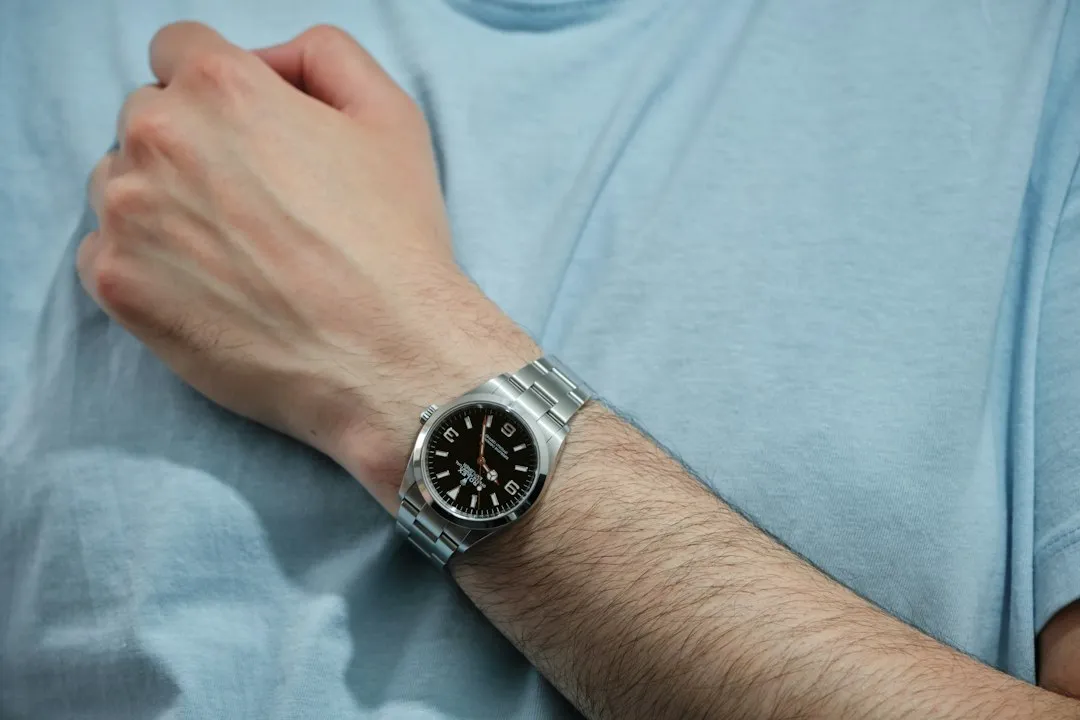
The ref. 16550 arrived in 1985. It moved the Explorer II to a 40 mm case and a sapphire crystal, a clear break from the acrylic original. This reference marks the point where the Explorer II became less of a vintage oddity and more of a contemporary sports watch, though it kept the same fixed 24-hour bezel approach. The shift was not just cosmetic. A sapphire crystal changed how the watch wore and how it aged, while the larger case gave the model a stronger wrist presence. For people who had followed the ref. 1655, the 16550 was a noticeable step into modern Rolex territory.
Ref. 16570: The Long Haul
In 1989, Rolex introduced the ref. 16570, which replaced the ref. 16550 after four years. It ran on Caliber 3185 and later Caliber 3186. Its luminous material changed over time: Tritium, then Luminova, then SuperLuminova. In 1996, Rolex added the Easylink extension system, allowing 5 mm increments of adjustment without tools. That combination made the 16570 a practical daily wearer for people who wanted the Explorer II look without the fragility of an older acrylic crystal. It also became the reference many enthusiasts picture when they think of the Explorer II.
Six Digits And The Return Of Orange
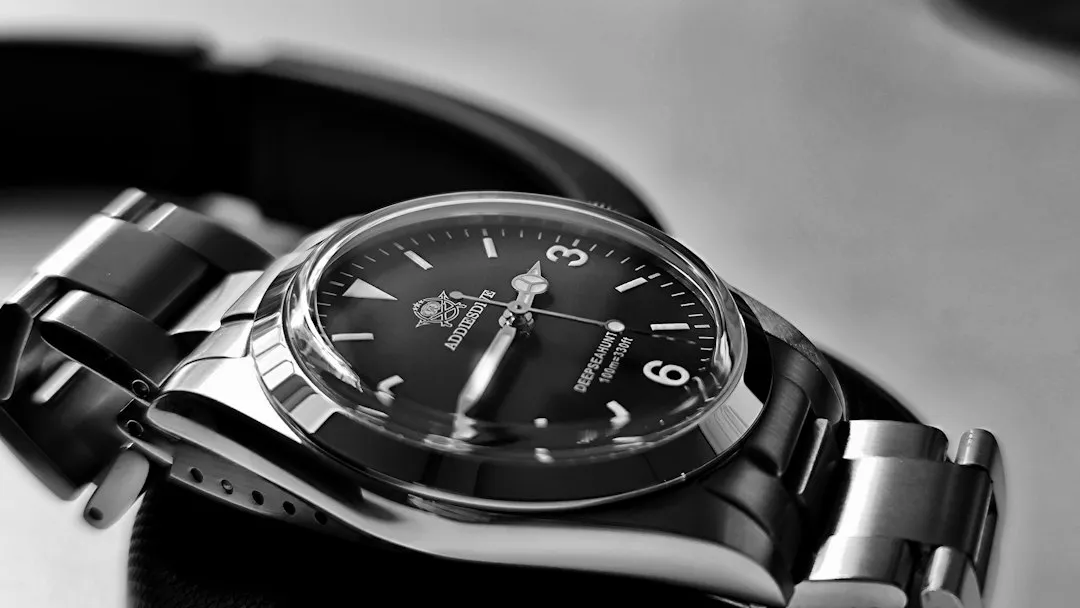
For the model’s 40th anniversary in 2011, Rolex released a six-digit reference. Its 24-hour hand was a bright orange arrow, honoring the ref. 1655. The case size moved to 42 mm from 2011 onward. A decade later, in 2021, Rolex launched the ref. 226570. The orange arrow remains a visual link to the original caving tool, even as the watch has grown larger and more modern. The six-digit era did not abandon the Explorer II’s core identity; it simply translated that identity into a bigger, more contemporary package.
The Through-Line
Across its history, the Explorer II has been less about radical reinvention than about refining a specific idea. It is not a rotating-bezel travel watch; it is a fixed-scale tool. It has moved through acrylic and sapphire, through different calibers, and through case sizes, but the 24-hour display remains the anchor. That is why the Explorer II sits apart from Rolex’s other sports watches. If you want to test how well you know references like these, Watchdle offers a daily watch-guessing game.
FAQ
What does “Freccione” mean?
Freccione comes from the Italian word freccia, meaning arrow. It refers to the 24-hour hand that defines the Explorer II’s dial.
Did Steve McQueen wear an Explorer II?
No. The “Steve McQueen Rolex” label is erroneous. McQueen’s Rolex of choice was the Submariner, and the Explorer II nickname may have started in Italy through marketing.
What did the ref. 16550 introduce besides its 40 mm case?
The ref. 16550 ran on Caliber 3085 and could be ordered with a black or white dial. The same year, Rolex began using 904L steel.
What powers the 2021 Explorer II?
The 2021 ref. 226570 uses Caliber 3285. It belongs to the generation released in 2021.