Omega Planet Ocean History: 2005 to Liquidmetal
In this article
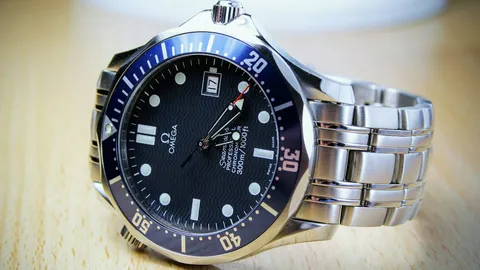
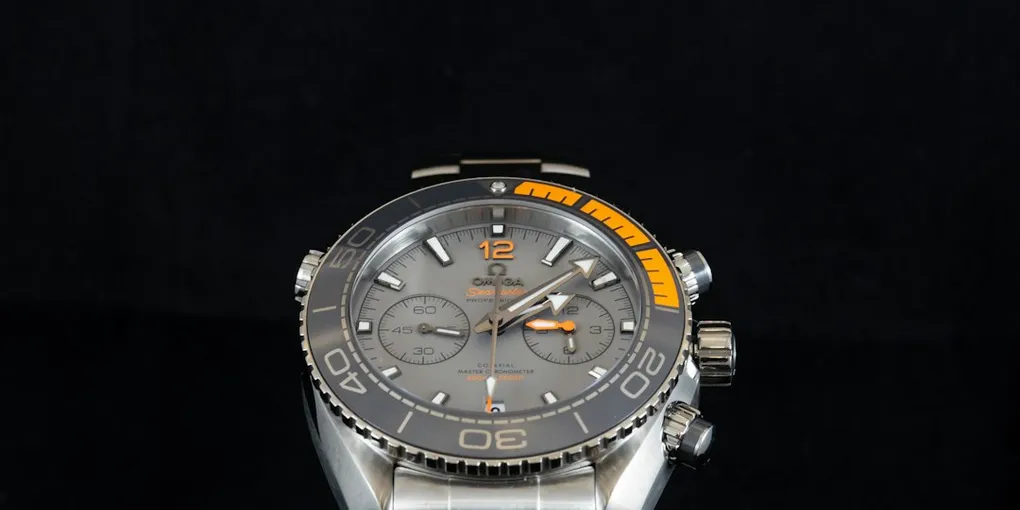
The Omega Planet Ocean was introduced in 2005 as a Swiss automatic dive watch with a depth rating of at least 600 meters (2,000 feet). Its first generation ran from 2005 to 2011 and looked back to the classic Seamaster 300 ref. 165.024 of the 1960s.
Stainless Steel, Aluminum, And A Coin-Edge Bezel
The collection’s material foundation is steel, and the debut-era watches expressed that in a straightforward way: stainless steel cases topped by aluminum bezels. That pairing gives the early Planet Ocean a slightly matte, functional character. Aluminum can show its age, but it also holds color cleanly and keeps the watch from feeling overly precious. The rotating ring is a 120-click coin-edged unidirectional bezel, which means it moves in one direction and offers a firm, tactile action. A helium escape valve at 10 o’clock completes the professional brief. Those features are not random decoration; they belong to a watch conceived around underwater use, even if most owners will never test its limits. The coin edge is especially important because it gives the fingers something to grip when turning the bezel, and the unidirectional action is a safety choice: if the ring is bumped, it can only move in the direction that shortens the elapsed time. The aluminum insert keeps the color crisp without adding a layer of glossy ceramic, which is one reason the first generation has a warmer, more vintage-adjacent look than later versions might suggest. The 10 o’clock valve is a visual signature as much as a functional one, and it immediately separates the Planet Ocean from more minimalist dive watches. Together, these choices create a watch that feels engineered rather than styled.
The Thickness Of Ref. 2200.50.00
Reference 2200.50.00 belongs to the early Planet Ocean family, and its profile starts at 14.5mm thick. That measurement explains a lot about the wearing experience. This is a watch with mass, a high presence, and a center of gravity that you notice. The thickness is not a flaw in a tool watch; it is part of the architecture, making room for the movement, the case construction, and the underwater ambitions that define the model. On the wrist, that extra height can make the watch feel more like equipment and less like jewelry. It also affects how the watch interacts with a sleeve, a wet suit, or a glove. A slim dive watch can disappear under a cuff, but the Planet Ocean does not try to disappear. It announces itself. The reference 2200.50.00 sits within the first-generation run, so it shares the same broad design language while offering a specific set of dimensions for collectors to study. Thickness often gets ignored in online discussions, but it shapes how a watch sits, how it balances, and how it feels when you actually use it. The 14.5mm starting point puts the Planet Ocean in the serious dive-watch camp, not the slim sports-watch camp.
The Mechanical Core Of The Early Planet Ocean
A dive watch can have a perfect bezel and a robust case, yet it still needs an engine that can run day after day. The early Planet Ocean chose a mechanical path, which gave it a different character from a quartz alternative. Mechanical movements ask for attention. They have rotors, gears, and a pulse that owners can feel if they listen closely. That may sound romantic, but it also has practical value: a mechanical dive watch is a self-contained system, and it does not depend on a battery that can die at the wrong moment. The first generation’s movement was part of a broader Omega tradition, and it helped establish the Planet Ocean as a serious modern Seamaster rather than a fashion piece. For readers interested in how Omega’s technical thinking evolved, the Co-Axial escapement story explores a separate thread in the brand’s engineering history. The movement world is often treated as a list of numbers, but in practice it is the difference between a watch that feels alive and one that feels inert. The early Planet Ocean belongs to the former category.
Liquidmetal And A New Material Chapter
In 2009, Omega brought Liquidmetal technology to the Planet Ocean line. That development marked a new material chapter for the collection, even though the core design language remained recognizable. A material change can be easy to overlook in photos, but it matters on the wrist. It can alter the way light moves across a bezel, the way a surface resists wear, and the way a watch ages over time. Liquidmetal did not replace the steel-and-aluminum foundation of the early watches; it added another layer to the story. For collectors, moments like this are useful markers. They help separate one phase of a collection from the next and give enthusiasts something concrete to discuss beyond color and case size. The Planet Ocean was still a professional dive watch, still built around underwater use, but it was also becoming a platform for experimentation. That balance between tradition and new technology is part of why the model has remained interesting for so long. For another perspective on deep-diving watch design, the Rolex Deepsea history is a useful comparison.
How The Planet Ocean Found Its Place
The Planet Ocean did not arrive as a vintage reissue in the literal sense, but its design inspiration gave it a sense of continuity. It sat alongside other Omega divers, and it offered a modern alternative to smaller, more traditional Seamaster models. The first generation is now old enough to be judged on its own terms: a professional dive watch with a clear tool-watch attitude. Its appeal comes from that mix of utility and familiarity. For a deeper dive into the category’s origins, the history of the dive watch provides the wider narrative. The Planet Ocean also benefited from timing. By the mid-2000s, dive watches were moving back toward larger cases and more overt capability, and the Planet Ocean fit that mood without looking like a copy of anything else. It had its own bezel, its own valve, and its own proportions. That combination helped it become a collection rather than a single model. Today, the early examples are appreciated for their honesty: they do not pretend to be delicate, and they do not hide their purpose. They are dive watches first, and that clarity is why they continue to attract attention.
To read more about the story behind watches, try a watch history book.
A Quick Diversion For Detail Hunters
If you enjoy spotting small differences between references, the watch game at Watchdle offers a lightweight way to test your eye. It is not a substitute for a reference book, but it can sharpen the kind of attention that makes discussions like this one more enjoyable.
FAQ
What movement powered the first-generation Planet Ocean?
Omega Caliber 2500 was the movement used in the first-generation Planet Ocean. It gave the model a mechanical heartbeat and tied it to Omega’s broader watchmaking output.
Which film-inspired special editions appeared in the early years?
The Planet Ocean was linked to Casino Royale in 2006 and Quantum of Solace in 2008. Those editions helped raise the model’s profile beyond dedicated dive-watch fans.
What case sizes were offered in the first generation?
The first-generation Planet Ocean came in 42mm and 45.5mm. That choice let buyers pick between a more restrained diameter and a larger, more overtly tool-like footprint.
What limited edition accompanied the arrival of Liquidmetal?
Omega produced reference 222.30.42.20.01.001 as a limited edition of 1,948 pieces. It sits within the same era of material experimentation that defines this chapter of the collection.
As an Amazon Associate we earn from qualifying purchases.