Omega Speedmaster Professional: The Full History
In this article
The Omega Speedmaster Professional is the manual-winding chronograph that began as a racing watch in 1957 and became the only officially qualified wristwatch for manned space missions and extravehicular activity in space, worn on the Moon during Apollo 11. Its history is a rare case where a purpose-built motorsport tool became the defining object of human spaceflight.
1957: A Chronograph Built for Drivers
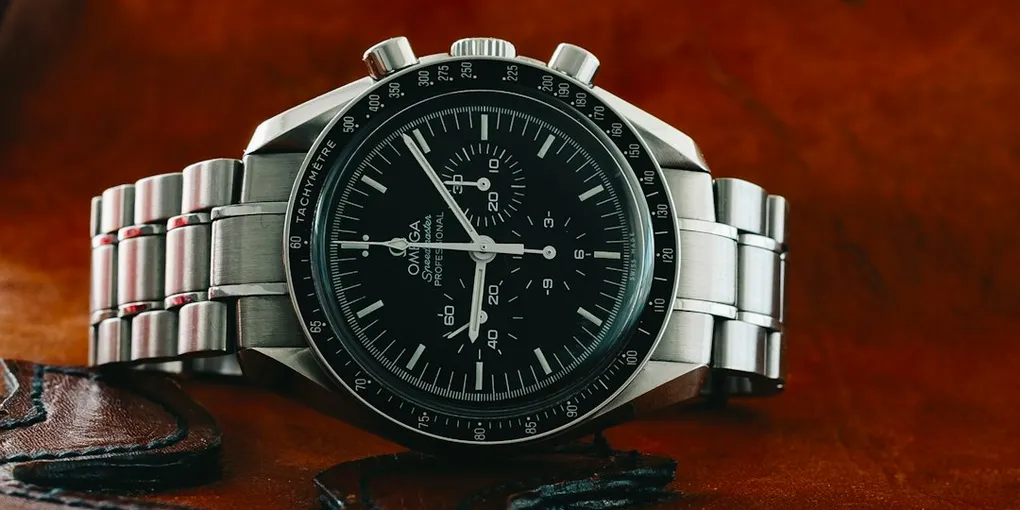
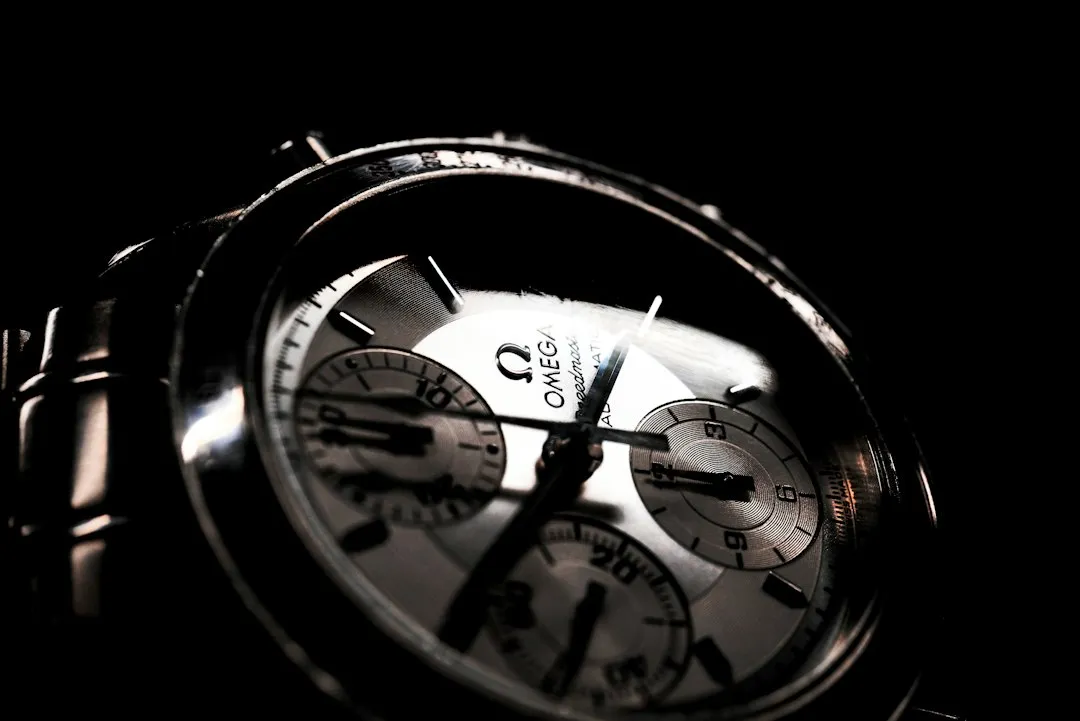
The Omega Speedmaster was introduced in 1957. It was designed for race car drivers, a sport and racing chronograph rather than a piece of space equipment. Omega SA produces the Speedmaster as a line of luxury chronograph wristwatches, and from the start it had a feature that separated it from ordinary chronographs: it was the first watch to feature an external bezel that showcased a tachymeter scale for the chronograph. That bezel gave the watch a purposeful look and tied the chronograph function directly to the case.
The early Speedmaster CK 2915 used the Omega Calibre 321. That movement was developed in 1946 by Albert Piguet of Lemania. It is worth remembering that the Speedmaster’s original purpose was sport and racing, not space exploration. The watch that would become a Moonwatch began life in the same world as other driver-focused chronographs. If you are new to this category, the Chronograph Buying Guide For First-Timers explains what actually matters when evaluating a chronograph.
From Mercury to Gemini: The Speedmaster Enters Space
The Speedmaster was not originally designed for space exploration, but it entered space anyway. Wally Schirra was the first person to wear a Speedmaster in space during the Mercury-Atlas 8 mission in 1962. His personal watch in space was a CK 2998 aboard Mercury-Atlas 8 (Sigma 7) on October 3, 1962. The broader story of early space watches is more complicated than a single brand, as explored in The First Watch In Space Was Not What You Think.
In 1965, NASA qualified the Omega Speedmaster. It became the only officially qualified wristwatch for manned space missions and extravehicular activity in space. That status is the foundation of the Speedmaster’s reputation. The first American spacewalk took place on the Gemini 4 mission, and the Speedmaster Professional would become the best-known and longest-produced manual winding Moonwatch.
The Professional name matters. The Speedmaster took on the official name Speedmaster Professional, and the ST 105.012 was the first Speedmaster with the Professional appellation on the dial. The ST 105.012 also had an asymmetrical case to protect the chronograph pushers and crown. That case shape was not decoration; it was a functional response to the risk of knocking the chronograph controls at the wrong moment.
Apollo 11 and the First Watch on the Moon
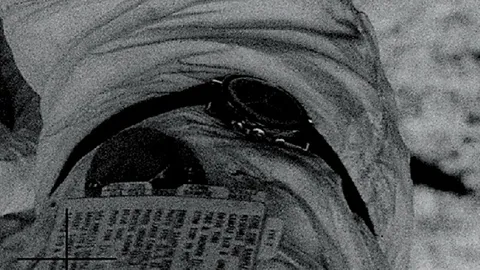
The Speedmaster Professional was worn by Neil Armstrong and Buzz Aldrin when they landed on the Moon. It was the first watch on the Moon during the Apollo 11 mission. The Apollo 11 watches were 1967 pre-Moon 321 versions, which places the Calibre 321 firmly at the center of the Moonwatch story. NASA’s EVA qualification is equally significant: the Speedmaster Professional was the only watch qualified by NASA for EVA.
For many collectors, this is where the Speedmaster stops being a chronograph and becomes an artifact. The watch was on the wrists of the Apollo 11 crew during the landing, and the Professional remained the manual-winding Moonwatch that enthusiasts know today. The Omega Speedmaster: The Moonwatch Explained article goes deeper into that specific identity, but the historical outline is clear: racing watch first, space watch second, legend third.
Calibre 321 to Calibre 861
The Calibre 321 was replaced by the Calibre 861 in 1968/1969. That transition is one of the key dividing lines in Speedmaster history. The Speedmaster Professional continued as the longest-produced manual winding Moonwatch, and the Professional appellation that began on the ST 105.012 remained part of the model’s identity.
The change from 321 to 861 also gives collectors a simple way to think about eras. Early Speedmasters, including the CK 2915 and the 1967 pre-Moon 321 versions used on Apollo 11, belong to the 321 story. After 1968/1969, the Calibre 861 replaced the 321. Omega’s other chronograph lines followed different paths, as in the Omega Flightmaster: The Full History, but the Speedmaster Professional’s path stayed tied to manual winding and spaceflight.
Snoopy, the Silver Snoopy Award, and Limited Editions
The Speedmaster’s Snoopy connection has a clear starting point. Omega received the Silver Snoopy award in 1970 and was one of the earliest recipients. Snoopy limited editions have appeared since 2003.
The Snoopy editions are not identical. Ref. 3578.51 featured a colorful Snoopy on the dial and caseback. Ref. 311.32.42.30.04.003 was more monochromatic. Ref. 310.32.42.50.02.001 used a blue-and-white color scheme and a Snoopy space capsule on the caseback. Together, they show how the Speedmaster’s space history can be interpreted in very different visual moods, from playful to restrained to blue-and-white.
The 50th Anniversary and the Modern Legacy
The Omega Speedmaster Apollo 11 50th Anniversary ref. 310.20.42.50.01.001 sold in 2023 for 13,970 CHF. That result is a useful marker of how the Speedmaster’s story continues to resonate in the auction and collector world. The reference is a modern tribute to the Apollo 11 legacy, and its sale price shows that the Moonwatch’s history is not just museum material.
The Speedmaster Professional remains the anchor of the line. It is the manual-winding Moonwatch, the watch qualified by NASA for manned space missions and EVA, and the watch worn on the Moon during Apollo 11. Its journey from a 1957 racing chronograph to a 1965 NASA-qualified tool to a 2023 auction lot is unusually coherent. The watch was not designed for space, which makes its space career all the more remarkable.
If you want to test your own recognition of the Speedmaster and other watches, the daily game at Watchdle is a natural next stop. It is a small way to keep the history alive, whether you are looking at a CK 2915, a Professional, or a Snoopy edition.
FAQ
When was the Omega Speedmaster introduced?
The Omega Speedmaster was introduced in 1957. It was originally designed for race car drivers as a sport and racing chronograph.
When did NASA qualify the Speedmaster?
NASA qualified the Omega Speedmaster in 1965. It became the only officially qualified wristwatch for manned space missions and extravehicular activity in space.
What makes the Speedmaster Professional a Moonwatch?
The Speedmaster Professional was worn by Neil Armstrong and Buzz Aldrin when they landed on the Moon during Apollo 11. It is the best-known and longest-produced manual winding Moonwatch.
What is the Speedmaster’s Snoopy connection?
Omega received the Silver Snoopy award in 1970 and was one of the earliest recipients. Snoopy limited editions have appeared since 2003, including refs. 3578.51, 311.32.42.30.04.003, and 310.32.42.50.02.001.