How To Choose A Dress Watch: Size, Dial, And Strap
In this article
A dress watch earns its place by staying quiet: the case slips under a cuff, the dial reads at a glance, and the strap looks like it belongs with tailored clothing. Choose the smallest and thinnest case you can wear comfortably, a dial that avoids visual noise, and a leather strap whose color and taper support the watch head rather than compete with it.
The Case: Start With Diameter, Then Thickness
What Diameter Range Works For A Dress Watch?
Start with dimensions because they decide whether the watch looks formal or merely small. A dress watch is generally recommended within a 33mm to 41mm diameter range, while the modern dress-watch sweet spot is often listed as 36mm to 41mm. Vintage examples sit smaller, commonly between 34mm and 36mm. Those numbers matter because wrist size and lug-to-lug fit change how a case wears; measuring your wrist for a watch is the first step, and a watch size guide covering case, lug-to-lug, and fit will save you from buying a diameter that looks right on paper but wrong on the arm.
A larger case on a flat, wide wrist can look smaller than a more compact case on a round wrist, so treat the range as a starting point, not a rule. If you have a small wrist, a case near the lower end of the range will feel more proportionate. If you have a larger wrist, the upper end can still look formal provided the thickness is controlled. The point is not to chase a number but to keep the watch head from dominating the wrist.
Thickness And Case Material
Thickness separates a dress watch from a sports watch more than diameter does. The broad recommendation for a dress watch is a maximum thickness under 15mm, but that is a generous ceiling. A slender profile lets the case slide beneath a shirt cuff and keeps the watch from banging into desks or doorframes. If you want a single target, look for a watch that feels thin in profile rather than merely small across the dial.
A watch can measure modestly across the dial and still feel bulky if the caseback is deep or the crystal is domed. When you try one on, button your cuff and see whether the watch slides underneath without tugging. That real-world test matters more than any single measurement.
Case material also sets the tone. Precious metal—gold, silver, or platinum—is the traditional choice for dress watches, and it communicates formality without needing a complicated dial. That does not mean stainless steel cannot work in casual tailored settings, but the classic dress-watch case is made from one of those precious metals. A fixed, polished bezel is the other period-correct detail: it frames the dial without adding a rotating timing scale or a tachymeter. If you are building a two-watch collection, this is where a dress piece can sit next to a sport watch without overlap. For a deeper look at that pairing, see dress watch vs sport watch: building a two-watch collection.
If you want to train your eye for these proportions, the Watchdle game offers quick side-by-side comparisons that make case shape and dial balance easier to judge.
The Dial: Choose Color And Layout Before Complications
Classic Colors That Stay Formal
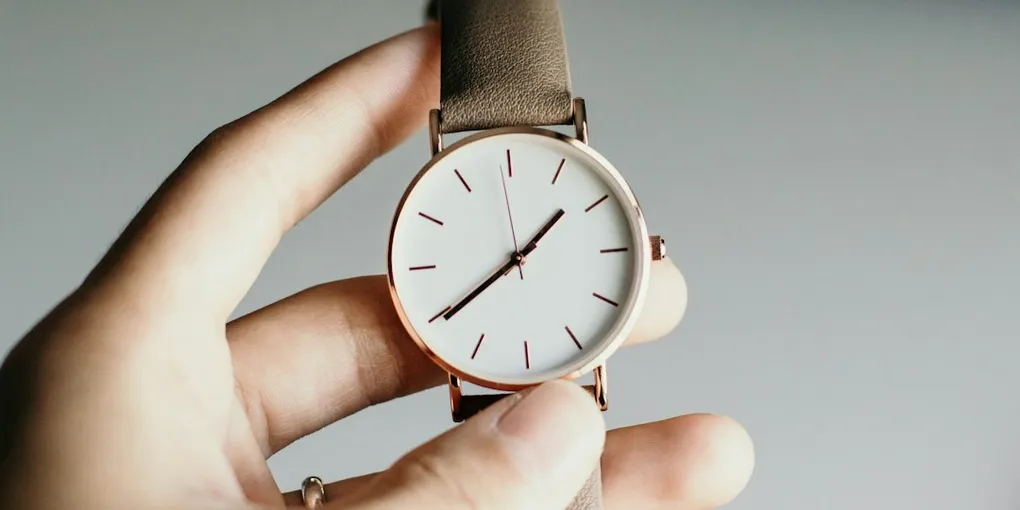
A dress dial should be readable before it is interesting. The classic color choices are white, cream, navy blue, or black. Those shades work with navy, gray, and charcoal suits, and they let the case and strap carry the visual weight. A white or cream dial brightens the watch and pairs easily with brown leather; a navy dial feels slightly more contemporary; a black dial is the most versatile when you want one watch to handle formal and semi-formal occasions.
Legibility comes from contrast, not from size. Thin hands and applied markers can be elegant, but they still need to stand out against the dial. If you cannot read the time in a dim restaurant, the watch fails its main job.
A Plain Dial With Clear Numbers
A plain dial with clear numbers is the ideal layout: no oversized numerals, no busy sub-dials, no racing-inspired fonts. The goal is a dial that looks uncluttered at arm’s length and still legible in low light. When choosing strap color, the dial is your starting point. If you want a deeper explanation of how dial color and strap color interact, this guide to how to choose a watch strap color for your dial covers the pairing logic.
The Strap: Leather Is The Default
Material And Color Options
A high-quality leather strap is the default for a dress watch. Smooth leather—calf, alligator, or shell cordovan—in black, dark brown, or burgundy is the most traditional choice. Those materials and colors age gracefully and look at home with suits, blazers, and even a crisp button-down. The strap should be thin, around 2-2.5mm, subtly tapered from lug to buckle, and stitched minimally. Thick stitching or a padded profile reads casual, while a clean taper keeps the line of the watch elegant.
Leather color should relate to shoes and belt, but it does not need to match exactly. A dark strap is the safest formal choice, while warmer tones feel more relaxed and textured. If your wardrobe leans casual, the same watch on a simpler leather strap can still work with a jacket and open-collar shirt.
Width, Taper, And Stitching
Leather also gives you flexibility. You can swap one strap for another to change the watch’s character without changing the watch itself. Learning how to swap a watch strap in two minutes is a skill worth having if you plan to rotate colors seasonally. Leather is not indestructible, so keep it clean and rotate it if you wear the watch often. A strap that is too wide or too thick will dominate the watch head, so match the strap to the lugs and keep the profile clean.
How The Three Decisions Work Together
The case, dial, and strap should not compete. If the case is on the larger end of the dress-watch range, keep the dial plain and the strap slim so the watch does not read as a sports watch with a leather band. If the dial is dark, a dark strap creates a seamless line; if the dial is light, a warmer strap adds depth without shouting. If the case is precious metal, the strap should feel equally considered—no rubber, no thick nylon, no oversized stitching.
Think of the watch as a single silhouette. If one element is bold, the others should recede. A textured dial can handle a simpler strap; a plain dial can carry a slightly richer leather. A thick case needs a cleaner dial. A small case can handle a bit more presence in the strap without becoming top-heavy.
Fit is the final filter. A dress watch should stay centered on the wrist and slide under a cuff without catching. That means checking lug-to-lug distance, not just diameter. If the lugs overhang your wrist, the watch will look larger than its measurements suggest. If the strap bunches at the lugs, the watch will look smaller and less elegant. Once you know your comfortable range, you can shop by proportion rather than by brand or trend.
FAQ
What Real Watch Shows Classic Dress-Watch Proportions?
The A. Lange & Söhne Lange 1, introduced in 1994, is a German gold-cased manual-wind watch measuring 38.5mm in diameter and 8.9mm thick.
How Thin Does A Proper Dress Watch Need To Be?
A proper dress watch is under 9mm thick. That is stricter than the broader dress-watch ceiling, and it is the figure to aim for if you want the case to disappear under a cuff.
Which Complications Belong On A Dress Watch?
At most, a dress watch should have a second hand and a date window. Anything beyond that starts to pull the design toward a sport or complication watch rather than a formal piece.
Should A Dress Watch Glow In The Dark?
Lume on a dress watch should be barely there or none at all. The dial is meant to be read in normal light, and glowing markers add a tool-watch cue that works against the formal intent.
See how well you know watches with the daily challenge at Watchdle.