How to Choose a Watch for Large Wrists: Case Size and Fit
In this article
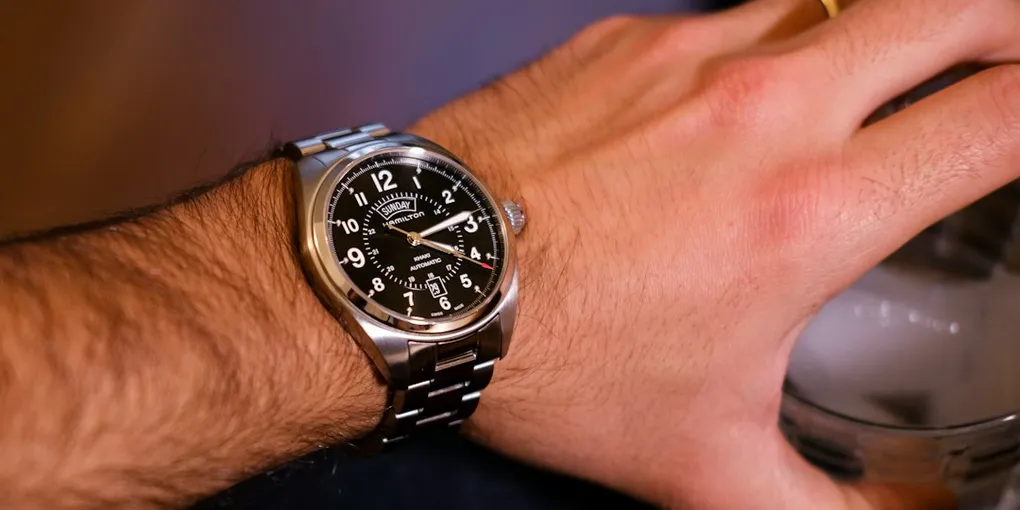
For a large wrist, start with a case diameter around 42–46mm if your circumference is above 7 inches (about 17.8 cm), and consider 44–48mm once you are past 7.5 inches; then let lug-to-lug fit override any diameter chart. The watch is too big if the lugs extend past the top surface of your arm, not merely if the case number sounds large.
Map The Wrist Before You Map The Case
A tape measure is more useful than a spec sheet at the start. Use a repeatable method to measure your wrist properly, because a loose measurement can push you into the wrong size bracket. Measure where you actually wear the watch, not at the narrowest point just because it flatters the number. A 42mm dive case is often suggested for 7–8.5 inch wrists and is especially suited to wrists larger than 7 inches. That puts a common dive-watch size in useful context: it is not automatically oversized on a broad arm, and it can be a sensible daily-wear starting point.
Read Case Diameter In Bands, Not Single Numbers
Diameter is the easiest number to compare, but it works best as a band. A 42mm case sits in the medium/large wrist category rather than the extreme end, which explains why so many all-purpose watches cluster there. Larger arms can carry large watches and deep-water watches well, especially when the design has enough visual mass to balance the wrist. The mistake is choosing a diameter in isolation and ignoring how the case, bezel, and lugs combine on the arm. A 46mm cushion case and a 44mm dress case can wear very differently even when their numbers are close.
Let Lug-To-Lug And Lug Shape Settle The Fit
Two watches with the same diameter can feel completely different because of the distance from one lug tip to the other. Curved lugs hug the arm better than straight lugs, so a case that curves downward can sit more cleanly than a flatter design with the same nominal size. If you want the full geometry explained, the watch size guide covering case, lug-to-lug, and fit is the place to start. On a large wrist, this is where a watch starts to feel like part of the arm rather than a disc balanced on top of it. Pay attention to the underside of the lugs too; sharp edges and a flat profile can make an otherwise good size feel awkward when you bend your wrist.
Balance The Crown, Bezel, And Dial
A broad wrist can handle more visual information than a narrow one. Bold, complex dials such as chronographs and dual-time zones have enough going on to hold their own, and multifunctional or bold dial styles suit larger wrists better than sparse, undersized layouts. A larger crown and robust bezels also add useful presence, especially on a watch meant for daily wear or outdoor use. If you are narrowing the field to a more expensive purchase, choose your first luxury watch with these proportion rules in mind rather than buying the biggest number in the case. Legibility matters as much as drama: a busy dial needs clear hands and markers, or the extra space becomes clutter.
Match Strap Width, Material, And Visual Weight
The strap has to look proportional to the case and the wrist. For large wrists, a strap width of 20–24mm is a practical range, and metal and leather straps both work well when they are substantial enough. A thin strap under a heavy case can make the watch look top-heavy; a flimsy leather band can do the same. A 46mm case paired with a 20mm strap can look pinched, while a 24mm strap gives the watch more visual continuity from case to wrist. Metal bracelets are worth understanding before you commit, because fit is not only about the clasp—correct link count and taper matter. Read sizing a watch bracelet before you shorten or extend anything, and check how to measure strap length for your wrist size if you are ordering leather or a custom band.
Choose A Watch Type That Earns Its Space
Large wrists do not need to be limited to one genre, but some types carry their size more naturally. Large watches and deep-water watches are the obvious matches because their cases, bezels, and crowns are designed to look substantial. A dive watch with a clear bezel and a robust case can look purposeful on a broad arm, while a chronograph or dual-time watch gives the dial enough structure to avoid looking empty. The goal is not to wear the largest watch you can find; it is to choose a design whose details are scaled to your wrist. A substantial steel or leather strap helps finish the job, and a larger crown can make the watch easier to operate without making it look clumsy.
For resizing or swapping a strap, a strap replacement kit covers the basics.
Test The Fit Before You Commit
Try the watch on with the strap or bracelet adjusted to your wrist, then look at it from a few feet away as well as up close. Check how the case sits when your arm is relaxed, how the crown presses against the back of your hand, and whether the lugs feel like they are floating or hugging. Wear it with the sleeve you wear most often; a thick case that catches every cuff will annoy you faster than a millimeter of extra diameter. If you are shopping online and cannot handle the watch first, use screen time wisely: Watchdle’s playable luxury-watch guessing game can help you compare case shapes and dial layouts without spending money. It is not a substitute for a mirror and a tape measure, but it is a useful way to train your eye on proportions.
FAQ
What case thickness should I look for on a large wrist?
A 12–15mm case thickness is the recommended range for large wrists. That range gives a watch enough substance without automatically becoming a cuff magnet. Check the thickness alongside the case diameter, because a deep case can feel larger than its width suggests.
Can a large wrist wear a watch under 38mm?
Yes, but small watches under 38mm offset a large wrist unless you want a classic vintage timepiece look. The fit can still work as a deliberate style choice, especially if the watch is meant to read as a dress or vintage piece. It is less convincing when the watch is simply too small for the arm.
Do metal bracelets make a watch look bigger?
Metal bracelets add extra weight and make a watch look much larger. That can be an advantage on a broad wrist, but it also means bracelet fit matters: excess links and a loose drape make the whole package look bulkier. If you want a more restrained look, leather is the other material specifically recommended for large wrists.
As an Amazon Associate we earn from qualifying purchases.