What Watch To Wear To A Job Interview: Dress Code Guide
In this article
For most interviews, a restrained dress watch with a simple dial, modest case, and leather strap is the safest choice; err slightly more formal than the company norm.
The watch is a small detail, but interview attire is a signal. Hiring managers and recruiters read the whole package, and a watch that clashes with the environment can distract from your answers. The fix is not to buy something flashy. It is to read the dress code first, then choose a watch that supports it.
Match The Watch To The Stated Dress Code
Business Formal: Law Firms, Investment Banks, And C-Suite Roles
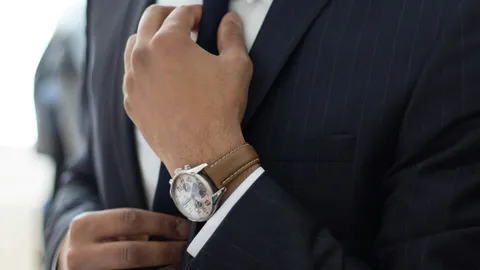
Business Formal typically appears in law firms, investment banks, and C-suite executive roles. Suit colors for this tier are navy, charcoal, or black. A crisp white or pale blue dress shirt works, or a tailored blouse. Shoes should be polished leather oxfords, loafers, or closed-toe heels. Within that framework, a watch should stay quiet. A slim dress watch on a leather strap is the natural companion; for more pairing detail, see what watch to wear with a suit. Avoid the urge to make the watch the loudest part of your outfit.
Business Professional: Corporate Offices, Financial Services, Government Agencies
Business Professional covers corporate offices, financial services, and government agencies. Acceptable accessories in this environment include a watch and small earrings. That makes a watch a safe accessory, but not a free pass for a bulky sports piece. If your collection has a dress piece and a sport piece, a dress watch versus sport watch comparison can help you decide which one to keep for interview days. The general rule: understated wins.
Business Casual And Smart Casual: Where A Casual Watch Can Fit
Business Casual is common in mid-size companies, marketing agencies, account management, and HR. Accessories can include a casual watch and understated jewelry. Smart Casual appears in tech startups, creative agencies, and early-stage companies. Here you have more room, but the interview is still a formal exchange. A clean field watch or a simple three-hander can work. If you are unsure about proportions, how to choose a dress watch: size, dial, and strap is a useful checklist.
Two Watch Archetypes That Rarely Fail
Gold-Tone Minimalism: Daniel Wellington
Daniel Wellington watches follow a classic dress watch style. A representative model has a black dial, gold baton indices, gold hour and minute hands, and a gold-coloured stainless steel case. That combination is legible and restrained. It pairs easily with navy, charcoal, or black, and it does not demand attention. If you want an affordable dress watch with a similar intent, an Orient Bambino guide explains why that model has earned a following.
Eco-Drive Practicality: Citizen Ladies’ Model
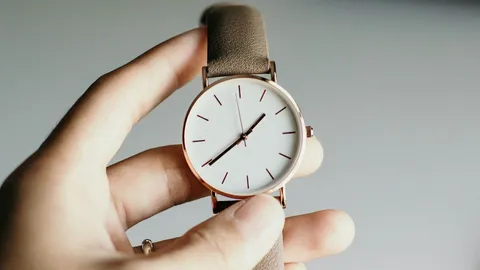
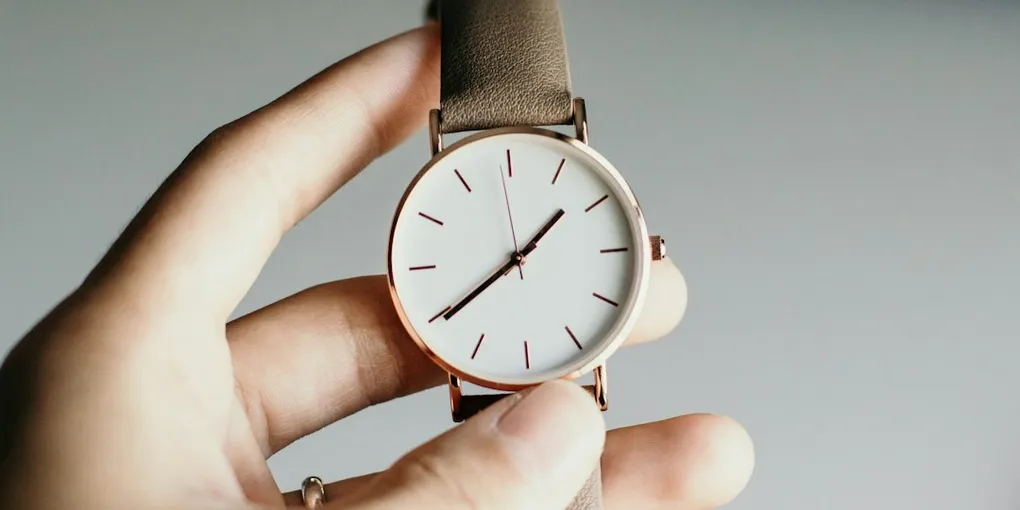
A Citizen ladies’ model offers a different route. It has a white dial, rose gold hands, baton indices, a date aperture at 3 o’clock, and a mineral crystal. Its technology is Eco-Drive, which draws power from all sources of light and keeps running as long as the watch has light. For an interview, that reliability matters. You do not want to notice a dead battery on the way in. If you are weighing movement types, automatic versus quartz: the real difference puts the choice in context.
For resizing or swapping a strap, a strap replacement kit covers the basics.

Expensive Watches And The Interview Room
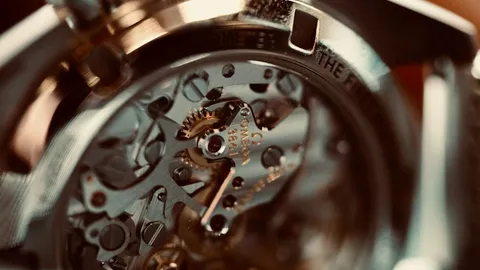
Price does not make a watch appropriate for an interview. A Seamaster Planet Ocean 600M SS Black Dial costs $5,900. A 3940R Perpetual Calendar 18K Rose Gold Silver Dial costs $99,500. A WHSA0015 Santos de Cartier Skeleton SS Skeleton Dial costs $21,900. A Laine V38 SS Salmon Guilloche Dial costs $15,390. Each is a serious watch, but a skeleton dial, a large dive case, or a precious-metal perpetual calendar can become a conversation piece. In an interview, you want the conversation to be about your work. If you already own one of these, wear it only if it disappears under a cuff and does not pull focus. If you want to sharpen your eye for silhouettes before choosing, the daily guessing game at Watchdle is a low-pressure way to study shapes.
Details That Keep A Watch In The Background
A few practical details matter more than brand. First, the case should fit your wrist and slide under a shirt cuff without catching. Second, the strap should not fight the rest of your outfit. Third, the dial should be easy to read at a glance. A simple three-hander with baton indices or a clean date window is usually safer than a busy chronograph or a luminous dive bezel. Finally, set the time accurately and make sure the crystal is clean. These are small moves, but they signal care.
When The Dress Code Is Not Clear
If the company does not publish a dress code, aim one notch above what you expect. The numbers support that approach: 75% of employers prefer candidates who dress slightly more formally than the company norm. A navy or charcoal suit with a white or pale blue shirt remains a reliable baseline for many interviews. A watch in polished steel or a warm metal tone, with a plain dial and a leather strap, fits that baseline. If the office is clearly casual, you can still wear a simple watch; you just have more freedom on the strap and case finish.
Watch Etiquette During The Interview
Keep the watch on your wrist and leave it alone. Checking the time during an interview can read as impatience, even if you are only nervous. If you need to track time, do it before you enter and rely on the room. A watch is a quiet accessory, not a prop. Do not twist it, tap the crystal, or use it as a fidget item. For candidates who wear bracelets, keep metal from clinking against a desk. A leather strap or a tight-fitting bracelet avoids that distraction.
A Simple Decision Framework
Start with the dress code: Business Formal, Business Professional, Business Casual, or Smart Casual. Then choose the watch that sits closest to the formal end of that category without looking out of place. A classic dress watch is the default for interviews in finance, law, government, and corporate roles. A casual watch can work in a startup or creative agency, but keep the dial clean and the case modest. If you own both a dress watch and a sport watch, the dress option is usually the safer pick. If you only own a sport watch, choose the simplest version you have.
FAQ
How quickly do hiring managers form an initial impression?
Hiring managers can form an initial impression in seven seconds and may make a hiring decision within the first five minutes of an interview. That short window is why your overall presentation, including your watch, should be settled before you walk in.
What percentage of candidates are rejected for inappropriate dress?
About 25% of candidates are rejected partly because of inappropriate dress, and 71% of employers say they would not hire someone if the dress code is violated. These figures make conservative choices the safer path.
Which watch brands does Chris Salih mention as tasteful options?
Chris Salih, Vice President at J.P. Morgan Chase and founder of @watchchris, has mentioned JLC, IWC, and Seiko as tasteful options. His typical interview watch is a classic dress watch.
What colors work best for finance and law interviews?
In finance and law, 37% of employers still expect ties, and the best colors are navy, charcoal, and black. A watch in steel or a restrained gold tone fits those colors without competing with them.
As an Amazon Associate we earn from qualifying purchases.