Why Dive Watch Bezels Have A Pip At 12 O’Clock
In this article
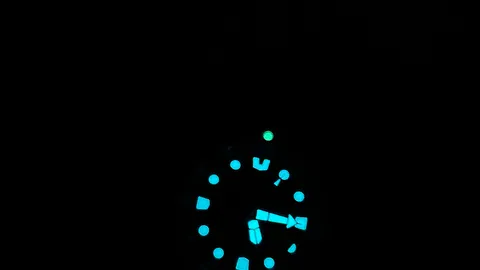
The pip at 12 o’clock is a dive bezel’s zero point. A diver lines it up with the minute hand at the start of a dive, and the rotating scale then shows elapsed minutes. Its glowing triangle matters because that single mark must remain legible when the rest of the bezel is just a printed scale.
Zero point on a rotating minute scale
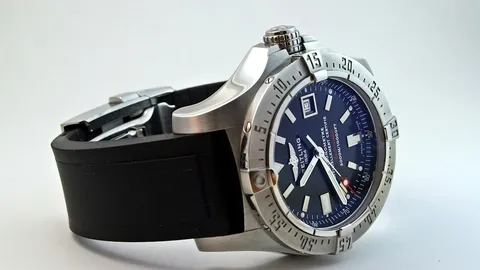
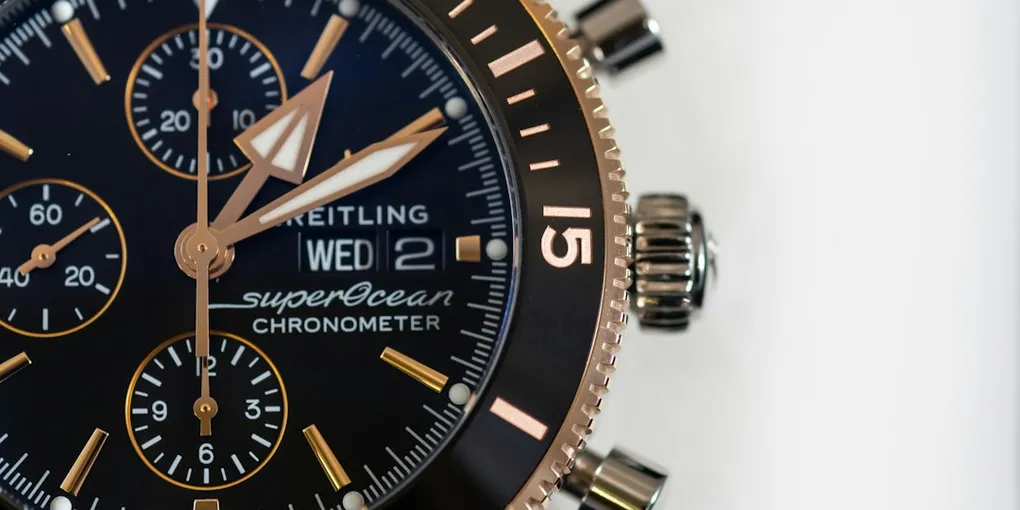
A dive watch bezel is a unidirectional rotating timing bezel, not a decorative ring. Unidirectional dive watch bezels turn one way for a reason, but the pip’s job is to give the scale a beginning. Its minutes run from 0 to 60 starting at 12 o’clock, increasing clockwise. In neutral, the pip is simply the top index: calm, obvious, and waiting to be moved. That position can look like a mere orientation mark, yet on a dive bezel it is a reset point. Without a distinct top mark, a diver would have to count from an ordinary printed marker in poor visibility—an unnecessary task.
Triangle, lume, and alignment
The pip is usually a triangular marker with a luminous insert. A triangle points, and a point is easier to align with a hand than a dot or line; once the bezel rotates, its tip becomes the anchor for timing. The procedure is direct: bring the pip to the hand, and the bezel becomes a timer. The diver need not remember a number or start a chronograph, because the wrist holds the start point while the hand shows progress. This guide to how to use a dive watch bezel properly walks through the mechanics; the essential relationship stays pip first, hand second, elapsed minutes third. Modern X1-grade Super-LumiNova gives sufficient legibility for that pip, not to make the whole bezel glow like a torch. The mark must be readable when the diver checks elapsed time. A luminous triangle at 12 can be found quickly even when surrounding print fades into shadow. The rest of a bezel often relies on high-contrast print rather than glow, because not every numeral needs reading in the dark. The pip is the exception. When materials age or fade, as on many bezel inserts, a discolored scale is one thing; a missing origin is another. The article on why watch bezels fade explains material changes, but the design logic stays constant: the start reference must remain readable.
Reading elapsed minutes and why direction matters
The bezel is set by bringing the pip to the hand. It is designed to stay where put: it cannot be nudged backward by accident or turned the wrong way to fake a shorter or longer interval. After alignment, the hand continues; the bezel stays fixed. The growing distance between hand and pip is the dive time, so a diver can see at a glance whether thirty minutes have passed or it is time to begin the ascent. No mental arithmetic, menu, or battery—just a hand, a pip, and a scale that cannot lie about direction. Underwater, the only number that matters is that pip, because the question is not “What time is it?” but “How long has it been since I started?” A purpose-built dive watch may carry many markings, but the pip is the reference that turns the watch into a timing instrument. That principle sits behind much of what the standards behind dive watch construction try to protect.
Neutral role and tool-watch design
In neutral, the pip sits at 12 and is merely a minute marker; it does not announce a dive or count anything. That dual role is elegant: the same triangle can be an ordinary 12 o’clock marker during daily wear and a critical timing reference once rotated. There is no mode switch, crown position, or complication to engage—the user changes its meaning by changing its position. That is why enthusiasts often check the pip first on a dive watch: its shape, lume, and alignment with 12 reveal whether the bezel was designed as a tool or as a costume. A daily game such as Watchdle can sharpen that eye by forcing you to notice small visual clues, but the real lesson is on the wrist: a dive bezel is a measurement device, and the pip is its origin.
FAQ
Why does the bezel rotate to the left to meet the minute hand?
It is turned left until the pip meets the hand; because the bezel cannot drift backward, that set point stays fixed while the hand advances.
What does the pip do when no dive is being timed?
It serves as a fixed 12 o’clock index and does not count anything until the bezel is rotated.
Which mark on the bezel actually matters underwater?
The pip, since the useful reading is the gap between it and the advancing hand.
Do all luminous bezel markings glow in the dark?
No. Aquastar bezels use lumed pips; the rest of the disc is high-contrast print.