Unidirectional Dive Watch Bezels Why They Turn One Way
In this article
- Why One Direction Beats Two
- What A Bump Underwater Is Supposed To Do
- Elapsed Time, Not Depth
- Marking The Start
- Where Rotating Dive Bezels Came From
- Human Factors And Gloved Hands
- Why The Safe Failure Mode Still Matters Today
- What The Bezel Cannot Do
- Planning Around The Insert
- Backup Alongside Dive Computers
- FAQ
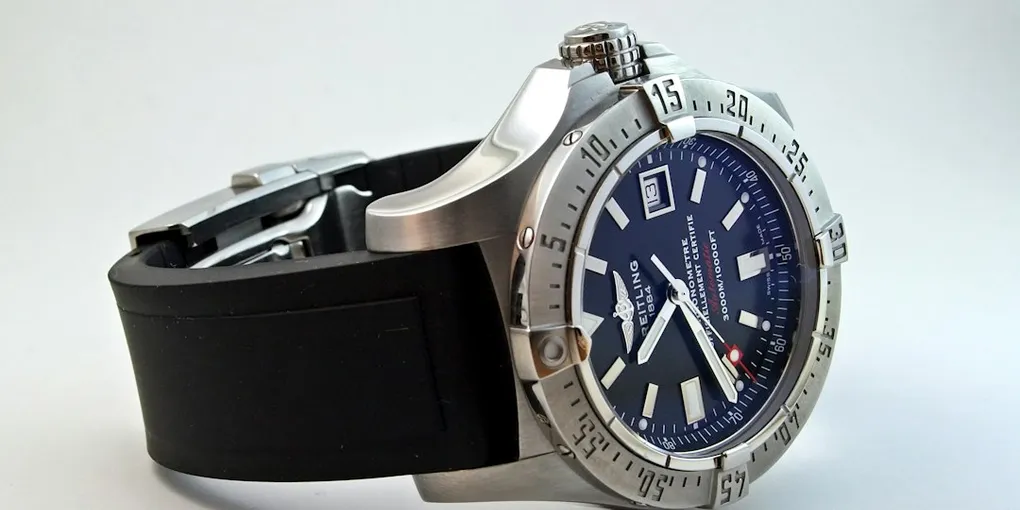
A unidirectional dive bezel turns counterclockwise only, so an accidental turn cannot fool a diver into believing more bottom time remains—the one-way motion removes the risk of reading the scale in the unsafe direction.
Why One Direction Beats Two
A bezel free to turn both ways could fail badly during a routine knock. An impact might shift the elapsed-time mark so the diver reads less time than has actually passed, which inflates the perceived gas allowance at the exact moment it should shrink. A unidirectional insert accepts only the safe failure mode: motion is limited to the direction that shortens apparent remaining allowance, never the direction that invents extra minutes. The quality of the case, strap, or crystal does not change that logic; the safety comes from deleting the opposite rotation entirely. A bidirectional ring could also be nudged by a suit cuff, a cave line, or a tank valve and then left in a misleading position. With one-way rotation, every accidental movement errors toward a shorter remaining allowance, so the diver is more likely to ascend with gas still in reserve.
What A Bump Underwater Is Supposed To Do
If the ring is struck below the surface, the design makes the diver surface sooner than planned, never beyond the capacity of their tank. That preferred accident beats the alternative: a diver who assumes the bezel has not moved may stay until the actual gas reserve is critically low. Blocking an accidental extension of dive time also reduces the risk of decompression sickness. Surfacing early consumes gas and schedule; misjudging remaining bottom time can consume much more. The safety effect exists because the only legal rotation moves the indicator in the direction that shortens, not lengthens, the apparent time left. A diver who trusts a bumped bezel without checking the plan is trusting a failure mode rather than an instrument.
Elapsed Time, Not Depth
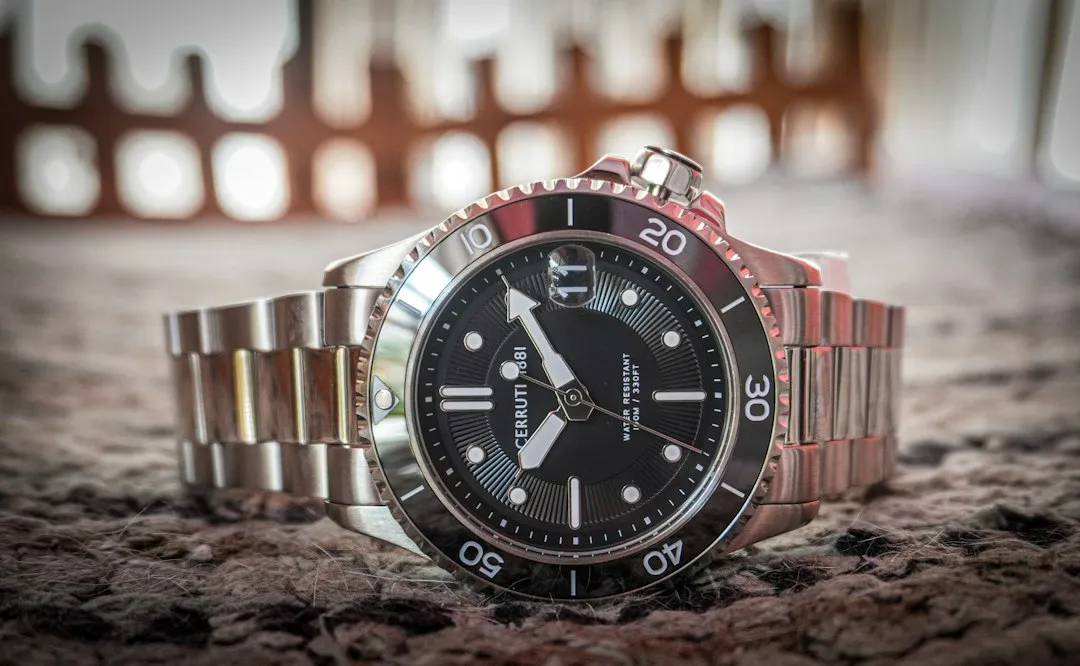
The insert measures how long a diver has been underwater; it does not measure depth. Depth belongs to gauges and pressure sensors, while the bezel turns minutes into a visible countdown against the minute hand. That distinction matters because water-resistance ratings are laboratory pressures, not guarantees about actual diving depth (Water Resistance Ratings: Lab Pressure, Not Diving Depth). A case can survive lab pressure without being suited to every profile the bezel might time. Depth changes with the bottom contour and the dive plan, whereas elapsed time is the same for everyone on the same descent. The bezel therefore answers a different question than a depth gauge: not how far down, but how long since the descent began.
Marking The Start
To read more about the story behind watches, try a watch history book.
Before descending, the diver aligns the zero marker with the minute hand. As time passes, the hand indicates elapsed minutes on the insert, telling the diver when to begin ascent without checking a separate timer. The zero marker is the reference point, so the bezel only works if it was set correctly at the start. Learning the correct starting position is worth the effort (how to set a dive watch bezel properly). The same visual check appears in the daily Watchdle game (https://watchdle.com/play/), where a diver dial is the daily puzzle. A bezel read without a known starting alignment is just a ring of numbers.
Where Rotating Dive Bezels Came From
The feature arrived with early purpose-built diving watches as sport diving grew, and it has stayed on tool watches ever since (The Birth Of The Dive Watch). Current models are still measured against diver-watch standards that separate real-world use from laboratory tests (ISO 6425: The Standard Behind Dive Watches). Inserts have been made in different materials and colors over the decades, but the reason for one-way rotation remains unchanged. Early sport divers had less equipment redundancy than divers do today, so a simple timing ring carried outsized importance. The insert gave a visual limit that did not depend on batteries, radios, or surface support.
Human Factors And Gloved Hands
Divers often wear thick gloves and move in limited visibility, so fine adjustments are difficult and bumps are easy. A unidirectional bezel usually resists casual turning until deliberate pressure is applied, but it cannot stop every impact. What it can stop is a silent change in the wrong direction. If a gloved hand catches the ring, the allowed motion still pushes the indicated time toward the conservative side. That tactile boundary matters more when a diver cannot easily look at a computer or gauge and must rely on the bezel at a glance.
Why The Safe Failure Mode Still Matters Today
Training and limits have changed since the earliest sport dives, but breathing gas is still finite and an ascent still carries risk. A bezel that erred in the dangerous direction would quietly undermine every plan made on the surface. Because the insert can only rotate one way, an accidental strike cannot secretly extend the dive; it can only suggest that the dive is already over. The argument for unidirectional rotation is simply that the bezel fails toward the surface, not toward the bottom.
What The Bezel Cannot Do
A timing insert cannot measure nitrogen loading, warn about currents, or replace a dive plan. It shows elapsed minutes and nothing more, so a diver must still track depth, gas, and no-stop limits by other means. Relying on the bezel alone would ignore everything else that determines whether a dive ends safely. The unidirectional feature protects one variable—elapsed time—while the rest of the system handles the rest.
Planning Around The Insert
Because the bezel moves only one way, an unexpected change is treated as a reason to end the dive, not to distrust the instrument. The insert does not adjust for depth, temperature, workload, or breathing rate; it only counts minutes against the plan made before entry. A careful diver pairs the bezel with planned turn times, gas checks, and an ascent schedule so no single knock can override the whole strategy. The bezel is a limit, not a target: reaching the marked minute does not mean the diver must stay until that point, only that the option to continue is ending.
Backup Alongside Dive Computers
Modern divers often carry computers that track time, depth, and decompression in real time, but the bezel remains a mechanical fallback. Electronics can fail, screens can fog, and batteries can die; a metal insert needs none of those. The unidirectional rule still applies even when a computer is on the wrist, because the bezel is the part most likely to be struck and the part that must fail safely. Using both tools means the computer handles detail while the bezel guards against the worst accidental reading.
FAQ
What was the original purpose of a rotating dive bezel?
It tracked bottom time, meaning the total time spent underwater.
Why did early divers need that particular reminder?
It warned them not to exceed their diving time limit when breathing from a limited oxygen supply.
When did rotating bezels first appear on dive watches?
They were introduced in the early 1950s, alongside the then-new sport of SCUBA diving.
What markings are typical on the bezel?
It usually carries minute indicators, often from 0 to 60.
As an Amazon Associate we earn from qualifying purchases.