Tudor Black Bay History: The Full Evolution
In this article
The Tudor Black Bay launched in 2012 as the Heritage Black Bay, first reference 79220R with a burgundy bezel, and it became Tudor’s modern reinterpretation of its Submariner past. It later grew into a collection with a blue bezel reference and a Tudor manufacture calibre.
The 2012 Debut and the Heritage Name
The earliest Black Bay was not simply called Black Bay; it arrived under the Heritage Black Bay name. That word “Heritage” was doing real work. It told buyers that the watch was connected to Tudor’s dive-watch history, while the reference number 79220R and its burgundy bezel gave the model a specific identity. Burgundy was a bold choice for a first outing. It was not the default black that many dive watches wear, and it was not a safe navy. It made the Black Bay instantly recognizable and gave the collection a color signature that later references could play against. The watch’s success also showed that Tudor could mine its own archive without creating a literal replica. The formula was simple on paper: take a familiar dive-watch silhouette, add historical details, and present it with modern reliability. In practice, the Black Bay had to feel coherent rather than assembled from spare parts. That is where its design references mattered.
Submariner DNA: Snowflake Hand, Markers, Crown
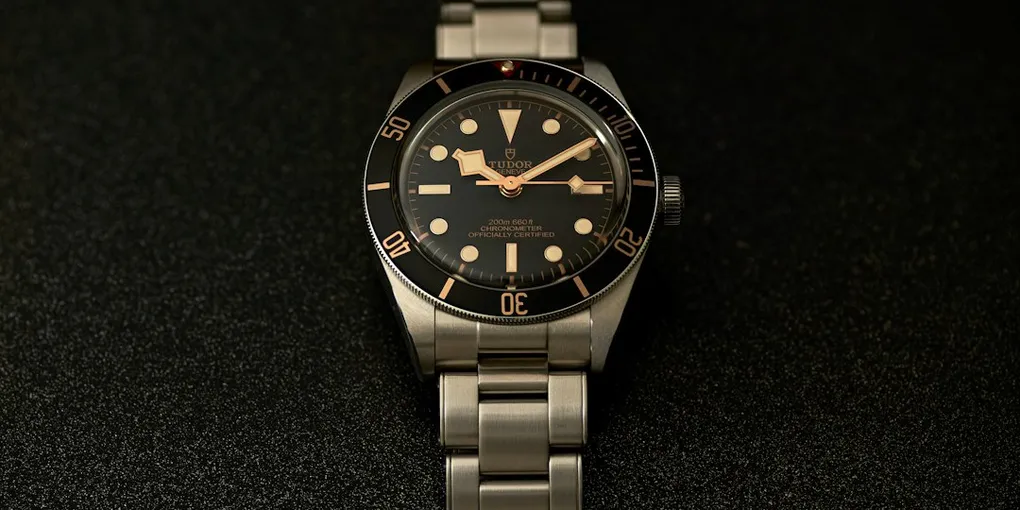
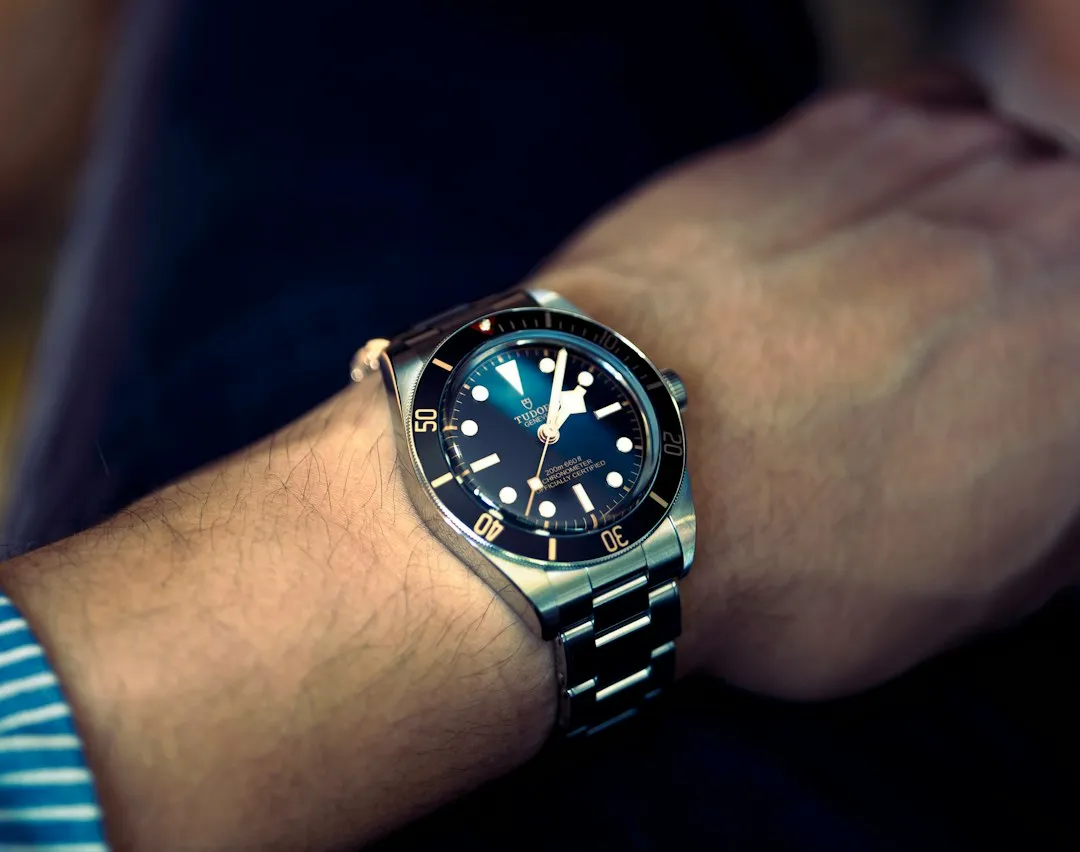
The Black Bay’s most obvious historical link is the snowflake hour hand, which comes from Submariner Ref. 7016 from 1969. That hand is broad and blocky, with a shape that makes the time easy to read at a glance. It is also deeply associated with Tudor’s dive watches, so putting it on the Black Bay was a direct statement of intent. The geometrical hour markers come from Tudor Submariners that were on the market in the 1960s and 1970s. Those markers give the dial a clean, functional rhythm. They are not overly ornate, and they do not try to turn a tool watch into jewelry. Then there is the large screw-down crown with the engraved Tudor rose emblem, a detail introduced on the 1958 “Big Crown” model. That crown is both practical and symbolic. It offers a substantial grip for setting and winding, while the rose marks the watch as a Tudor in a way that is more expressive than a simple text logo. Together, the hand, markers, and crown form a kind of visual shorthand. A collector can spot the Black Bay from across a room because those elements are doing exactly what they were designed to do: communicate legibility, history, and brand identity. For a wider view of how dive watches moved from tools to icons, see the dive watch’s journey from tool to icon.
2013: A Blue Reference and an Award
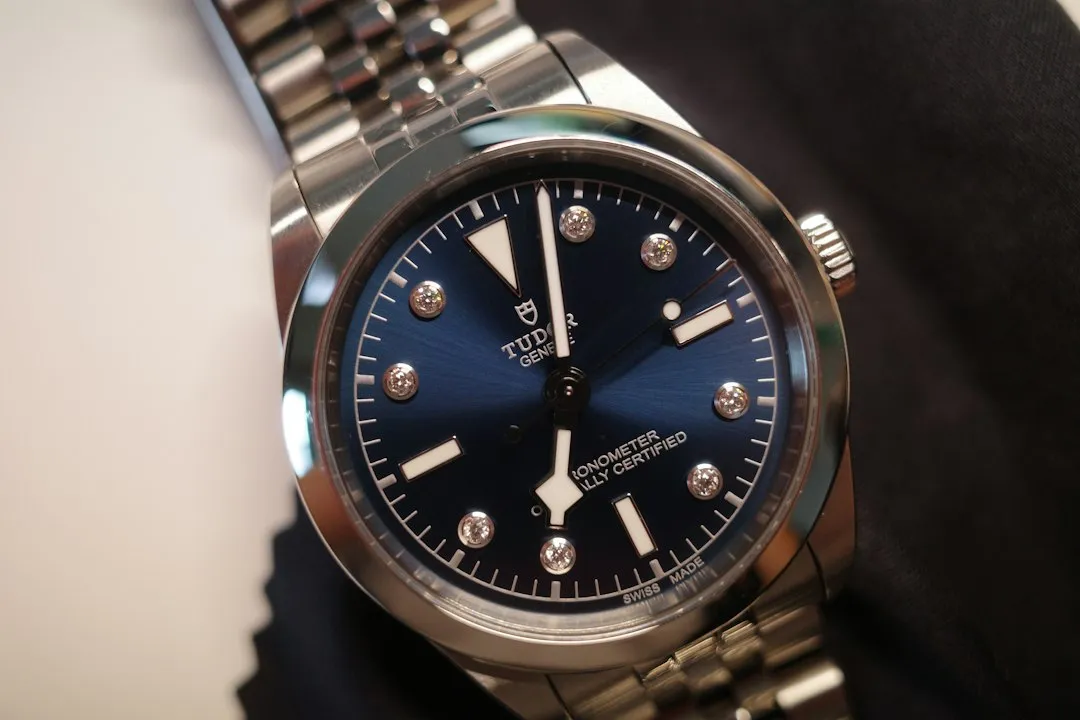
Tudor added Ref. 79220B in 2013, and that version wore a dark blue bezel. The move made sense. The original burgundy had established the line, but a second color gave buyers a choice and showed that the Black Bay was becoming a collection rather than a single model. The same year, the Black Bay won best “Revival” at the Grand Prix d’Horlogerie de Genève. The award was a notable endorsement for a watch that was not a strict re-edition. It suggested that the jury valued the way Tudor had translated older ideas into a contemporary product. The blue reference also changed the mood of the watch. A dark blue bezel can feel more subdued than burgundy, and it pairs easily with different straps and dial details. Between the two, Tudor had already established a pattern: one reference could be warm and distinctive, another cooler and more classic, and both could share the same core design language.
From ETA 2824 to Tudor Manufacture Calibre
The first Black Bay ran on an ETA 2824. That movement beat at 28,800-vph and carried a 38-hour power reserve. Those specifications were familiar and proven, which suited a watch that was reintroducing a historical look. But Tudor did not stay still. The brand’s first manufacture movement, Caliber MT5621, launched in 2015. In 2016, the Black Bay received the Manufacture Calibre treatment, with movement manufacturer TUDOR. That transition was significant. It moved the collection from an outsourced movement to one made by Tudor itself, and it gave the Black Bay a stronger technical story to match its historical one. For buyers who care about what is inside the case, the change turned a retro-styled watch into a more vertically integrated product. It also created a clear dividing line between early and later Black Bays. The outside remained recognizable, but the engine changed. To understand how such movement choices fit into the wider landscape, this explanation of how movement types differ is helpful.
Testing and Modern Credibility
The Black Bay is tested by the Federal Institute of Metrology or METAS. That detail matters because it adds an independent layer to the watch’s performance claims. A dive watch can look the part and still fall short in timekeeping, so external testing gives buyers a reason to trust the specification beyond the marketing copy. It also fits the Black Bay’s position in Tudor’s lineup. The watch is vintage-inspired, but it is not a fragile tribute piece. It is built to be worn, and the testing process reinforces that intent. For a collection that began as a nostalgic exercise, the presence of third-party verification shows how far the Black Bay has traveled from its first reference. The design still references the past, but the standards are modern.
Why the Black Bay Matters
The Black Bay’s history is short compared with many dive watches, but it is unusually concentrated. In a few years, it went from a single Heritage Black Bay reference with a burgundy bezel to a broader collection with different colors, a Tudor manufacture calibre, and independent testing. That speed helps explain its impact. It arrived at a moment when many buyers were looking for vintage-inspired dive watches that could handle daily wear. The Black Bay offered recognizable historical cues—snowflake hand, geometric markers, big crown—without asking owners to baby a vintage piece. It also benefited from Tudor’s ability to tell a story that felt authentic rather than borrowed. The name Heritage Black Bay, the first reference 79220R, the blue 79220B, the ETA 2824, the MT5621, and the METAS testing all form a chain of development. Each step added something without erasing what came before. If you enjoy identifying references by bezel color, hand shape, and movement era, Watchdle offers a quick way to test that knowledge.
A Collection Built on Specific References
The Black Bay is often discussed as a single design, but its history is really a series of specific references and changes. The 79220R established the burgundy bezel. The 79220B brought dark blue. The early ETA 2824 gave way to the Manufacture Calibre treatment. The snowflake hand and geometric markers kept the dial tied to Tudor Submariners from the 1960s and 1970s, while the crown linked back to the 1958 “Big Crown” model. Even the collection’s original name, Heritage Black Bay, tells you that the past was always part of the plan. That is why the watch has such a clear identity. It is not a generic dive watch with a retro dial. It is a deliberate remix of Tudor’s own history, updated with modern movement making and testing. For anyone exploring the broader dive-watch world, what actually matters in a dive watch provides useful context, and a detailed Black Bay review can help separate the references from the hype.
FAQ
What movement powered the first Black Bay?
The first Black Bay used an ETA 2824. That movement ran at 28,800-vph and had a 38-hour power reserve.
When did Tudor launch its first manufacture movement?
Tudor’s first manufacture movement was Caliber MT5621, launched in 2015. The Black Bay received the Manufacture Calibre treatment in 2016, with movement manufacturer TUDOR.
What was Ref. 79220B?
Ref. 79220B was released in 2013 and wore a dark blue bezel. It followed the original burgundy-bezel reference and gave the collection a second color option.
What award did the Black Bay win in 2013?
The Black Bay won best “Revival” at the Grand Prix d’Horlogerie de Genève in 2013. The award recognized its approach to reviving historical design cues.
Think you know your watches? Test yourself in today’s challenge at Watchdle.