Panerai Radiomir Black Seal: The Full History
In this article
In 2007, Panerai dropped the Radiomir Black Seal, officially cataloged as reference PAM 183. This was not a fragile dress piece meant to hide under a pristine shirt cuff. It was a massive, forty-five millimeter chunk of polished steel styled after the military divers Panerai built for the Royal Italian Navy back in the nineteen-forties. By two thousand seven, the brand was firmly entrenched in its modern luxury era under Richemont ownership, but the Black Seal proved they could still build a watch with genuine tool-watch grit. It stripped away the crown-protection bridge of the Luminor and returned to the clean, wire-loop lug architecture of the original nineteen-thirties prototypes.
The name Black Seal carries actual history. During World War Two, the Italian Navy used human torpedoes officially known as Siluro a Lenta Corsa. The commandos who rode these underwater craft were nicknamed Gamma group, but they wore a patch featuring a black pig and earned the moniker Black Seals. Panerai revived this dark, utilitarian aesthetic for a watch that wore its military lineage on its sleeve. If you wanted a Panerai that connected directly to the vintage Frogmen without the chunky modern crown guard, the Black Seal was the exact ticket.
The Case and Dial Architecture
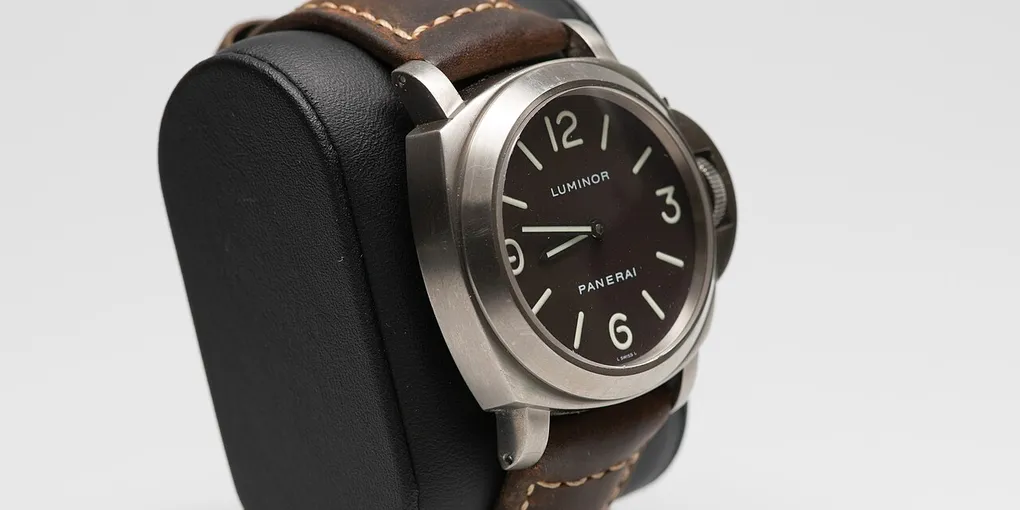
The PAM 183 utilizes a cushion-shaped 316L stainless steel case measuring forty-five millimeters across. On paper, that sounds absurdly large, but the lack of a traditional case flank and the downward sweep of the wire-loop strap attachments make it wear far smaller than the numbers suggest. Those wire lugs are a direct nod to the reference 3990 and other early Radiomirs, screwed directly into the case flanks. You need a tiny screwdriver to change straps, which is a minor annoyance you gladly forgive once the watch is on your wrist.
The dial is a classic sandwich construction. Panerai takes a top metal plate with cut-out numerals and hour markers, then layers it over a bottom disc coated with luminous material. This creates actual physical depth that flat-printed dials simply cannot match. The sub-seconds dial sits at the nine o’clock position, balancing the large, blocky vintage-style numerals at twelve, three, and six. The typography is clean and sparse, featuring just the vintage-style Radiomir Panerai text up top and the Black Seal designation down below. There is no date window to ruin the symmetry.
Inside the Oyster: The Caliber OP XI
Flip the watch over, and you get a sapphire display back showing off the hand-wound Caliber OP XI. Underneath the custom Panerai-engraved bridges, this movement is actually built on the ETA Unitas 6497-2 architecture. Purists sometimes scoff at using an ETA tractor, but the 6497 is a bulletproof pocket watch movement designed to take a beating and keep on ticking. It beats at 21,600 vibrations per hour and packs a healthy 56-hour power reserve.
As a daily wearer, this mechanical setup forces you to slow down. You have to wind the watch every couple of days, feeling the resistance build in the crown as the mainspring tightens. The lack of a rotor means the display back gives you an unobstructed view of the gears and the swan-neck regulator. It is an honest, utilitarian movement that is easy to service by almost any competent watchmaker on the planet, which is a massive plus for a piece you actually intend to wear while doing real work.
Living With a Forty-Five Millimeter Cushion Case
Wearing a Radiomir Black Seal on a daily basis requires a bit of confidence and a wrist that can handle a forty-five millimeter footprint. Because the case is fully polished, it acts like a magnet for hairline scratches and fingerprints. Within a week of normal desk diving, your pristine mirror finish will show the scars of living. Do not panic about this. A polished Radiomir looks infinitely better once it picks up a few honest bumps and bruises. It shifts from a jewelry store piece to a rugged tool watch with character.
The watch pairs brilliantly with thick, distressed leather straps. The standard equipment usually included a black calfskin strap with a large steel pin buckle, but the PAM 183 is a strap monster. Swapping the factory leather for a rugged brown ammo pouch strap completely changes the vibe, making it lean hard into its military origins. It slides under a jacket cuff if you wear it with tailoring, but it truly shines with a heavy sweater or a simple t-shirt where the massive cushion case can do all the talking.
Play today’s watch at .