Sapphire or Mineral Crystal? How to Tell What You Have
In this article
The only dependable way to confirm a sapphire crystal is to check the manufacturer’s official specifications for your exact model or reference number — if the paperwork says “sapphire crystal,” you can stop guessing. As a quick check at home, the water-drop test is the most useful hint: a drop that holds itself together suggests sapphire, while one that flows and spreads suggests mineral glass.
Three Crystals, One Little Window
Beneath the dial, a watch carries one of three materials. Sapphire is a very hard synthetic crystal, grown from synthetic corundum. Mineral glass is exactly what the name implies: hardened glass. Acrylic is a plastic material, and it rates only about 3-4 on the Mohs hardness scale, which makes it soft and prone to scratches. Yet acrylic keeps one virtue the harder options lack — it is much less likely to shatter upon impact than mineral glass or sapphire, which is why some fans of vintage pieces still defend it.
The industry’s preferences shifted over a couple of decades. Sapphire became increasingly common during the 1970s and 1980s, quickly replacing acrylic — first as the norm for luxury watches, then for most of the watch industry. Today it is the preferred material almost everywhere, which is precisely why so many owners of mid-range and older watches want to know what they actually have. If you’re curious why brands pay up for it, our article on why watches use sapphire crystal digs into the cost side.
Why Your Eyes Alone Can’t Settle It
Separating acrylic from glass is easy enough — plastic looks and feels like plastic. Telling mineral from sapphire by sight is another matter entirely: the two are much more difficult to identify with just an eye test, and to most people they look nearly identical. The shape of the crystal doesn’t help either, because a flat, domed, or boxed profile is not proof of the material underneath.
One popular clue misleads people constantly. Tilt the watch under a flashlight and a blue or purple reflection may indicate an anti-reflective coating — but a coating does not prove sapphire, since these treatments can also be applied to mineral crystals, and some sapphire crystals show little or no visible color reflection at all. There’s a whole invisible layer of engineering hiding there; our piece on anti-reflective coating explains what it does.
Crystal sleuthing joins a family of similar detective work, by the way — checking whether a watch is magnetized follows the same logic of reading indirect clues instead of opening the case.
The Water-Drop Test, Done Properly
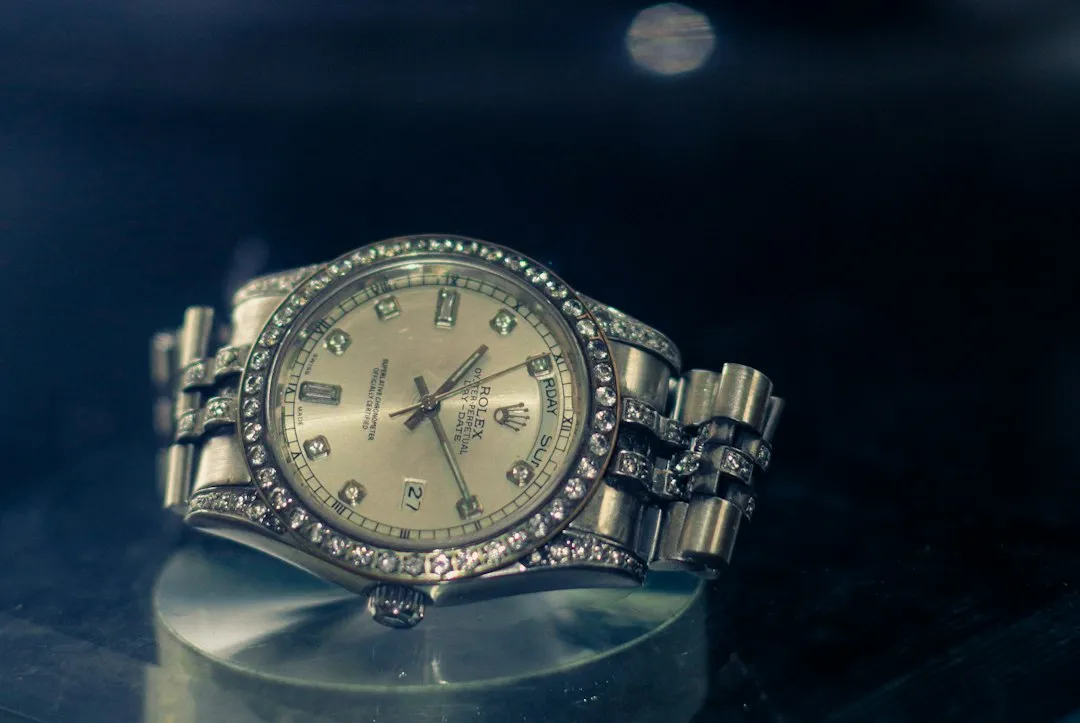
This is the home test worth actually performing. Place a small drop of water on the crystal and watch it. On sapphire, the droplet maintains its shape and may bead even more tightly, almost like water on a freshly waxed car. On mineral glass, the drop loses that tension, spreads out, and wets the surface.
The catch is contamination. Oils, dirt, and coatings all affect beading, so a fingerprint or a greasy film can make sapphire act like mineral and the other way around. Clean the crystal thoroughly first — warm water, a gentle wipe, fully dry — and repeat the test a couple of times before drawing any conclusion. Even then, treat the result as a strong hint rather than a verdict.
What a Fingernail Tap Tells You
The second classic test costs nothing: gently tap the crystal with a fingernail and listen. On mineral glass the sound tends to come back high-pitched; on sapphire it comes back lower and more solid, like tapping a thicker pane. Anyone who has handled a lot of watches starts to hear the difference without thinking about it.
The honest caveat: sources disagree on which pitch actually indicates sapphire, and everyone’s ears and nails differ. Use the tap to corroborate the water test, never to overrule a spec sheet.
Reading the Spec Sheet Like an Insider
Here is the hierarchy of evidence, clearly ordered: checking the manufacturer’s official specifications for the exact model or reference number is the most reliable method there is. Brands that fit sapphire almost always state it, and a specification reading “sapphire crystal” usually refers to solid synthetic sapphire through and through.
Spec-sheet language rewards close reading, which is also the exact muscle a good guessing game trains — the daily one at Watchdle hands you a mystery watch and lets the listed details argue the case. Reading listings carefully matters just as much when buying: a seller’s “sapphire” claim means little without the reference number to back it.
What Scratches Do and Don’t Prove
Sapphire’s reputation for toughness is deserved — it is very difficult to scratch, highly scratch-resistant but not impossible to damage. Resist the urge to test it with a key or a coin; that’s how good crystals get ruined over folklore. If a watch has logged years of daily wear with a flawless crystal, that quiet record says more than any party trick.
For a structured comparison of how the two materials behave under abrasion, our sapphire vs mineral scratch test lays it out side by side. And if a crystal has already cracked or been badly marked, the guide to replacing a watch crystal covers what sapphire and mineral replacements each involve.
FAQ
Is Hardlex sapphire?
No. Hardlex is a hardened mineral crystal rather than sapphire, and the name is commonly associated with Seiko. For identification purposes it sits on the mineral side of the line, so the water-drop and tap behavior described above is what you should expect from it.
What does “sapphire-coated” mean on a spec sheet?
It signals a different material — commonly mineral glass — that has been given a thin sapphire-based surface layer, rather than a solid sapphire crystal throughout. The coating improves surface hardness but you are not getting the full synthetic sapphire.
Can anything scratch a sapphire crystal at all?
Yes. A diamond can mark sapphire, and certain other extremely hard materials can too. Ordinary daily contact, though, rarely leaves a trace, which is why sapphire earned its reputation in the first place.
Does the temperature test work?
Only partially. Glass-like materials may feel cooler to the touch than acrylic, so it can help you spot a plastic crystal on an older watch. It does not, however, reliably separate mineral from sapphire — for that, rely on the water-drop test and the official specifications.