How to Fix a Loose Watch Crown: A Practical Guide
In this article
A loose watch crown is not a cosmetic quirk: the crown should have no play when nudged from side to side, and a loose one likely needs to be tightened or replaced. The useful next step is figuring out whether the problem lives in the crown itself, in the stem, or in the case tube before the watch is worn again.
The Crown, the Stem, and the Connection You Cannot See
The crown is the tiny knob on the side of the case. It is the part your fingers meet, but it is only the visible end of a small mechanical conversation. A stem—the rod inside that attaches the crown to the movement—carries every push, pull, and turn inward. When that link is tight, the crown feels like one solid piece. When it is not, the crown can feel wiggly or loose when gently wiggled side to side. That play is not an invitation to keep fiddling; it is the first clear signal that the assembly has shifted.
The crown has changed roles over the decades, from a plain winding tool to a design signature, as the crown’s evolution from winding tool to status symbol shows. But its mechanical job remains stubbornly simple: connect your fingers to the movement without letting dirt, moisture, or impact follow you inside. A loose crown undermines that job at the exact point where precision matters most.
Symptoms That Separate Crown Trouble From Stem Trouble
A crown that won’t stay pushed in or keeps popping back out after setting the time or date is telling you that the holding action has failed. A crown that is hard to turn, or feels gritty, sticky, or stiff when turning, is giving you a different message: friction and alignment are no longer smooth. Those are crown-side clues, and they tend to show up the moment you interact with the watch.
Stem-side symptoms can be stranger because the stem is hidden. A watch may stop keeping time even when fully wound. The date may change at random times instead of precisely at midnight. Moisture or fogging can appear inside the crystal. None of these guarantees that the stem is the only issue, but they move the diagnosis inward. If your watch has a screw-down crown, setting it correctly matters.
What a Jeweler Can Repair and What Gets Replaced
A jeweler will examine the watch to determine if the crown and stem can be repaired or need replacement. That examination is not guesswork; it is a triage of tiny parts. Replacement is often necessary because the parts are so tiny. The decision comes down to whether the original pieces can still do their job safely, or whether the watch needs fresh parts that match the case and movement.
This is the fork in the road: preservation when possible, substitution when not. The crown sits on the boundary between the outside world and the movement, so a repair that restores a secure fit also protects the watch’s relationship with water and dust. That is why water resistance ratings: lab pressure, not diving depth are worth understanding before you assume a loose crown is harmless. A crown that no longer seats correctly can compromise the case as a system, not just the part you touch.
When the Repair Needs Access Inside the Case
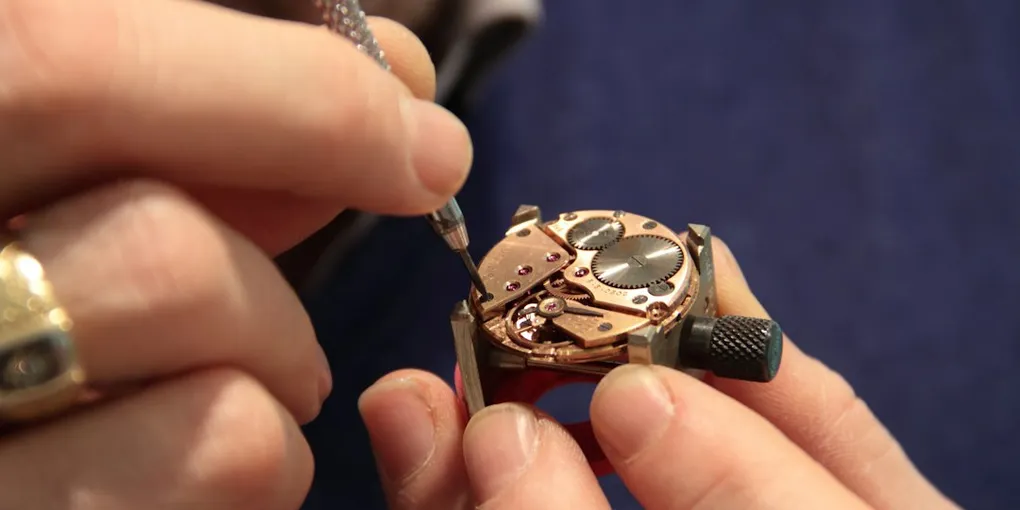
Some crown problems can be addressed at the case opening, but deeper repairs follow a sequence. The movement is removed from the watch. The dial and hands are removed. Then the set lever spring or cover plate is removed to access the set. Only after that can the internal parts be inspected, adjusted, or replaced. This sequence explains why a loose crown is rarely a one-minute fix. The crown is small; the access required to reach its working parts is not.
Crown position also changes the ergonomics of use and repair. A crown at a different side of the case can affect how you set the watch and how forces reach the stem, a subject left-handed watches and crown placement covers well. If you wear the watch on the opposite wrist, or you regularly knock the crown against a desk, the angle of contact matters. The loose feeling may start as a slight wiggle and then become a habit of popping out or refusing to stay put.
What Replacement or Repair Actually Looks Like
When replacement is the answer, the damaged stem and crown are removed and replaced with new matching parts. When the original pieces can be saved, a jeweler may use specialized tools to fix cracks or threads. Neither path is automatically better than the other. The right choice depends on what the examination reveals: a clean replacement can restore function, while a careful repair can preserve original parts when the damage is limited.
To see the small details up close, a watch loupe helps.
A crown that feels wrong is best assessed rather than repeatedly exercised. If you enjoy the observational side of watches—spotting crown types, case details, and small differences—Watchdle offers a playful way to test that eye. It is a game, not a repair manual, but it sharpens the kind of attention that helps you notice a crown that no longer sits right.
Why the Tiny Parts Deserve a Real Diagnosis
The crown and stem are among the smallest components you interact with, yet they carry a disproportionate amount of daily wear. Every time you set the time, change the date, or screw the crown down, you load the same tiny connection. That is why the difference between a simple tightening and a full replacement matters. A solid crown should feel like part of the case, not a loose button waiting to be pulled free. If the symptoms point to the stem, the crystal, or the date mechanism, the repair may reach further than the crown itself. The best outcome is a crown that feels secure again, with no side-to-side play and no gritty rotation. The alternative is a watch that keeps telling you something is wrong every time you touch it.
FAQ
What holds a watch crown in place?
A crown spring provides the holding force, while the case tube is the small metal piece that keeps the crown secure in the case. If that tube is bent or damaged, it may need to be replaced.
What does a jeweler check when reinstalling a stem and crown?
A loose crown fix involves carefully installing the stem and crown, and making sure the detent is seated properly. That seating step is part of what makes the assembly feel correct rather than merely attached.
As an Amazon Associate we earn from qualifying purchases.