How to Charge a Solar Watch: A Practical Guide
In this article
A solar watch charges whenever its dial is exposed to light, whether from the sun or an artificial source, and brighter light fills the rechargeable battery faster. For most owners, the simplest method is to place the watch by a window with the dial facing the sun, though indoor charging takes much longer than charging with sunlight.
What Happens Inside a Solar Watch When Light Reaches the Cell
The process begins at the cell. Light energy received by the solar cell is converted into electronic energy, and that energy is stored in a rechargeable battery. In solar-powered watches, the storage is a rechargeable lithium-ion battery. This is why the watch can keep running after the lights go out, but only within the limits of what it has already saved.
A solar watch cannot be recharged in the dark, so a drawer, a safe, or a closed watch box offers no top-up at all. If you are used to conventional quartz watches, the power source is different from a standard battery swap; the guide to Replacing A Watch Battery At Home Without Ruining It covers that separate routine.
The cell itself is not a user-serviceable part in the way a coin cell is. You do not need to open the case or expose the movement. The charging happens through the dial, so the watch can stay sealed while it gathers light. That sealed design is one reason solar watches appeal to people who want low maintenance. The trade-off is that the watch must see light regularly. There is no fuel gauge you can top up with a cable. Light is the only input.
Sunlight Versus Indoor Light: What the Lux Numbers Say
The gap between outdoor and indoor light is enormous. Direct sunlight on a summer day measures about 100,000 lx. A cloudy day drops to about 10,000 lx. Indoors, a 30W fluorescent lamp gives about 10,000 lx at 5 cm, but only about 3,000 lx at 20 cm. A general office sits around 700 lx. Because room light is weaker compared to sunlight, it takes longer to recharge.
These numbers explain why a windowsill can do in a morning what a desk lamp might struggle to do in a day. They also show that distance from the lamp matters as much as the lamp itself. If you move a watch farther from the same light source, the available light falls sharply. Office lighting is weaker still. None of this means indoor charging is useless. It means you should expect a slower process and plan accordingly.
For a broader look at how watch movements differ, see Manual, Automatic, Or Quartz: How Movements Differ. Solar is simply another way to power a watch, and the rules of light exposure are its own.
How to Position a Solar Watch for Recharging
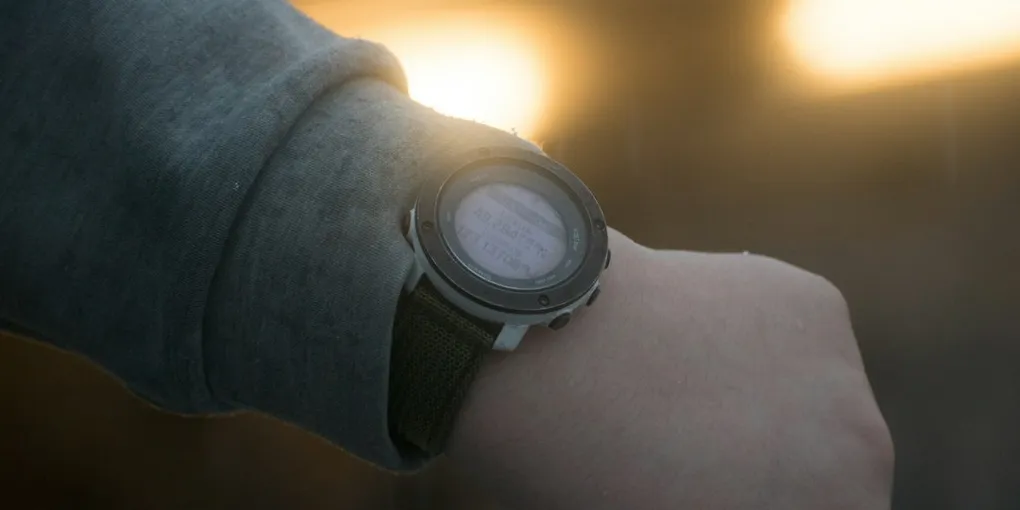
When the watch is not on your wrist, place it by a window and expose it to sunlight. If it is not worn daily, store it in well-lit areas. This is not about leaving it in a blazing hot car or under a magnifying glass; it is about steady, unblocked light. A windowsill that catches daylight for several hours is a better home than a dark shelf.
If you rotate your watches, keep the solar model near the front of the case or on a shelf where ambient light reaches it. For outdoor-focused choices, the Field Watch Buying Guide: The Forgotten Tool Watch is a helpful companion. The angle of the watch matters less than the presence of light. You can place it flat, propped up, or on a stand, as long as the dial is not hidden. Avoid stacking it under other objects. If you keep it in a watch box, choose a box with a glass lid or leave the lid open during the day. The goal is to make light exposure part of your storage routine, not a special event.
LED Lamps, Fluorescent Tubes, and Other Indoor Sources
Indoor charging is practical, but it has rules. With an LED light source, keep a minimum distance of at least 20 inches from the watch. Solar-powered watches can charge from various light sources including indoor lighting, so direct sunlight is not a strict requirement. That said, the light still has to hit the cell. A lamp placed behind the watch or a watch buried under a cuff will not gain much.
If you use a desk lamp, angle it toward the dial and leave it on for a longer stretch. Do not expect the same speed you would get outside. The 20-inch guideline for LEDs is there to keep the watch from sitting too close to a concentrated source. It also gives the light room to spread across the dial rather than hitting a small spot. If you want to see how solar technology has been used in different watch families, the Seiko Astron GPS Solar: The Full History is a useful read.
What the Charging Numbers Mean for Daily Wear
Daily wear is less about chasing a perfect number and more about avoiding long dark periods. A solar watch gains energy from the light it sees, so the real enemy is a closed drawer, a dark safe, or a sleeve that covers the dial for days. You do not need to schedule charging sessions if the watch lives in a bright room. If it spends most of its life in a box, make a habit of placing it near a window when you rotate it into use.
The best routine is the one you will actually repeat. Some owners keep a solar watch on a windowsill overnight and rotate it into the collection the next morning. Others wear it daily and never think about charging at all. Both approaches work as long as the watch sees light often enough to replace what it uses. The moment you notice it has stopped, treat that as a signal to review its storage spot. While it charges, Watchdle offers a quick daily game for watch enthusiasts.
FAQ
Can a solar watch charge under indoor lighting?
Yes. Indoor charging light sources include an incandescent lamp or a fluorescent lamp.
How much direct sunlight does a Casio or G-Shock need for one day of power?
Eight minutes of direct sunlight is enough for one day of power on CASIO/G-SHOCK watches. For a deeper look at that line, see Casio G-Shock DW-5600 History: From 1987 to Solar.
How long can a solar watch hold a charge?
Solar-powered watches have a power reserve of up to two years.
Can charging overheat a solar watch?
A solar watch should not be heated to a high temperature.