Why Do Some Watches Have A Helium Escape Valve?
In this article
Helium escape valves are small one-way purge valves fitted to the cases of certain professional dive watches, and their job is to let trapped helium gas exit during decompression. They exist because saturation divers breathe helium-rich gas at depth, and that gas can creep into a watch case and then expand when the diver returns to the surface.
The Problem: Gas That Slips In And Won’t Slip Out
Regular air is approximately 78% nitrogen. In saturation diving—a method used by commercial divers to reach depths greater than standard scuba diving alone—helium replaces nitrogen in the breathing gas mixture to eliminate the negative effects of nitrogen narcosis. The atmosphere in a diving bell is highly saturated with helium and hydrogen to counteract toxic air at depths. That environment is hostile to ordinary watch cases for a subtle reason: helium atoms are extremely small and easily slip inside a watch.
Over extended underwater periods, helium can slowly seep into a watch because of the pressure difference between the outside environment and the inside of the case. Once inside, the gas does not simply vanish. During resurfacing, trapped helium expands as pressure decreases. Without an escape route, that expansion can potentially damage the watch’s internal mechanisms. A helium escape valve exists to permit those trapped helium gas molecules to safely exit the case in a controlled manner. It is a pressure-management solution, not a decoration.
Automatic Escape Valves: Invisible Until Pressure Builds
An automatic helium escape valve is designed to disappear into the case profile. It is circular and flush with the case, triggered automatically by increasing internal pressure. An internal spring closes it again, so the wearer does not need to touch anything. At critical pressure, the valve opens to allow accumulated helium to escape, preventing damage during decompression.
The mechanism is one-way and spring-loaded, activated when pressure outside differs significantly from pressure inside, releasing trapped helium atoms. That means the diver can focus on ascent timing, buoyancy, and decompression stops instead of hunting for a small crown. In day-to-day wear, an automatic valve often goes unnoticed unless you know exactly where to look.
Manual Escape Valves: A Crown You Must Remember
Manually operated helium escape valves take a more visible form. They appear as additional crowns, and they require unscrewing before releasing trapped helium. They also need to stay open during decompression to balance pressure. In practice, a manual valve often uses a separate screw-down crown that the diver opens as he or she ascends, letting gases escape. It can be opened during decompression to expel helium safely out of the watch.
This is a deliberate procedure, and forgetting it defeats the purpose of having the valve at all. It also changes the look of the watch: an extra crown is a clear piece of hardware, not a hidden case feature. Some collectors find that mechanical honesty appealing. Others prefer the cleaner silhouette of an automatic system or no valve at all.
Why ISO 6425 Doesn’t Ask For One
A helium escape valve is not a requirement of ISO 6425. It is not a requirement outlined in ISO 6425 for a timepiece to be called a dive watch. The feature is mainly included in professional-grade dive watches intended for saturation or commercial divers who spend prolonged periods in pressurized environments. Target users are mostly professional divers diving to depths greater than 250 feet for extended periods.
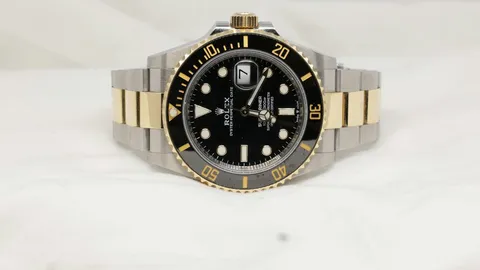
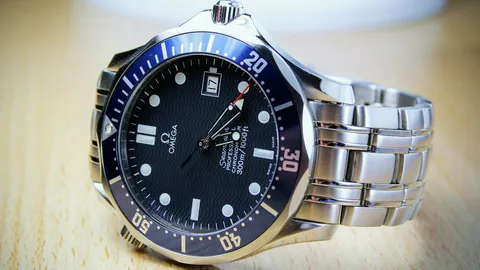
That explains why many capable recreational divers lack the hardware entirely. The Rolex Submariner, Omega Seamaster 300, and Tudor Black Bay do not feature helium escape valves. If you are comparing depth ratings and real-world use, a guide to water resistance ratings is more relevant than counting crowns. For a broader look at what actually matters in a diver, see the dive watch buying guide.
Rolex, Doxa, And The Saturation-Diving Origin
The helium escape valve was co-created in the 1960s by Rolex and Doxa S.A. The Rolex Sea-Dweller and Doxa Conquistador are among the models tied to its introduction. The Sea-Dweller’s story is inseparable from saturation diving, and its saturation-diving history explains why a valve became part of the tool-watch conversation. What began as a specialist answer to a dangerous engineering problem eventually became a recognizable marker of serious dive-watch design.
Other watches have adopted the feature since. The OMEGA Seamaster Planet Ocean and select TAG Heuer Aquaracer models feature a helium escape valve. The Dievas Maya MK III Black has an integrated helium escape valve placed at the crown side and water resistance to 1000m. The Steinhart Triton 1000 Titanium places its helium valve at the 2 o’clock position, also with 1000m of water resistance.
Placement, Models, And The Specialist Niche
The placement varies. On the Dievas, it sits at the crown side; on the Steinhart, it is at 2 o’clock. Automatic versions stay flush and unobtrusive, while manual versions add a visible crown. Because the feature is not required by ISO 6425, it remains a specialist detail rather than a universal dive-watch marker. A watch can be a serious diver and still skip it.
If an automatic sits unworn for days, a watch winder keeps it running.
That is part of the curiosity. Two watches can share similar depth ratings and dive-watch intentions, yet one hides a tiny gas-release system in its case while the other does not. If you enjoy spotting these small structural differences—an extra crown here, a flush valve there—a round on Watchdle is a natural way to test your eye. The same curiosity applies to other dive-watch details, from the dive bezel pip to the broader history of the dive watch.
FAQ
What exactly does a helium escape valve release?
It releases trapped helium gas molecules that have seeped into the watch case during extended underwater periods. As pressure drops during resurfacing, those molecules expand, and the valve gives them a controlled path out instead of letting them damage the movement.
Are helium escape valves required for a dive watch to be ISO 6425?
No. ISO 6425 does not make a helium escape valve a condition for a timepiece to be called a dive watch. That leaves room for plenty of serious divers to omit the feature.
How does a manual helium escape valve differ from an automatic one?
Manual versions are separate screw-down crowns that must be opened by the diver and kept open during decompression. Automatic versions are flush, circular, and spring-closed, reacting to internal pressure without user input.
Which models are known to include a helium escape valve?
The OMEGA Seamaster Planet Ocean and select TAG Heuer Aquaracer models feature one. The Dievas Maya MK III Black and Steinhart Triton 1000 Titanium are two more examples, with valves placed at the crown side and 2 o’clock respectively, each rated to 1000m.
As an Amazon Associate we earn from qualifying purchases.