What Is A Flyback Chronograph And What Does It Do?
In this article
A flyback chronograph is a watch complication that can be reset and restarted with a single press, without first stopping the chronograph. That one-action reset is the reason the function exists: it collapses the usual stop-reset-start routine into a single motion for measuring consecutive intervals.
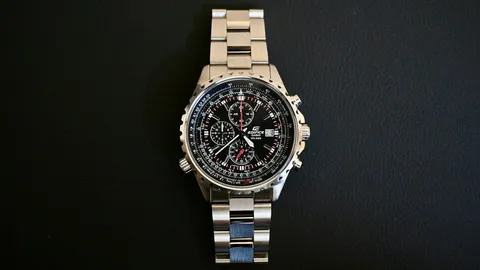
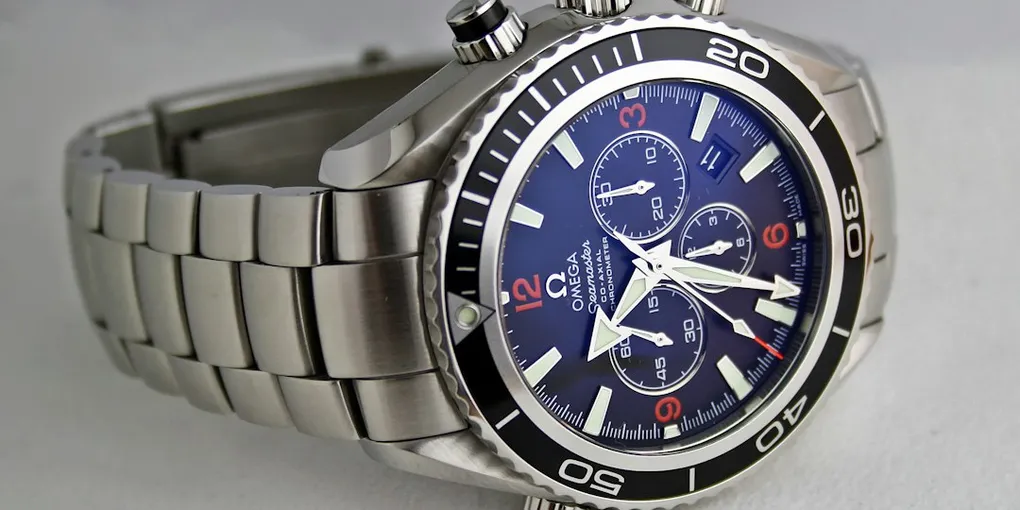
The pusher layout tells you a lot. A flyback chronograph usually has a push-piece at 2 o’clock to start, stop, and reset the timer, plus an additional pusher at 4 o’clock that enables stop, reset, and restart all at once. In plain terms, the 4 o’clock button is the flyback trigger. Press it at the end of a leg, lap, or maneuver, and the hands fly back to zero and begin timing again without an extra command.
The Pusher At Four O’Clock That Changes Everything
On a standard chronograph, consecutive intervals demand three operations: stop the chronograph, reset the hands to zero, and restart. That is not a catastrophic burden on a quiet afternoon. It becomes clumsy when your hands are busy and the next interval has already begun. A flyback simplifies this into a single action. It permits a reset while the mechanism is still running. That difference matters most when the timing never really pauses—when one lap ends exactly as the next begins.
Think of a pilot crossing waypoints. With a conventional chronograph, the end of the first leg is a small ceremony: stop, zero, go. With a flyback, the same transition is one push. The benefit is straightforward: it shortens the time needed to measure subsequent legs of a flight. The function also reduces the margin of error and helps pilots navigate more precisely in an era of high-speed flight.
The broader chronograph world is worth understanding here. A typical chronograph combines regular timekeeping with subdials that measure shorter spans, usually operated by pushers beside the crown. The basic architecture—start, stop, reset—is shared across the category, and if you want the mechanics in plain language, this explanation of how a chronograph actually works is a useful companion. But flyback is a specific variation, not just a marketing label. It changes what the reset button can do.
From Cockpit Need To Patent: Longines And The 1930s
The flyback function first took flight in the 1930s, primarily designed for aviators who needed to reset and start a chronograph quickly while navigating through the skies. The historical uses went beyond the cockpit, but aviation gave the complication its purpose. It served navigation and timing sporting events across the 20th century. Pilots could record multiple intervals such as the time taken to travel between waypoints, measure fuel consumption, or perform coordinated maneuvers. Those are not abstract chores. They are tasks where a few seconds of fumbling can matter.
Longines produced a wrist chronograph with a caliber 13.33Z movement in 1925—an early flyback chronograph model. The patent work followed: Longines filed on 12 June 1935, and the patent was approved and registered on 16 June 1936. The names attached to the function over time include Retour-en-vol, Taylor system, and Permanent zero setting. Those labels sound archaic now, but they point to the same idea: a permanent zero setting that lets the hand return and restart without a separate stop.
Aviation history gives the feature a vivid context. Richard Byrd flew first over the South Pole in 1929 and led several expeditions wearing a Longines wrist chronograph with a flyback function, using a cal. 13ZN. Wiley Post carried three chronometers because a minute of error in time meant a 15-mile error on the equator in the final calculation of position. Those details explain why pilots cared about precise, repeatable timing. The flyback was not a decorative complication. It was a cockpit tool.
If you want to see how the chronograph itself moved from stopwatch to wrist instrument, the birth of the chronograph is a good place to trace that shift. Flyback sits near the end of that evolution: the point where the wrist chronograph became fast enough to keep up with a flight plan.
Why A Traditional Chronograph Feels Slower
A traditional chronograph can time an event, but its reset has a constraint: you can start and stop the timing, yet you can reset only when it is stopped. That is the mechanical rule. A flyback chronograph removes that constraint. You are able to reset at any time. This is why lap timing benefits so directly.
The Rolex Daytona makes the contrast concrete. Introduced in 1963, the Daytona is a steel automatic from Switzerland and a traditional chronograph that can measure events up to 12 hours in length. That is a serious instrument with a long measuring range. But it is not a flyback. The distinction is not about quality or prestige. It is about the sequence your thumb must follow.
This is also where buyers confuse two similar words. The difference between chronograph and chronometer has nothing to do with the flyback pusher, but it matters when reading descriptions. A flyback chronograph can also be a chronometer, or not. The labels answer separate questions.
Inside The Mechanism: Clutches, Hammers, And Safe Resets
Mechanically, a flyback is not just a springier reset. The chronograph clutch typically takes power off the 4th wheel, which is a relatively low-torque part of the movement. Most chronographs are horizontally clutched: two wheels on the same plane mesh together to drive the mechanism. That layout influences how forces travel through the movement when the reset is triggered.
Reset hammers and cams are almost universally made of steel to survive the tremendous forces involved. In a flyback mechanism, safeguards ensure the reset can be performed safely without damage. The reset hammer lifts the clutch lever out of the way just before hitting the wheels. Without that choreography, repeatedly resetting a running chronograph would be a recipe for wear. With it, the single press becomes a controlled event rather than a mechanical ambush.
That engineering explains why flyback watches have a distinct feel. The extra pusher at 4 o’clock is not there for symmetry. It is the entry point to a sequence that has to happen in the right order, at speed, without the user thinking about the order at all.
Regattas, Laps, And The Modern Flyback
Aviation is the origin story, but not the only use. The Yacht-Master II is a special type of flyback chronograph specifically designed for regattas. That makes sense: a regatta start is a countdown, and timing successive intervals around marks requires the same quick-reset logic that pilots wanted. The complication suits any activity where the clock does not pause for you.
Lap timing is the everyman version. At the end of the lap you can simply reset as the chronograph runs, allowing you to track lap times precisely. A driver, runner, or cyclist does not need a cockpit to appreciate that. A standard chronograph asks for three deliberate inputs between laps; a flyback asks for one. The difference is small on a spreadsheet and large in motion.
Modern flybacks also show up in less expected shapes. The Atwood is a 39mm flyback chronograph with a blued column wheel—a reminder that the function can live in a wearable case rather than a pilot’s instrument. And if you are still learning the landscape, a first-timer’s chronograph buying guide can help separate the features you will actually use from the ones that merely sound technical. If you enjoy testing watch knowledge, Watchdle offers a playful way to see how well you recognize the details behind complications like this.
A flyback chronograph is ultimately a simple promise: reset without stopping, restart without a second thought. For pilots in the 1930s, that promise was about navigation and precision. For everyone else, it is about keeping pace with the next interval before it slips away.
FAQ
What makes a flyback chronograph different from a standard chronograph?
A standard chronograph needs three operations for consecutive intervals—stop, reset, and start—and its reset works only after timing is halted. A flyback condenses that routine into one pusher press.
Where did the flyback function first appear?
Longines produced a wrist chronograph with a caliber 13.33Z movement in 1925. The company filed a flyback patent on 12 June 1935, and it was registered on 16 June 1936.
Which watches demonstrate the flyback idea?
The Yacht-Master II is a special flyback chronograph made for regattas, and the Atwood is a 39mm flyback chronograph with a blued column wheel. For contrast, the Rolex Daytona is a traditional chronograph introduced in 1963, steel, automatic, and Swiss.
What is the pusher layout on a flyback chronograph?
Typically, a push-piece at 2 o’clock handles start, stop, and reset. An additional pusher at 4 o’clock enables stop, reset, and restart all at once.
Test yourself in today’s challenge at Watchdle.