Seiko 6139-6002 Pogue: First Automatic Chronograph
In this article
The Seiko 6139-6002 Pogue is the vintage reference that collectors connect to Seiko’s 1969 automatic chronograph, a movement line some argue was the world’s first automatic chronograph wristwatch. Its nickname comes from Colonel William Pogue, whose Seiko 6139 became part of the Skylab 4 story.
Seiko’s 1969 Automatic Chronograph Race
In the late 1960s, automatic chronographs were a technical target. Seiko’s 6139 carried the common name “Speed Timer” and combined a 30-minute chronograph recorder with a tachymeter scale. The Speed Timer reached the Japanese market in May 1969. That timing sits at the center of an argument: the 6139 is described as arguably the first automatic chronograph wristwatch in the world. The word arguably matters because the timeline changes depending on whether one counts prototypes or watches that reached buyers. Seiko’s May launch gave it a strong position in the race. Automatic winding meant the watch could keep running without daily hand-winding, while the chronograph function turned it into a timing tool. That combination was not easy to engineer in a compact wristwatch. The Speed Timer name framed the 6139 as a performance instrument. Collectors today often separate the reference from the movement, but the two are inseparable: the 6139’s reputation rests on the mechanism inside it. For anyone tracing chronograph history, the 6139 sits at the point where stopwatch utility met self-winding convenience. The broader stopwatch-to-wristwatch evolution is covered in The Birth of the Chronograph: How Stopwatches Became Watches.
From Seiko’s Automatic Chronograph to the Pogue Nickname
The Pogue nickname did not begin with the 6139-6002 alone. It came from Colonel William Pogue, selected by NASA in 1966. He originally entered the Apollo Program, but the aborted Apollo 19 mission moved him into the Skylab program. Before his mission, he needed a chronograph. Speedmasters were not issued until very close to mission launches. He bought a Seiko privately, and that personal purchase is why the nickname attached to a civilian Seiko rather than to the NASA-issued Speedmaster. During Skylab 4, he wore the Seiko on his left arm and the NASA-certified Omega Speedmaster on his right. NASA astronauts had only one certified watch before Skylab 4: the Omega Speedmaster, whose own flight history is traced in Omega Speedmaster Professional: The Full History. Pogue also secretly tucked the Seiko in his suit leg pocket without official NASA approval. The mission ran from late 1973 into 1974, with a duration over 84 days; the 6139 spent 84 days in space. On November 16, 1973, it became the first automatic chronograph in space, worn during the NASA Skylab 4 mission. It performed flawlessly. That milestone came 12 years before the Sinn 140 worn by Reinhard Furrer during NASA’s Spacelab D1 mission in 1985. Pogue’s decision to bring the Seiko along was practical, not ceremonial. Official gear followed NASA’s certification path, but the timeline left room for personal backup. The watch stayed with him through a mission that stretched beyond the typical sprint of a spaceflight. Its survival in that environment gave the movement a story that no marketing campaign could invent. The contrast between the two watches on his wrists tells the tale: one represented the approved system, the other a private choice that happened to make history. That duality is why the Pogue nickname has outlasted so many other Seiko references.
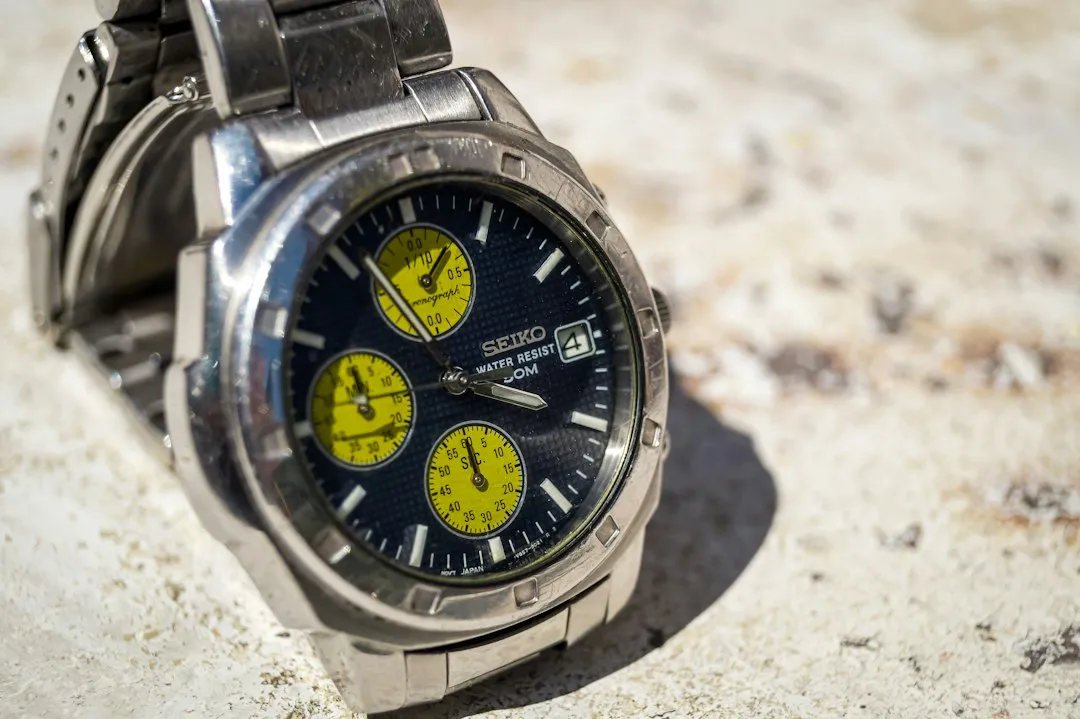
The 6139-6002 Reference in Detail
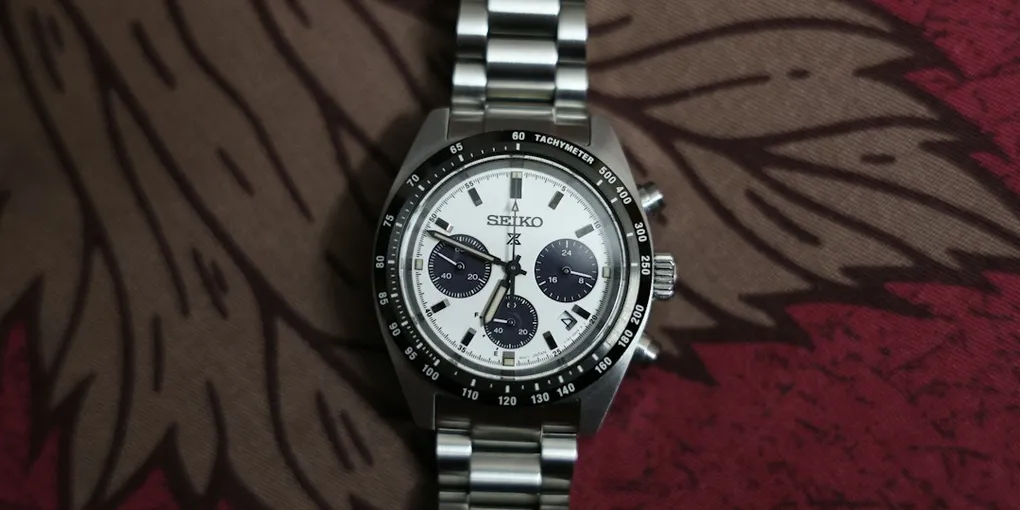
The reference at the center of the modern nickname is 6139-6002, a Japan-market Seiko. Its movement is mechanical and named Caliber 6139. The case is cushion-shaped and made of 316L stainless steel. Case width is 40mm, lug-to-lug length is 46mm, thickness is 14.5mm, and lug width is 19mm. Water resistance is 70, power reserve is 42, beat frequency is 28,800, and the movement has 17 jewels. The watch glass is Hardlex. The bezel is a fixed tachymeter. The crown is push-pull. It comes on a steel bracelet. The dial is a white reverse panda. Its brand is Seiko, and its model name is Pogue Chronograph 6139-6002. Some listings describe the family as 5 SPORTS SPEED TIMER with reference 6139-6002. A representative vintage listing in the data describes it as Automatic | Chronograph | Day Date | Cal 6139B | Circa 1976 | Vintage | Serviced. The 6139’s chronograph layout is easier to appreciate alongside How A Chronograph Actually Works. The reference has a period-specific character. Its proportions reflect the era’s approach to chronographs: readable, purposeful, and less concerned with slimness than with function. The dial layout and bezel scale make the watch look like an instrument rather than jewelry. Collectors who prefer understated cases may find it bold, while those who want a recognizable vintage chronograph often see those same traits as virtues. The 6139-6002 sits in that middle ground, familiar to Seiko fans but still distinct from the brand’s dive watches.
Collector Interest Around the Pogue Chronograph
The Pogue has become a gateway collectible. Because it is tied to a named astronaut, examples trade at a range. The data includes a Pepsi variant at $1,300 plus $40 shipping, another Pogue at $1,712 with free shipping, and a third example at $3,898 plus $78 shipping. Those numbers show how condition, variant, and presentation can separate otherwise related watches. Seiko’s broader tool-watch lineage, including Seiko 6105 History: Willard, Uemura, Vietnam, helps explain why the Pogue sits in a larger collector ecosystem. For first-time buyers, Chronograph Buying Guide For First-Timers helps separate movement type, condition, and originality. A quick way to test your recall of references like 6139-6002 is Watchdle, the daily watch game. The nickname helps search results, but it can also flatten real differences between examples. Variants may share a family resemblance while differing in dial, bezel, and presentation. Service history and originality matter because these are older chronographs, and older mechanisms can be sensitive to wear and poor work. The Seiko ecosystem rewards patience: the same reference can appear with a wide spread in asking prices, and the details often explain why. That is part of the fun for collectors who enjoy the hunt as much as the watch.
FAQ
What did Colonel Pogue buy before Skylab 4?
On June 13, 1972, he purchased a Seiko 6139-6005 at the Ellington AFB Exchange in Texas for $71. The watch had a yellow dial.
Which rival automatic chronograph prototypes appeared around Seiko’s 1969 launch?
Zenith’s El Primero prototype had a release date of January 10, 1969. The Chronomatic group—Dubois Dépraz, Breitling, Heuer, and Hamilton-Büren—had a prototype release date of March 3, 1969.
What price point appears for the 6139-6002?
A price of $618 appears for the 6139-6002.