Panerai Luminor History: Navy Tool to Public Icon
In this article
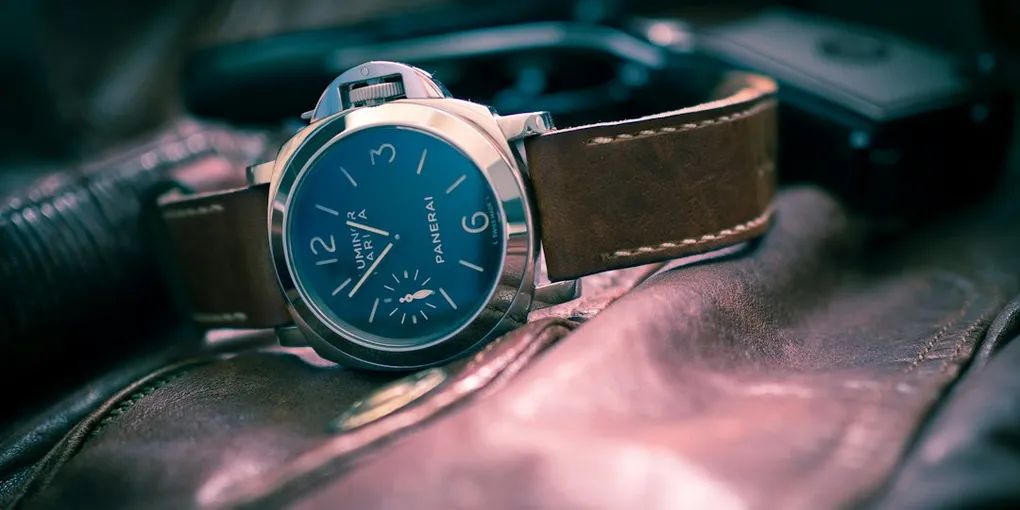
The Panerai Luminor is the civilian chapter of a military dive-watch line, turning a Radiomir-derived, crown-guarded design into a public release in the 1990s. Its story runs from a Florentine watchmaker’s shop to Italian Navy issue, and the features that define it—the Luminor luminous compound and the crown-protecting device—were born long before collectors could buy one.
A Florentine Shop and a Navy Contract
Giovanni Panerai opened a watchmaker’s shop in 1860 at Ponte Alle Grazie in Florence. That date is the root of the brand’s tradition, but the shop did not begin as a manufacturer of its own military watches. Panerai became an authorized dealer for Rolex, Vacheron Constantin and Patek Philippe, and it also served as an official supplier to the Royal Italian Navy (Regia Marina). That combination—retail, service, and naval supply—set the stage for the tool watches that followed. The dealer relationships and naval supply role are two threads that run through the early history. The military-to-civilian arc is covered in more detail in Panerai Luminor: Built For Navy Frogmen, Sold By Stallone.
Radiomir: The Patent and the Prototype
Panerai developed Radiomir between 1915 and 1916. The compound used zinc sulfide, radium bromide, and mesothorium, and a patent was filed in France on 23 March 1916. For years, the name Radiomir referred to the luminous material rather than a watch model. The earlier chapter is traced in Panerai Radiomir Black Seal: The Full History.
The 1936 Radiomir Prototype
In 1935 the Royal Italian Navy requested a watch design. The prototype submitted in 1936 was named Radiomir. It had a 47 mm cushion-shaped case, used Staybrite stainless steel, and attached to the wrist with welded wire lugs. The crown was made by Rolex, and the movement was a Rolex Calibre 618 made by Cortebert, with a 41-hour power reserve. Only 10 prototypes were produced. The request and the response together show how directly military needs shaped the watch: the Navy asked in 1935, and the Radiomir name appeared on the prototype a year later.
Reference Numbers and Rolex Assembly
Panerai’s very first wristwatch, the Ref. 2533, used a waterproof Oyster case from Rolex, a modified Swiss Cortébert 618 Caliber, and a two-layered sandwich dial. The Ref. 3646 had a dial design with Roman numerals on the top half and Arabic numerals on the bottom half; it was first supplied to the Royal Italian Navy in 1938. The Ref. 2553 used barred and dotted hour indicators. In 1940, the Ref. 6152-1 replaced soldered wire lugs with larger lugs made from the same block of steel as the case. Panerai watches were assembled by Rolex, with Panerai supplying luminous dials and military modifications. Those watches became standard issue for Italian Naval Commandos throughout WWII and its aftermath. For the broader dive-watch context, see The History Of The Dive Watch: From Tool To Icon.
Luminor: A New Luminous Compound and a Crown Guard
In 1949 Panerai introduced the Luminor luminous paint. The material gave the future line its name, but the crown-protecting device was introduced in 1956, adding the mechanical feature that separated later Luminor watches from the Radiomir generation. The Radiomir line had already established the cushion-shaped case and welded wire lugs; the crown guard gave the Luminor a different silhouette and a new way to protect the winding crown. By the 1940s, Panerai had developed the cushion-shaped case with welded wire lugs, and the Luminor’s later identity built on that foundation while adding crown protection.
The 1960s Reference Behind Today’s Luminor
Modern-day Luminor takes inspiration from Panerai Ref. 6152/1 from the 1960s. That reference is the ancestor the modern line cites, and it links the civilian Luminor back to the military watches of the mid-century. The line’s transformation from military equipment to a collector’s object is part of a wider shift visible in dive watches, from professional instruments to icons. The Luminor did not appear as a finished civilian product in one step; it accumulated details—luminous material, crown protection, case construction—over decades.
From Military Only to Public Availability
Before 1993, Panerai watches were available only to military forces. Public availability began in 1993. That year marks the boundary between a supplier to the Royal Italian Navy and a brand that collectors could approach directly. For the first time, watches that had been standard issue for Italian Naval Commandos could be seen outside military channels. The Luminor line entered a new era. The change was not just commercial; it altered who could own and wear a Panerai. If you want to test how well you know this timeline, Watchdle’s daily game lets you guess watches from their details.
Luminor Submersible and the Later Lineage
Panerai introduced the Luminor Submersible in 1998. It was based on a watch developed for the Italian Navy in the 1950s. That release extended the Luminor family into a dedicated dive-watch line. The Submersible’s military ancestor places it in the same lineage as the Radiomir prototypes and the Luminor crown-guard watches. The Submersible name became a separate branch within the Luminor family. For context on what matters in a modern dive watch, see Dive Watch Buying Guide: What Actually Matters.
FAQ
When did the Panerai Luminor and Luminor Marina first appear to the public?
Both had their first public presentation in 1993. The Luminor Marina was a steel watch with an automatic movement, and its country of origin was Italy.
What was the Luminor substance patented in 1949?
The Luminor substance was patented on 11 January 1949 and based on tritium, a hydrogen isotope. Luminor became its trademark name.
Who invented the crown-protecting device, and what was it called?
Giuseppe and Maria Giuseppe Panerai are listed as inventors. The application name was Tight Seal Device; it was patented in Italy in 1955, with a U.S. patent almost a year later.
What was L’Egiziano, the Egyptian Navy Panerai?
The Egyptian Navy commissioned it in 1953. L’Egiziano had a 60 mm steel case, a Swiss Angelus movement with an eight-day power reserve, and 200-meter water resistance.