NATO Strap: What It Is and Why It’s Called That
In this article
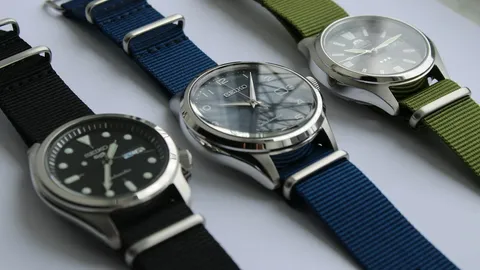
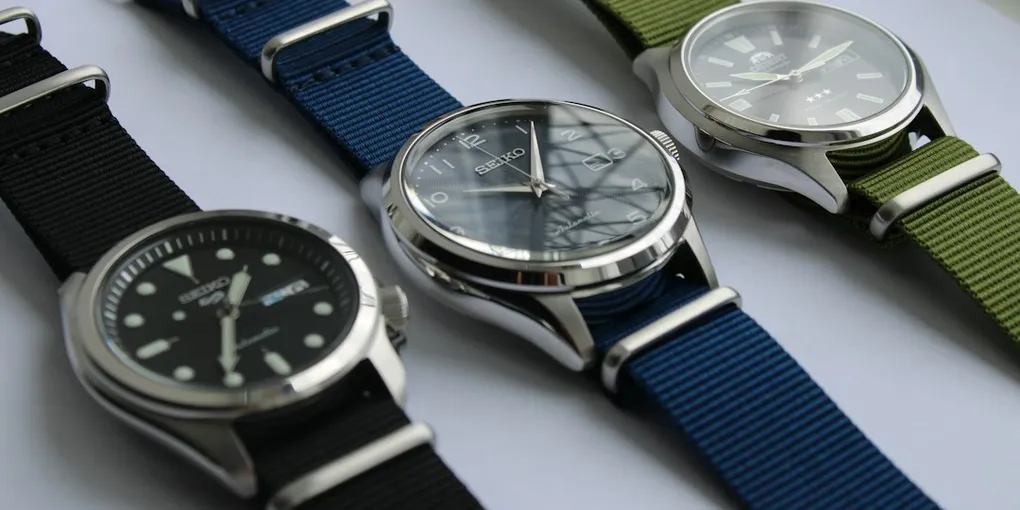
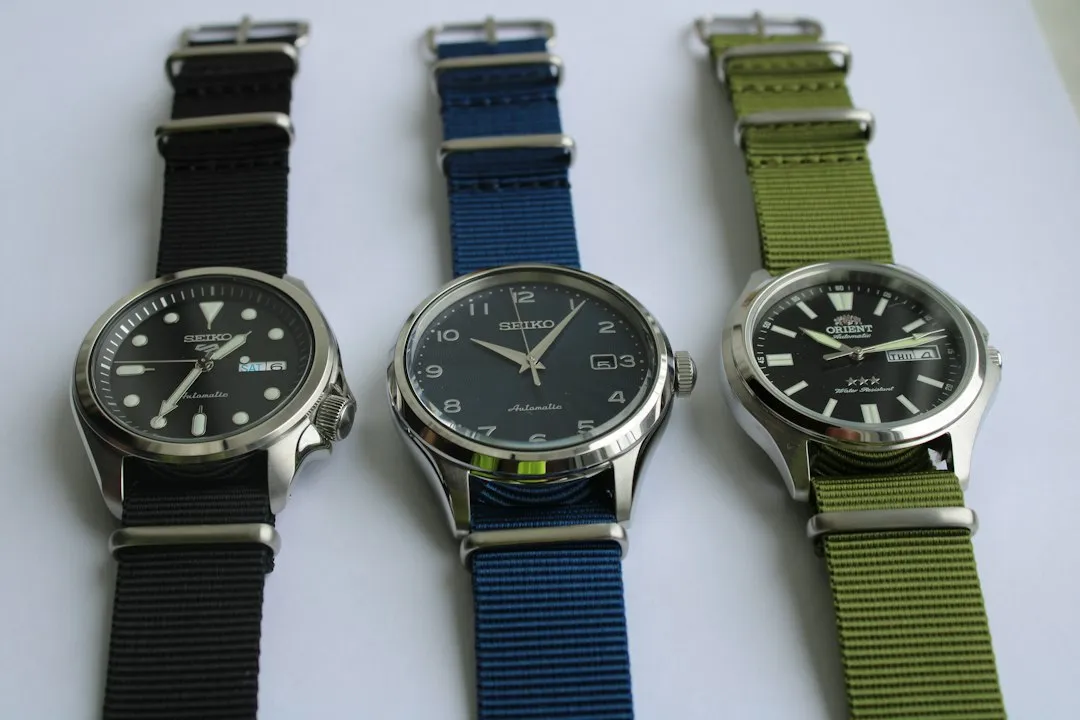
A NATO strap is a one-piece watch strap, usually made of fabric, that loops beneath the watch case and through its spring bars. The name is a longstanding nickname attached to a military supply code, not a sign that NATO itself created the strap.
The Security Logic of a One-Piece Strap
The construction is the whole point. A single length of strap passes under the case and threads through the bars attached to the watch, rather than attaching as two separate pieces. That means the watch is not relying on one pair of spring bars alone. If one spring bar fails, the strap still keeps the watch attached to the wrist. Military users valued exactly that: utility, practicality, and secure use on the field of battle, where a dropped watch could mean losing timekeeping entirely. The design used two spring bars and added length so troops could wear a watch on top of their uniforms. That added length is not decorative; it is what allows the strap to sit over a sleeve or field jacket while still keeping the watch head readable. Because the strap is one continuous piece, there is no separation between the upper and lower runs. That reduces the number of failure points and makes the fit feel different from a two-piece strap, which can matter when you are wearing a watch in cold, wet, or dusty conditions. How To Change A NATO Watch Strap walks through the threading sequence, and How To Swap A Watch Strap In Two Minutes covers the quicker version. The result is a strap that feels less like a conventional accessory and more like a retention system.
Why the British Ministry of Defence Gets the Credit
The strap did not originate at NATO headquarters. It was introduced by the British Ministry of Defence in 1973, and the MoD designed it. The UK is a NATO member, but that does not make the strap a NATO product. Soldiers knew the original as G-10, while the official name was G10 straps, named after the acquisition form soldiers filled in to receive one. The military term G10 refers to requisition form G-1098. The earliest version used a chrome-plated brass buckle. That combination of a plain fabric strap and a utilitarian buckle tells you what kind of object it was meant to be: a piece of kit, not a fashion item. The fact that collectors now debate weave, hardware, and length is a later layer of meaning. At the time, the priorities were simple: keep the watch on the wrist, keep the supply chain organized, and keep the soldier moving. The G10 label is not a model number in the modern collector sense. It comes from the paperwork that put the strap into a soldier’s hands, which is why the term is tied to acquisition rather than design.
How a Supply Code Became the Word “NATO”
The common name comes from the NATO Stock Number, an alphanumeric code used in the British Ministry of Defence to identify standardised material items of supply. In other words, “NATO” in the strap’s name is a supply-catalog shorthand that stuck. Over the years, the G10 affectionately became known as the NATO strap. That nickname has become so dominant that it can obscure the original G10 label entirely. The confusion is understandable: the word sounds official, and the strap’s military look invites the assumption that NATO designed it. The supply-code origin is stranger and more specific. It also explains why the name survived even as the strap moved from military stores into civilian watch culture. The word “NATO” in the name therefore describes a cataloging framework, not a design committee. That distinction is easy to miss because the acronym is so familiar. If you enjoy noticing how names and visual details travel through watch culture, the daily challenge at Watchdle is a natural place to test your eye.
Before 1973: Canvas, RAF Pilots, and a Bond Submariner
Fabric watch straps were not invented in 1973. Armed forces in both the United States and Great Britain used them as early as the mid-20th century, predating the formation of NATO in 1949. They were sometimes called RAF straps because of their popularity with pilots of the British Royal Air Force. The British Army and other armed forces had been issuing fabric straps since the last years of World War II, with ATP and Dirty Dozen watches issued with canvas straps from 1945. The use of canvas shows that fabric was already a practical military choice before nylon became the material associated with the later MoD strap. Sean Connery’s James Bond wore a striped nylon strap on a Rolex Submariner in Goldfinger, a film made nine years before the launch of the original NATO strap. That timing matters because the Bond look is often folded into NATO-strap history even though it predates the official item. For more on how dive watches moved from tool to icon, The History Of The Dive Watch: From Tool To Icon traces that larger shift. The through-line is not a single invention story but a slow convergence of fabric straps, military procurement, and watch design.
Single-Pass Fitting and Modern Compatibility
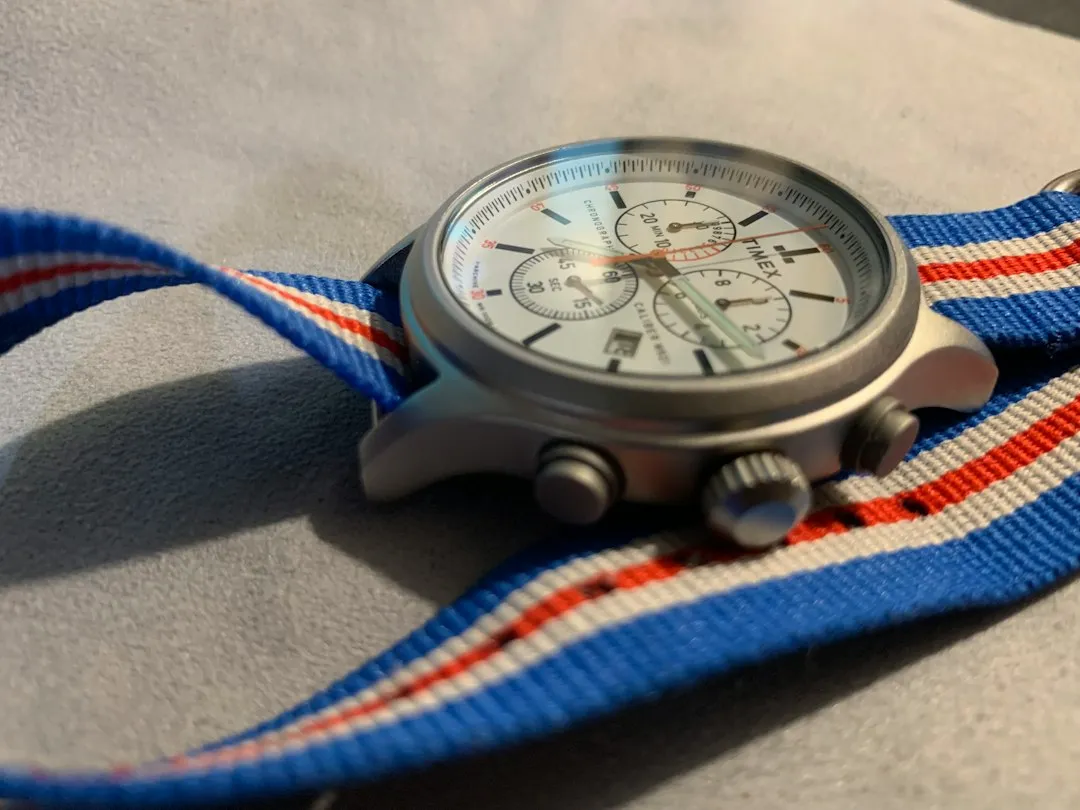
Not every watch can wear every variant. The Tudor Pelagos FXD fits only single-pass NATO straps, for example. That compatibility detail matters because the strap has to thread correctly through the watch’s attachment points, and a single-pass design is what the FXD accepts. Tudor Pelagos Review: It Out-Dives Its Big Brother covers that model in context. If you are deciding between fabric and other materials, Rubber Vs Leather: Which Strap Wins? weighs a different set of trade-offs. A NATO-style strap remains one of the few pieces of watch gear that is both deeply practical and instantly recognizable. It can make a dress watch feel more casual, or make a tool watch feel even more purpose-built. Single-pass construction also changes the visual profile. It sits flatter under the case, and it cannot be adjusted in the same way as a two-piece strap with a conventional buckle and keeper. The key is to match the strap’s construction to the watch’s bars and your own daily use, rather than assuming every NATO-style strap will fit every case.
What the Nickname Obscures
Calling it a NATO strap is convenient, but it compresses several different things into one phrase. There is the physical object: a single-pass fabric strap that loops under the case. There is the British military supply name: G10. There is the catalog code that inspired the popular nickname. And there is the later legal sensitivity around the word itself, which explains why some sellers choose careful descriptions instead of the most familiar term. The nickname also hides the difference between original-spec straps and modern interpretations. A strap can look military without following the 1973 pattern, and it can follow the pattern while being sold under another name. When someone says “NATO strap,” they might mean any one-piece fabric strap, a specific MoD-pattern item, or a modern fashion version with different hardware. That ambiguity is part of why the term is so durable. It is short, memorable, and sounds authoritative. The reality is more interesting: a nickname borrowed from a supply system, applied to a strap that NATO did not design. The next time you see one on a wrist, you are looking at a small piece of military paperwork that escaped into everyday watch culture.
FAQ
What did the original 1973 specification call for?
The British Ministry of Defence set Def Stan 66-47 (S.S.W. / Strap, Wrist Watch). It called for straight cross weave nylon ribbon, 20mm wide, in admiralty grey—grey to BS 4800 card number 3 reference 18B25.
What supply numbers were used for G10 straps?
Army and navy personnel ordered under code 6645-99-124-2986. Air force personnel used 6645-99-527-7059.
Who trademarked the word “NATO” for watch straps?
International Watchman Inc. trademarked “NATO” in 2010. The company has enforced it, forcing many small businesses to refrain from describing their products as NATO straps.