Watch Lug Width Guide: How To Measure For Straps
In this article
To measure watch lug width, use a ruler or caliper and measure in millimeters from the inner edge of one lug to the inner edge of the other. That number is the strap width you need.
Lug width is not a suggestion. It is the single most important measurement when buying a new strap. Get it wrong by a millimeter and the strap may not fit the watch at all. That is why the measurement deserves its own step before you think about style or strap shape.
What Lug Width Actually Means
The term “lug width” describes the distance between the lugs: the two metal pieces on either side of the watch case that the strap attaches to. More precisely, it is the internal measurement between the two lugs. You are not measuring the outside of the case, the case diameter, or the distance from lug tip to lug tip. You are measuring the open gap where the strap sits.
This matters because straps are sold by width. If you have a watch with a 20mm lug width, you will need a 20mm watch strap. A 19mm strap is too narrow for a 20mm gap; a 21mm strap is too wide. The fit is direct, and the number on the strap listing must match the number you measure on the watch.
How To Measure Lug Width Correctly
Use Millimeter Precision
Lug width is measured in millimeters. A ruler or caliper works, but the tool needs to give you millimeter precision. Calipers can hold the exact inner edges without slipping. A ruler can work if it is fine enough and you read it carefully. The key is not the tool itself; it is the accuracy of the number.
Measure Inner Edge To Inner Edge
Place the measuring tool between the lugs. Measure from the inner edge of one lug to the inner edge of the other. Do not measure from outer edge to outer edge. The inner measurement is the space the strap has to occupy. If you measure the outer edges, you will get a larger number and order a strap that cannot fit.
For example, a watch with a 20mm lug width needs a strap that is 20mm at the point where it attaches. That is the only width that will sit correctly in the gap.
Check The Number Twice
Because lug width is such a critical measurement, it is worth measuring twice. If the first measurement is 20mm and the second is 20mm, you can proceed with confidence. If you get 20mm and 21mm, re-measure with more care. The strap buying process becomes much simpler once you have one reliable number.
The Two-Number Strap Format
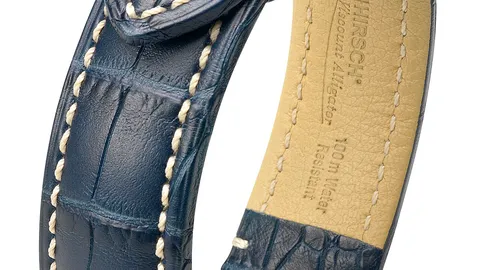
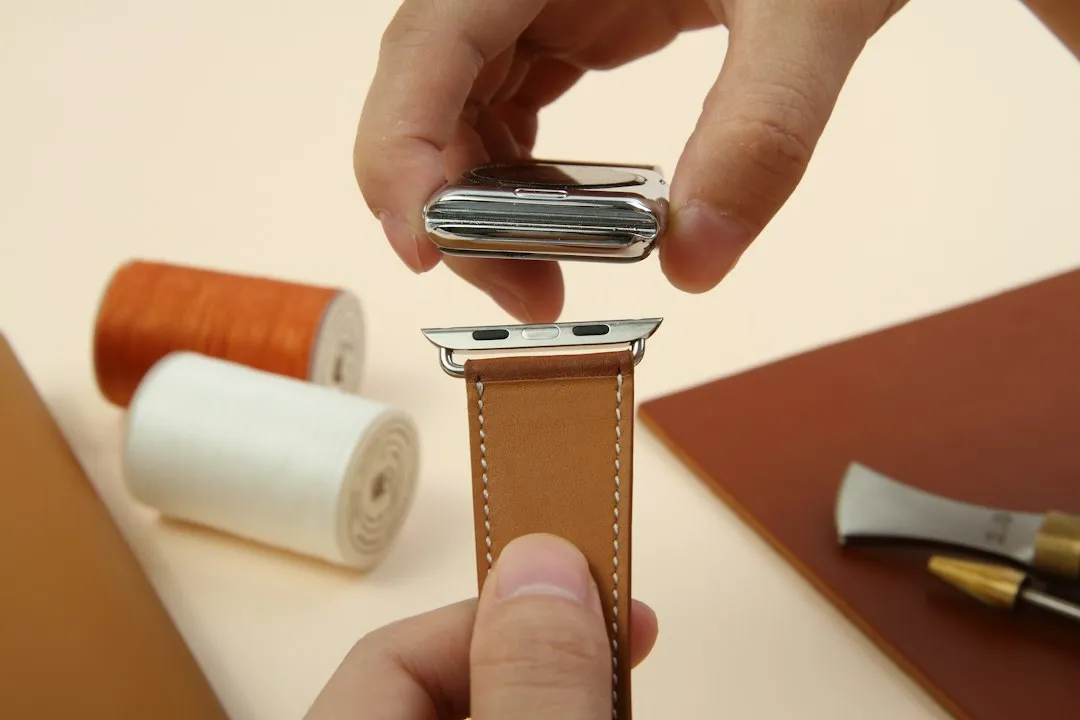
Strap listings often use a two-number format, such as 20/16. The first number refers to lug width. The second number refers to buckle width. A 20/16 strap is 20mm where it attaches to the watch and tapers down to 16mm at the buckle.
That taper is not a problem. The important part is the first number. If your watch has a 20mm lug width, you need a strap that starts at 20mm, even if it tapers to 16mm later.
When you see a strap described as 22/18, the same logic applies. The strap attaches at 22mm and narrows to 18mm at the buckle. The lug width is always the first number, and it is the one that must match your watch.
Common Lug Widths
Lug widths exist across a broad range, from 6mm up to 30mm. Most common sizes fall between 16mm and 24mm. In modern watches, the most popular lug widths are 18mm, 20mm, and 22mm.
Those three sizes cover a huge portion of the strap market. If your watch uses one of them, you will have plenty of options. If it uses something else, you may still find a strap, but the search can be narrower.
Some watches sit outside the usual range entirely. The Bell & Ross BR05, for instance, has a 12mm lug width. That is far below the common 16mm to 24mm band, which is exactly why measuring matters more than assuming.
When Standard Sizes Do Not Apply
Not every watch uses a standard lug width. If your watch’s lug width is not 18, 19, 20, 21, or 22mm, select “Custom” and enter your specific lug width measurement. This is the safest path when the number does not match the usual options.
Custom sizing is not only for exotic watches. It can apply to any watch whose lug width falls outside that list. Since lug widths range from 6mm up to 30mm, there are many possible measurements between the common ones. A 17mm lug width, for example, is not on the standard list above, so a custom option would be appropriate.
The lesson is simple: the watch does not care what sizes are popular. It only cares what its actual lug width is. Measure it, write it down, and use that number when ordering.
Lug Width Is One Part Of Fit
Lug width tells you which strap will attach to the watch. It does not tell you how the watch will sit on your wrist. For that, it helps to read a broader watch size guide. It also helps to know your wrist size, which you can do with a guide on how to measure your wrist. Lug width gets the strap right; those measurements get the watch right.
Strap Changes And Practical Checks
Once you know your lug width, changing a strap becomes much easier. A strap that matches the lug width can be fitted to the watch, while a strap that does not match will either be too loose or too tight. If you are new to changing straps, a step-by-step guide on how to swap a watch strap can help you avoid unnecessary frustration.
If your watch uses a bracelet instead of a strap, the lug width still matters at the point of attachment. A dedicated guide on sizing a watch bracelet can cover that side of ownership.
Before you buy, run through a short checklist:
- Measure the lug width in millimeters.
- Measure from the inner edge of one lug to the inner edge of the other.
- Confirm whether the watch uses a common size such as 18mm, 20mm, or 22mm.
- If the measurement is not 18, 19, 20, 21, or 22mm, choose “Custom” and enter the exact number.
- Check the strap’s first number, not the buckle number.
- If the strap tapers, make sure the first number still matches your lug width.
That checklist prevents most ordering mistakes. It also makes you more aware of the details that separate a watch that fits from one that merely looks good in a photo. If you enjoy testing that kind of watch knowledge, the game at https://watchdle.com/play/ can be a fun way to engage with watch details and dimensions.
Why The Number Is Worth Remembering
Lug width is a small measurement with a large effect. It determines whether a strap can attach, whether it sits cleanly between the lugs, and whether the watch looks intentional or improvised. A 20mm watch needs a 20mm strap. A 22mm watch needs a 22mm strap. A 12mm watch like the Bell & Ross BR05 needs a 12mm strap. There is no universal size that solves every case.
The good news is that measuring takes less than a minute. With a ruler or caliper and millimeter precision, you can measure inner edge to inner edge and get the exact number. Once you have it, strap shopping becomes straightforward. You can focus on the taper and other choices instead of guessing whether the strap will fit.
FAQ
What is lug width?
Lug width is the distance between the lugs, the two metal pieces on either side of the watch case that the strap attaches to. More specifically, it is the internal measurement between the two lugs. It is the most important measurement when purchasing a new watch strap.
How do I measure lug width accurately?
Use a ruler or caliper with millimeter precision and measure from the inner edge of one lug to the inner edge of the other. If your watch’s lug width is not 18, 19, 20, 21, or 22mm, select “Custom” and enter your specific lug width measurement.
What strap width do I need for a 20mm lug width?
If you have a watch with a 20mm lug width, you will need a 20mm watch strap. A 20/16 strap is 20mm where it attaches to the watch and tapers down to 16mm at the buckle.
Are there common lug widths I should know?
Lug widths range from 6mm up to 30mm, with most common sizes between 16mm and 24mm. Modern watches often use 18mm, 20mm, and 22mm, though some models such as the Bell & Ross BR05 use a 12mm lug width.