How to Clean a Leather Watch Strap Safely
In this article
- Take the strap off before anything else
- Start with a dry pass to lift dust and grit
- Use warm water and restraint
- Add mild soap only where it is needed
- Rinse the cloth, then rinse the leather
- Dry it flat, slowly, and away from heat
- Condition once the leather is completely dry
- Build a rhythm that matches how often you wear it
- Mistakes that age leather quickly
- FAQ
The safest way to clean a leather watch strap is to keep water to a minimum, work in short stages, dry the leather slowly, and condition it only after it is completely dry. That routine removes sweat, dust, and grime without soaking the strap or forcing it to stiffen.
Take the strap off before anything else
Remove the leather strap from the watch before cleaning. This protects the case and dial from water, soap, and accidental knocks while you handle the strap. If reinstalling spring bars usually turns into a wrestling match, this guide to swap a watch strap without rushing is worth reading before you begin. Once the strap is free, you can reach the underside, edges, and buckle holes without pressing moisture into the watch itself. The buckle and keeper often hold the most grime, but they are also the parts most likely to scratch the case if you clean while the strap is still attached. Removing it also lets you lay the leather flat later, which matters during drying.
Start with a dry pass to lift dust and grit
Use a dry soft cloth—microfiber or a jewelry polishing cloth—to wipe down the strap before any liquid touches it. This pass lifts dust and grit that would otherwise turn into an abrasive paste once water is introduced. Leather is porous, so it readily absorbs sweat and dirt from regular wear, and it soaks up moisture and oils; it is also sensitive to liquids. A dry cloth removes the first layer of surface grime, which means the damp stages that follow have less to carry away. Work from one end to the other with light pressure, turning the cloth so you are always using a clean section. The point is not to scrub the leather; it is to collect loose material before it becomes mud.
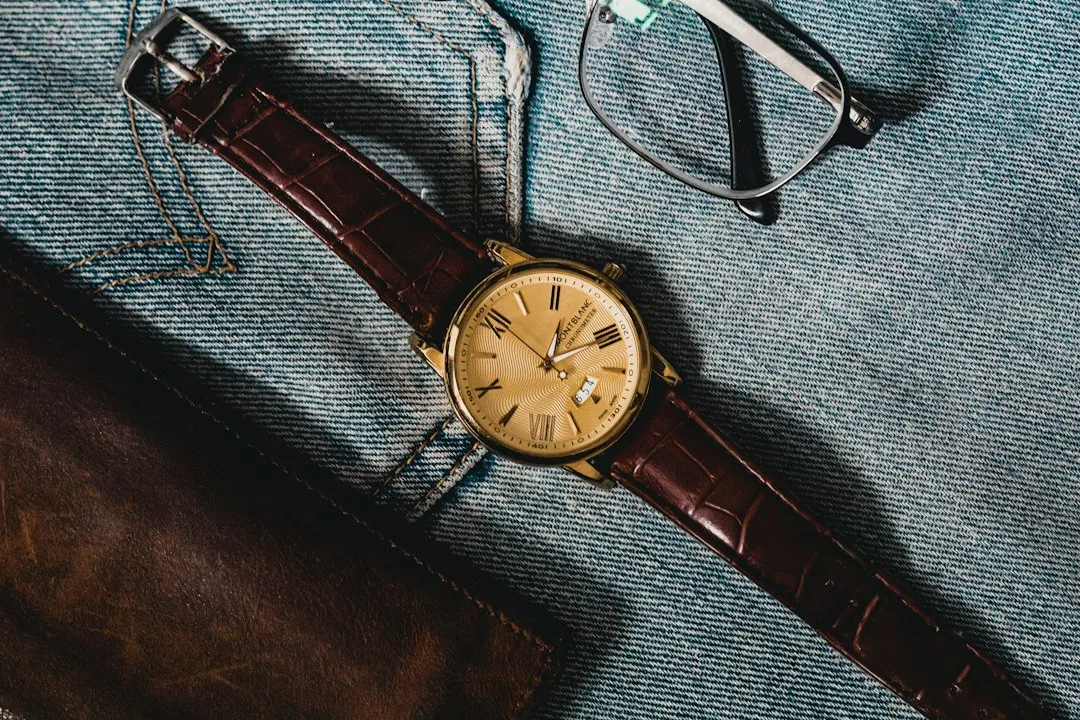
Use warm water and restraint
Wipe the leather with a barely wet damp cloth using warm water. Work across the top, the underside, and the edges, turning the cloth as it picks up grime. The cloth should feel damp, not dripping. When leather becomes soaked, it swells, then shrinks and stiffens as it dries. That is why this stage should feel closer to a controlled wipedown than a wash. If the cloth leaves visible wet patches that linger, it is too wet; wring it out and try again. The leather should feel cool and slightly damp to the touch, then return to a matte finish as it air-dries.
Add mild soap only where it is needed
For soiled areas, put a drop of mild soap on a damp cloth and work it in small circles. An unscented mild hand soap on a damp—not sopping wet—microfiber or jewelry cloth is enough; rub the inside and outside with small circular motions. A soft toothbrush helps around stitching and buckle holes, where dead skin, sweat, and grime collect. Keep the soap gentle and the cloth restrained. Use the toothbrush with almost no pressure; its job is to reach the seams, not to abrade the leather. Around buckle holes, a gentle circular motion with the cloth may be enough. If you are deciding whether leather is the right material for daily wear in the first place, this comparison of rubber and leather straps lays out the trade-offs.
Rinse the cloth, then rinse the leather
Rinse the cloth, squeeze out the excess water, and wipe the strap with the clean damp cloth until no soap residue remains. A rinsed, wrung-out cloth is the tool; a soaked strap is the thing to avoid. Soap left behind is what this pass is meant to remove, and the goal is to do that without pushing more liquid into the material. Change the rinse water if it becomes cloudy, and keep using a clean section of cloth. The final wipe should leave no slippery feeling and no visible suds. While the strap is off, it is also a sensible moment to clean the watch case without working around leather.
Dry it flat, slowly, and away from heat
Let the strap dry naturally flat on a towel at room temperature, away from radiators and direct sun. Never use a hairdryer. A slow, flat dry helps the strap keep its shape. Place the strap so air can reach both sides, and do not hang it over a radiator or leave it on a windowsill in strong sun. Rotate it once if needed so the underside dries evenly, but avoid bending it while it is damp. If you rotate straps, this is also the moment to set the leather aside and clean a nylon NATO strap separately if that is your next wear.
Condition once the leather is completely dry
After the strap is fully dry, apply a small amount of leather conditioner. Leave it for a few minutes, then buff off the excess. Follow the package directions for the number of drops, putting them on a clean cloth and gently rubbing the strap before letting it dry; choose a conditioner intended for jewelry, watches, clothing, or accessories. Conditioning is not a cleaning step, and applying it to damp leather defeats the purpose. Use a clean cloth rather than your fingers if you want an even, thin layer. For a broader long-term leather care routine, keep conditioner separate from wash day.
For resizing or swapping a strap, a strap replacement kit covers the basics.
Build a rhythm that matches how often you wear it
For daily wear, a damp clean every two to four weeks is a practical baseline. If the strap is used often, once every other week can work, though that cadence excludes the conditioner step. The goal is to remove sweat and surface grime before they settle into the leather, not to scrub the strap on autopilot. Simple dry wipes can happen more often; the soap and water session is the one to space out. If you enjoy testing how different watches and straps look together, a daily game like Watchdle can be a light way to think about rotation without overthinking the cleaning schedule.
Mistakes that age leather quickly
Drying too fast leads to cracks. Direct sunlight or heat can also cause cracking. These outcomes are not cosmetic problems you can buff away later; they change how the strap feels and how it sits on the wrist. A gentle soap, a barely damp cloth, and patient drying are not signs of fussiness; they are the conditions leather needs to stay supple.
FAQ
Can suede or nubuck straps be cleaned with water and soap?
No. Suede and nubuck straps should not be exposed to water or soap at all. Keep both away from those materials.
How should patent or coated leather be wiped?
Patent and coated leather should be wiped with a damp cloth only. That is the cleaning method for these finishes.
How often should leather conditioner be applied?
Apply conditioner every three to six months, or when the strap feels dry or looks dull. That schedule sits apart from routine cleaning.
What can harsh cleaners do to a leather strap?
Harsh cleaners strip the leather’s natural oils. That is one reason to stick with mild soap and a minimal amount of water.
As an Amazon Associate we earn from qualifying purchases.