How To Store Watches Long Term Without Damage
In this article
- Build a Stable Microclimate Before Choosing a Box
- Give Automatics a Reason to Keep Moving
- Quartz Watches Need Battery Discipline
- Manual Watches: A Calendar for Winding
- Prevent Scratches, Dents, and Strap Damage
- Handle Vintage, Luxury, and Travel Pieces Separately
- Keep Magnets and Electronics Away From Mechanical Watches
- FAQ
The safest long-term storage for watches is a cool, dry, dust-free location with humidity kept below 50%, temperatures between 50°F and 80°F, and no prolonged direct sunlight, with each piece resting in its own padded slot or pouch.
Build a Stable Microclimate Before Choosing a Box
Start with the room, not the box. A stable, clean location protects mechanical parts, while an enclosed but breathable space limits mildew or oxidation. Humidity is the quiet enemy: moisture can sneak into the case, fog the crystal, and rust the movement over time, especially in vintage, mechanical, or non-water-resistant watches. Too much humidity also raises the risk of corrosion or internal condensation. Temperature shifts matter because they can alter the viscosity of lubricants, accelerating wear or reducing accuracy. Extreme heat can dry out oils in mechanical watches; extreme cold can cause a movement to slow down. High temperatures can warp delicate parts inside, so the upper end of that range still deserves respect. Direct sunlight fades dials and damages leather straps, so a drawer in a dark room beats a sunny shelf. If your home is particularly humid, use a dehumidifier in the room. A dry box with a silica pack adds another layer of protection. Keep watches away from windows, vents, and the car.
Give Automatics a Reason to Keep Moving
Long periods of inactivity can cause lubricants inside the movement to settle or dry. If left untouched for days or weeks, the watch will eventually stop, and letting it sit too long can lead to sluggish performance or uneven power distribution. A watch winder can help keep the mechanism active and precise, and it will keep the movement running smoothly. If the watch is not on a winder but you want it running, wind it every 1–2 days. If continuous running is not necessary, wind it every 2–3 weeks. Stable temperature and humidity help, and a winder or padded box is the usual accessory. A service every 3–5 years is part of the long-term plan. When you do handle an automatic, the same care applies as when you learn how to wind an automatic watch without breaking it.
Quartz Watches Need Battery Discipline
Quartz watches bring a different risk: battery depletion or exposure to extremes can diminish longevity. Store them in low humidity and avoid prolonged exposure to heat. A case with soft lining is useful, and a dedicated slot prevents rubbing. If you handle the cell yourself, follow a safe process for replacing a watch battery at home without ruining it.
Manual Watches: A Calendar for Winding
A manual watch can rest in a dry, cool space protected from dust and light. A watch box or pouch is enough. Wind it every 1–2 days if you want it to keep running. If continuous running is not required, wind it weekly to keep the movement and lubrication in good condition, and give it a proper clean before storage; the same restraint applies as when you clean a watch without ruining it.
Prevent Scratches, Dents, and Strap Damage
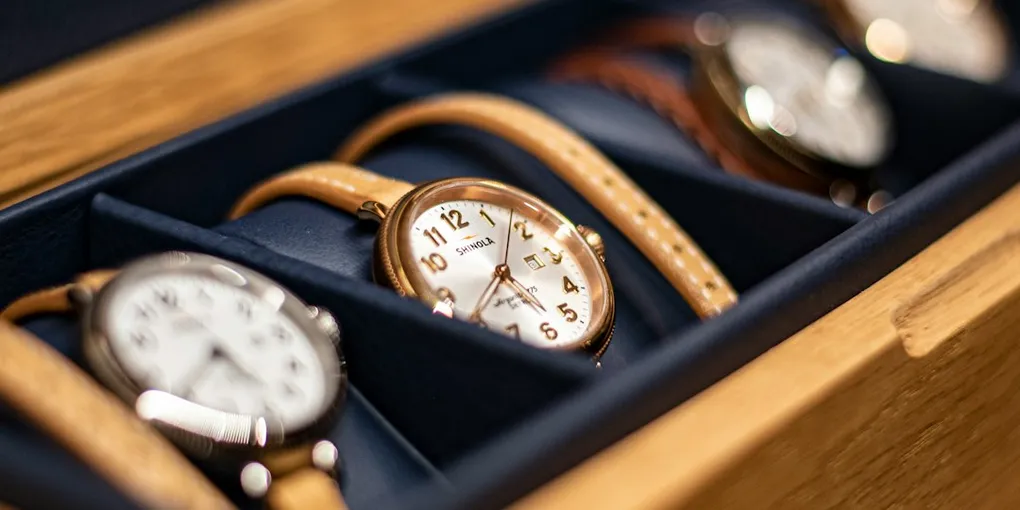
A padded, compartmentalized case helps prevent scratches, knocks, and accidental drops, and keeps a strap or bracelet from warping. Loose drawer storage is asking for trouble: a crystal and case can rub against keys, coins, or other metal, and a strap can be damaged from being bent or compressed. Stacking watches leads to scuffs, dents, and worn-out straps. Lay watches flat or strap them to a pillow to maintain the band’s shape, especially leather. A dedicated watch box with individual slots, kept in a cool, dry place away from direct sunlight and humidity, is the standard approach. The interior should be padded, with foam or velvet-lined compartments; individual slots prevent watches from rubbing up against each other. Give every watch comfortable space without touching its neighbors. A drop can damage a watch, so secure each piece before closing the drawer. For a broader routine, see how to store watches so they survive years.
Handle Vintage, Luxury, and Travel Pieces Separately
Luxury and vintage watches deserve a controlled climate, away from UV and magnetic fields. A climate-controlled cabinet or leather box is the appropriate home. Store them separately from modern pieces. Older watches often have more delicate movements, original parts, or finishes that can easily get scratched or worn down, and leather straps can absorb oils and odors from other materials if crammed together. Those older finishes and parts are not always replaceable, so separation is not merely cosmetic. For travel, use a hard-shell travel case with secure individual slots. Watch rolls and soft pouches work only if they are padded enough to keep the watch secure. If a vintage watch needs work, treat it with the same restraint as when you restore a vintage watch without ruining it.
For everyday care, a simple watch cleaning kit does the job.
Keep Magnets and Electronics Away From Mechanical Watches
Magnets and electronics can throw off accuracy. Electronics have built-in magnets that can interfere with a mechanical watch movement, and wireless chargers and laptop bags with magnetic clasps can also interfere. Keep watches out of loose drawers, bathroom cabinets, and away from magnets. Improper storage can lead to scratches or dings from knocking into other objects, dust and debris sneaking into crevices, moisture buildup that damages internal mechanisms, and magnetization that messes with timekeeping accuracy. A little discipline here prevents a watch from needing attention later. If you want a light way to keep watch details fresh in your mind while your collection rests, a round of Watchdle at https://watchdle.com/play/ is a harmless diversion.
FAQ
How should I store leather, metal, and rubber straps?
Leather straps should stay away from moisture and direct heat. Metal bracelets can be polished before storing to keep them shiny. Rubber or silicone bands should be wiped down and stored in a cool place to prevent drying out or cracking.
What should I do about the battery before storing a quartz watch?
Check the battery annually. Leaving dead batteries inside can cause them to leak and corrode the inner workings, battery contacts, or case, especially if the watch sits untouched for months.
How often should a luxury or vintage watch be inspected in storage?
Inspect every 6–12 months. A full inventory and insurance are also sensible considerations for these pieces.
As an Amazon Associate we earn from qualifying purchases.