IWC Schaffhausen Big Pilot: The Full History
In this article
In 2002, IWC Schaffhausen did something that felt fundamentally wrong for the era. While the rest of the Swiss watch industry was shrinking cases to fit under tight dress shirt cuffs, IWC launched the Big Pilot reference 5002. It was a 46.2 millimeter slab of steel that paid homage to the 1940s B-Uhr observation watches, but it was not a vintage reissue. It was a modern, aggressive, and oversized statement piece that defied the prevailing fashion of the early 2000s. It was the watch that proved you did not need a chronograph or a dive bezel to be relevant. You just needed size, legibility, and a movement that refused to quit.
The 5002 and the Return of the Oversized Tool Watch
The original Big Pilot 5002 was built on a very specific premise: utility. During the Second World War, IWC produced the 52-calibre T.S.C. observation watch for the German Luftwaffe. Those pieces were massive, measuring 55 millimeters across. When IWC revisited this design language in 2002, they did not just shrink the dimensions. They adapted the DNA of the 1940s cockpit instrument for the modern wrist.
The 5002 featured the Pellaton winding system, a hallmark of IWC engineering that remains one of the most efficient ways to wind a mechanical watch. It used the caliber 5011, which boasted a seven-day power reserve. This was a massive selling point at the time. You could take the watch off on a Friday evening, leave it on your desk, and it would still be ticking when you grabbed it on Monday morning. The dial was pure function: high-contrast white numerals against a matte black background, topped with a distinct diamond-shaped crown designed to be operated by a pilot wearing thick gloves. It was clunky, it was heavy, and it was perfect.
The Evolution of the 5000 Series
By 2006, IWC transitioned to the 5004 reference. This was a refinement rather than a reinvention. The brand adjusted the dial layout slightly and moved to the caliber 51110. Collectors often debate the merits of the 5002 versus the 5004. The 5002 is favored for its “fish” crown, a subtle logo that indicated water resistance, and the specific typeface used on the dial. The 5004 cleaned up the aesthetics, but it kept the core identity intact.
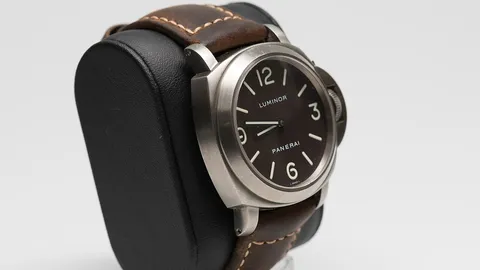
What made the transition successful was that IWC did not try to make the watch “dressy.” They kept the sandblasted steel finish and the heavy buffalo leather straps. These watches were never meant to be subtle. They were designed to dominate the wrist. Throughout the late 2000s, the Big Pilot became the unofficial uniform of the brand. If you walked into a high-end watch boutique during this period, you knew exactly what the Big Pilot looked like, even if you had never seen one in person. It occupied the same cultural space as a Panerai Luminor, but with a Swiss heritage that appealed to those who wanted a bit more technical pedigree under the hood.
The Shift to the 5009 and Beyond
In 2012, IWC rolled out the 5009 reference. This iteration smoothed out some of the quirkier design elements of the earlier models. The minute track was simplified and the date window integration became more seamless. While some purists complained that IWC was losing the raw, industrial edge of the 5002, the market disagreed. The Big Pilot had moved from being a niche enthusiast watch to a genuine pillar of the brand.
This era also saw the introduction of various limited editions, including the TOP GUN series and the Le Petit Prince versions. The transition to ceramic cases and titanium allowed IWC to experiment with weight and durability. Even with these modern materials, the core dimensions stayed mostly consistent. The Big Pilot remained a 46 millimeter monster. It is a rare example of a watch that forced the market to adapt to it, rather than the other way around.
Why We Still Care About the Big Pilot
When you strap on a Big Pilot, you are not wearing a watch that hides well. It is a piece of equipment. The movement, now updated to the 52110 caliber in newer iterations, still features that signature seven-day power reserve. The dial remains one of the most legible layouts in existence. There is no clutter, no unnecessary sub-dials, and no confusion about what the watch is meant to do: tell the time at a glance.
Collectors love the Big Pilot because it refuses to apologize for its size. In an industry that is currently obsessed with “vintage-inspired” 36 millimeter sports watches, the Big Pilot stands as a reminder of the 2000s era, when bigger was undeniably better. It is a watch for people who want to feel the weight of their timepiece. It is not a watch for the faint of heart, and that is exactly why it has remained a staple in collections for over two decades. Whether you are chasing an original 5002 or a modern ceramic variant, the appeal remains the same. It is a cockpit instrument that found a permanent home on the wrist.
Play today’s watch at .