Heuer Autavia History: 1933 Dashboard to Chronograph
In this article
The Heuer Autavia began in 1933 as a 12-hour dashboard stopwatch for automobiles, aviation and zeppelins, then Jack Heuer recreated it as a wrist chronograph between 1962 and 1969. Its move from dashboard to wrist is the defining arc of the model, and it explains why the Autavia is read as both a precision instrument and a racing watch.
The Dashboard Instrument That Came First
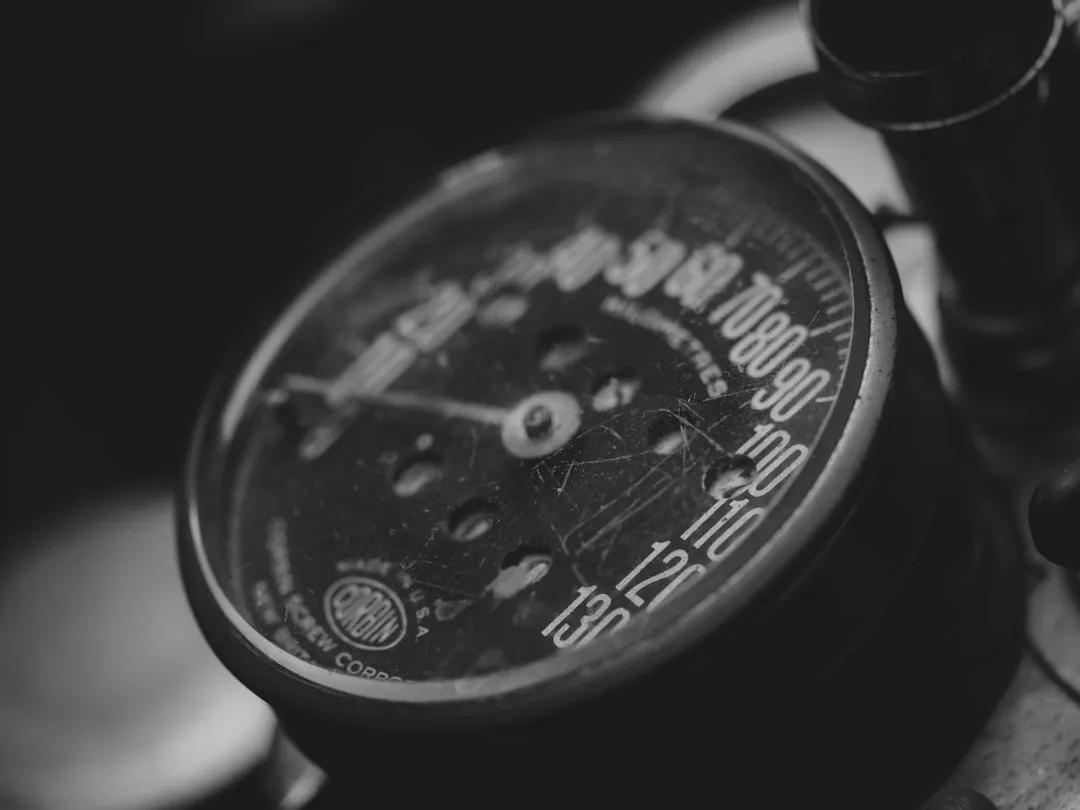
Heuer did not design the first Autavia for the wrist. The instrument that carried the name was built for dashboards, and it delivered accuracy to one-fifth of a second. Heuer combined the beginning of “Automobile” and “Aviation” to create the name in 1933. Dashboard timers for cars and aircraft entered the catalog starting that year. Dashboard-mounted Autavias became standard equipment for racers and rally navigators from the mid-1930s through the late 1950s.
The job was simple to describe and difficult to execute: measure intervals reliably while a car or aircraft was moving, vibrating, and demanding attention elsewhere. A dashboard timer had to be legible at a glance, durable enough for rough roads and airfields, and precise enough to settle close results. That functional brief explains why the Autavia name carried weight before it ever appeared on a dial. It also places the model in the larger story of chronographs moving out of workshops and into machines, a transition explored in The Birth of the Chronograph: How Stopwatches Became Watches.
Reference Numbers Before Model Names
For most of Heuer’s history, chronographs did not carry model names. From the 1860s through the 1950s, the company described them only by reference numbers. That changed in 1962, when Heuer began giving chronographs model names printed at top-dead-center of the dial. The Autavia name, already established on the dashboard side, made its way onto wristwatches. A rotating bezel remained the model’s defining feature throughout its life.
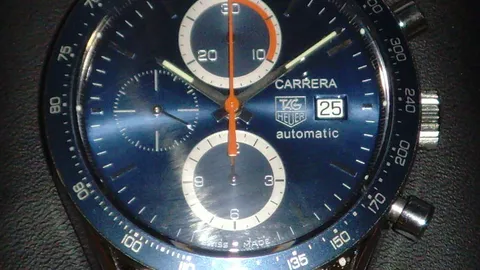
The naming shift was not cosmetic. A reference number speaks to catalogs and dealers; a name speaks to customers. Printing that name at the top of the dial made the watch identifiable from across a room, and it gave Heuer a way to build families of racing chronographs rather than a list of anonymous cases. The Autavia benefited from that change because its name already had a history. It also benefited from the rotating bezel, which turned the wristwatch into a tool for measuring elapsed time without relying solely on the dial. The moment fits a broader shift in racing chronographs, similar to the story told in TAG Heuer Carrera: Born On The Track.
Screw-Back Cases and the 1960s Autavia
The first wrist Autavias used screw-back cases. The first execution ran from 1962 to 1965, and the second from 1967 to 1969. The visual difference between the two was the bezel: earlier models had a wider bezel, later models a narrower one. That change may sound minor, but on a chronograph the bezel frames the timing scale and shapes the watch’s face. A wider bezel gives the watch a more instrument-like presence; a narrower one lets the dial breathe and can make the case feel larger. Collectors often read those proportions before they check anything else.
The screw-back construction also set these early wrist Autavias apart from later compressor-case models. It was a period of experimentation, when Heuer was translating a dashboard name into a wristwatch language. The result was not a direct copy of the dashboard timer. It was a new object that borrowed the Autavia’s authority while adapting to the wrist. For anyone sorting chronograph types, case architecture and bezel function matter as much as dial layout, as explained in Chronograph Buying Guide For First-Timers.
Compressor Cases and the Automatic Shift
In 1969, Autavia introduced a compressor case, used into the early 1970s. Reference 2446C used this compressor case from its 1969 introduction. Also in 1969, Heuer introduced a new case to accommodate the larger automatic movement. The change reflected the broader move from manual-wind chronographs to automatic ones. A larger movement required more room, and the case grew to match.
The automatic era changed more than dimensions; it changed how the chronograph worked on the wrist, a subject explained in how a chronograph actually works. With an automatic movement, the watch no longer depended on daily winding to keep running, which made it more practical for drivers and anyone who wanted a chronograph ready to time an interval without preparation. The compressor case and the later 1970s case both belong to this transition. They show Heuer adapting the Autavia to a new mechanical reality while keeping the model’s identity intact. The move from screw-back to compressor to a larger automatic case is not just a collector’s detail. It tracks the shift from a hand-wound racing tool to a more everyday-capable chronograph.
Racing Names and the Viceroy Promotion
Autavia’s wrist life is inseparable from motorsport. The model also entered a different kind of public awareness in 1972, when Viceroy cigarette brand promotion featured the Autavia. That promotion placed the watch in front of an audience beyond race paddocks and timing stands. Racing chronographs of the period were often sold as tools for drivers and navigators, not as luxury objects. The Autavia’s dashboard roots gave it a credible link to that world.
If an automatic sits unworn for days, a watch winder keeps it running.
Even when the watch was on a wrist rather than a dashboard, its name carried the memory of cars and aircraft. The Viceroy promotion is a reminder that the Autavia was not only a technical exercise. It was also a product with a public face, sold through channels that reached people who might never own a stopwatch for rally navigation. If you enjoy identifying racing chronographs from their details, try a round on Watchdle.
FAQ
What replaced the dashboard Autavia?
The Auto-Rallye/Monte-Carlo replaced it in 1957, and the Monte Carlo model was its late-1950s replacement.
How did Autavia case dimensions change?
Screw-back cases measured about 39 millimeters across the dial and 13 millimeters thick. The 1969 compressor case measured 40.4 millimeters across and 13.5 millimeters thick, while 1970s cases measured approximately 42.5 millimeters across and 15 millimeters thick.
Which racing drivers wore Autavias?
Mario Andretti and Jochen Rindt wore manual-wind Autavias in the late 1960s. In the 1970s, Jo Siffert, Gilles Villeneuve, Clay Regazzoni and Derek Bell wore automatic Autavias.
What crystal types appeared on later Autavias?
Reference 1163 used a plastic crystal, while References 11630 and 11063 used mineral crystals.
As an Amazon Associate we earn from qualifying purchases.