Cartier Tank History: Wartime Inspiration To Icon
In this article
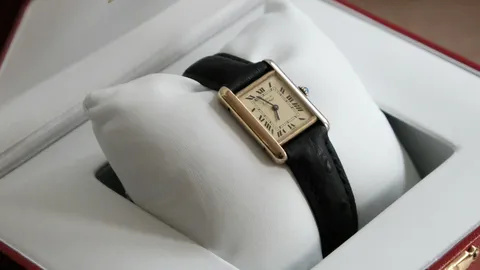
The Cartier Tank is a French dress watch first crafted in 1917 by Louis Cartier, inspired by Renault tanks on the Western Front. It entered serial production in 1919 with an initial run of six steel pieces powered by manual movements.
The Cartier House Before The Tank
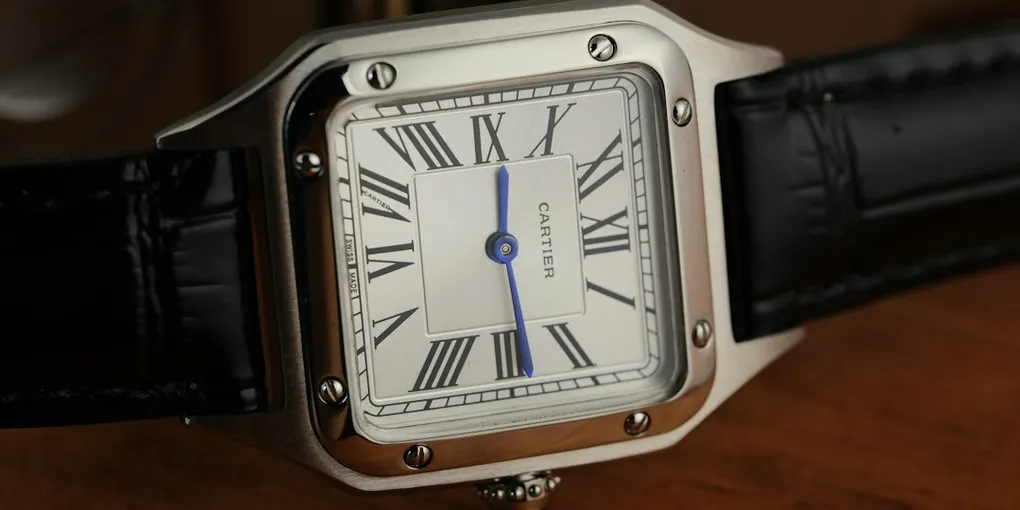
Louis-Francois Cartier lived from 1819 to 1904 and learned the trade as an apprentice to Adolphe Piccard. He founded the Cartier company in 1847 when he was twenty-eight years old. By the time the Tank appeared, the house had already been operating for many decades. Its wristwatch credentials were visible in 1904, when it introduced the Santos. That model was made of steel, used an automatic movement, and came from France. The Santos thus arrived more than a decade before the Tank, demonstrating Cartier’s comfort with modern materials and self-winding mechanics ahead of the Tank’s manual debut. The house’s survival into the twentieth century meant that Louis Cartier could draw on an existing infrastructure of craftsmen and suppliers when he began sketching the Tank. That institutional memory mattered because the Tank required a different approach to case construction than the round watches that dominated earlier production. The shift from pocket watches to wristworn timepieces during this era is covered in How The Wristwatch Won Over The Pocket Watch.
Battlefield Inspiration And Design Origins
Louis Cartier developed the Tank after studying Renault tanks on the Western Front, with the Renault FT-17 tank serving as a concrete reference. Cartier, the manufacturer, oversaw the creation of a timepiece that translated military vehicle forms into a wristwatch format. The first example was crafted in 1917, establishing a direct link between battlefield hardware and a new category of dress watch. Because the design came from Louis Cartier and was tied to a specific French tank used in the war, the watch carries a clear provenance that separates it from generic rectangular shapes. Looking at the Renault FT-17, Cartier saw a boxy, utilitarian form that could be shrunk to wrist proportions without losing its character. The watch therefore inherited a visual language from an object designed for mud and trenches rather than drawing rooms. More detail on this wartime connection appears in Cartier Tank: A WWI Battle Tank Reimagined As A Wristwatch.
Early Production Runs
Cartier introduced Tank production in 1918, then moved to full serial production in 1919. That first full production run comprised a small number of pieces. The limited scale of the launch suggests Cartier treated the Tank as a careful experiment rather than an immediate high-volume offering. Because the first run was so limited, early Tanks did not reach a broad audience immediately. Their scarcity today is a direct result of that cautious production strategy. Three years later, the house added the Tank Louis, released in 1922. The watch’s analogue display places it within the traditional watchmaking format Cartier had long supported.
Silent Film And Mid-Century Owners
Rudolph Valentino wore a Cartier Tank in the 1926 film The Son of the Sheik, bringing the design to a cinema audience shortly after its early production years. The appearance in a major silent film linked the Tank to Hollywood glamour at an early stage in its history. Seeing Valentino wear the Tank on screen connected the watch to a new kind of celebrity endorsement, one that relied on film rather than print. The image of a movie star wearing a rectangular watch helped normalize the shape for the public. After Valentino’s era, the Tank continued to be worn by notable individuals, though specific records from the intervening decades are tied to later auction events rather than the initial release period.
Later Tank Variations
The Tank Americaine arrived in 1989, followed by the Tank Française in 1996. By 2016, Cartier produced six distinct Tank references: the Tank Anglaise, Tank Louis Cartier, Tank Américaine, Tank Française, Tank MC, and Tank Solo. These later references extend the Tank story well beyond its earliest origins and show how the line changed over time. The gap between the late twentieth century models and the later reference list shows that Cartier revisited the Tank repeatedly across decades. Each generation of Tank models kept the core identity while addressing contemporary tastes. It sits in a different category from sport-oriented collections, a distinction outlined in Dress Watch Vs Sport Watch: Building A Two-Watch Collection. Readers interested in winding systems can review Automatic Vs Quartz: The Real Difference. If you enjoy matching watch trivia to daily puzzles, WatchDle offers a guessing game at https://watchdle.com/play/.
How The Tank Compares To Earlier Cartier Watches
The Santos and the Tank came from the same house but reflected different inspirations. One was tied to early aviation, the other to armored warfare. Yet they served different moments in the brand’s evolution. The Tank occupies a formal category, while the Santos leaned toward a more utilitarian wristwear idea. This contrast helps explain why the Tank became a staple of elegant wardrobes rather than a tool watch.
Why The Tank Endures
The Tank has remained in production for more than a century because its design ties it to a specific historical moment while remaining legible as a wristwatch. Its connection to the Western Front and to Louis Cartier’s personal involvement gives it a story that goes beyond materials or complications. Collectors and wearers have continued to seek out Tank references across generations, from the silent film era to modern auctions. This longevity sets it apart from many watches that enjoy only a brief period of popularity.
The Tank And The Broader Watch Market
While the Tank was being developed, other watchmakers were also exploring new formats, but few linked a timepiece so directly to a tank seen on a battlefield. The result is a watch that occupies a distinct place in horological history, sitting between the early Santos wristwatches and the many formal timepieces that followed. Its connection to a specific conflict and its long production run mark it as a product of a particular era, yet its references continued to appear well into the twenty-first century.
FAQ
Who received the first Cartier Tank prototype?
U.S. General John “Black Jack” Pershing received the prototype.
What happened to Jacqueline Kennedy’s Cartier Tank?
Her brother-in-law gave her the watch, which she began wearing in 1963, and it later sold at auction for $379,500 in 20017.
When was the Tank Louis released?
The Tank Louis arrived in 1922.
How did Cartier mark the Tank’s centenary?
Cartier offered a centenary model in 2017 powered by an automatic movement.