Automatic or Quartz: Match the Movement to Your Routine
In this article
Choosing between automatic and quartz comes down to ownership style. Quartz asks for little beyond a working battery; automatic turns wrist motion into mechanical energy. Neither wins everywhere—they solve timekeeping in different ways. For a focused comparison, see Automatic Vs Quartz: The Real Difference.
Power Source and Movement Types
Quartz watches use a battery. Automatic watches are mechanical and self-winding, drawing energy from the wearer’s motion. Mechanical watches also include manual-wind models, which must be wound by hand; How movements differ explains the broader categories.
In an automatic watch, a rotor spins with wrist movement and winds the mainspring. That stored energy is released through the escapement to the balance wheel, producing the sweeping second hand. Wear it regularly and it stays powered; leave it off long enough and it stops when its stored energy runs out. If you need to top it up, How to wind an automatic watch without breaking it shows the safe method.
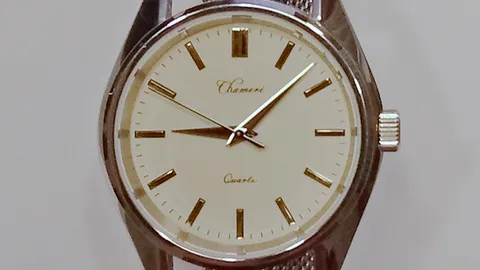
Quartz watches rely on a battery current passing through a quartz crystal. The crystal vibrates to regulate time, making quartz generally more accurate than mechanical watches. Battery life can range from one to five years, and Replacing a watch battery at home without ruining it covers the precautions. Quartz watches can be repaired as long as their integrated circuits and required batteries remain available.
Accuracy and Feel
Quartz accuracy is its main advantage: a quartz watch keeps time within ±15 seconds per month. Mechanical watches drift more day to day, though individual performance depends on movement and condition.
Automatic watches appeal for a different reason. They are small machines whose balance wheel and escapement create a visible, continuous sweep. Many enthusiasts choose them despite quartz’s advantages in precision and convenience.
Maintenance, Longevity, and Wear Habits
Automatic watches are not maintenance-free; How often should you service a mechanical watch? covers the signs and intervals. A high-quality mechanical watch can last more than 100 years with regular service. Longines has said its heritage workshop can repair virtually every mechanical watch it made, even those older than that.
Quartz watches are usually simpler to keep running, though their batteries must eventually be changed. If you wear one watch most days, an automatic will stay powered naturally. If you rotate watches or leave them unused for long stretches, quartz avoids resetting and winding rituals.
The Swatch Sistem51 Example
Automatic watches are not only luxury pieces. Swatch released the Sistem51 in 2013 as a robot-built automatic with 51 components and a 90-hour power reserve. Hodinkee and Swatch later collaborated on the Hodinkee Sistem51 Vintage 84, a $150 limited edition inspired by a 1984 Swatch design. That original design was quartz powered, so the collaboration flipped the script. The Vintage 84 could be pre-ordered through the Hodinkee Shop.
Longines, for example, offers both mechanical and quartz timepieces, so brands do not treat them as mutually exclusive. The right choice depends on what you want from the object, not on a single price tier.
Which Should You Buy?
Choose quartz for set-and-forget timekeeping, battery-powered operation, and high accuracy. Choose automatic for self-winding mechanics, visible motion, and periodic care. If you enjoy testing your eye for watches, try the daily game at Watchdle while you decide. The decision ultimately comes down to temperament: quartz for precision and simplicity, automatic for mechanics and ritual.
FAQ
How accurate are quartz watches compared with mechanical watches?
Quartz watches are generally more precise because their oscillator runs at a much higher frequency than a mechanical balance wheel. That advantage shows up as steadier timekeeping over days and weeks.
How often should an automatic watch be serviced?
Longines suggests about every three to five years, since lubricants can dry out and gaskets can age. The exact interval still depends on the movement and how the watch is worn.
Can a quartz watch be repaired?
Often yes, but practicality depends on whether replacement electronic modules and cells remain available. The battery is the routine wear part and will eventually need changing.