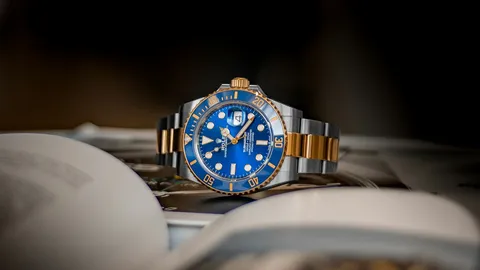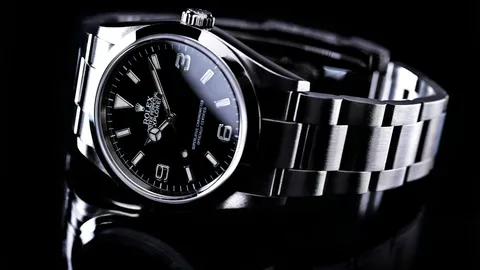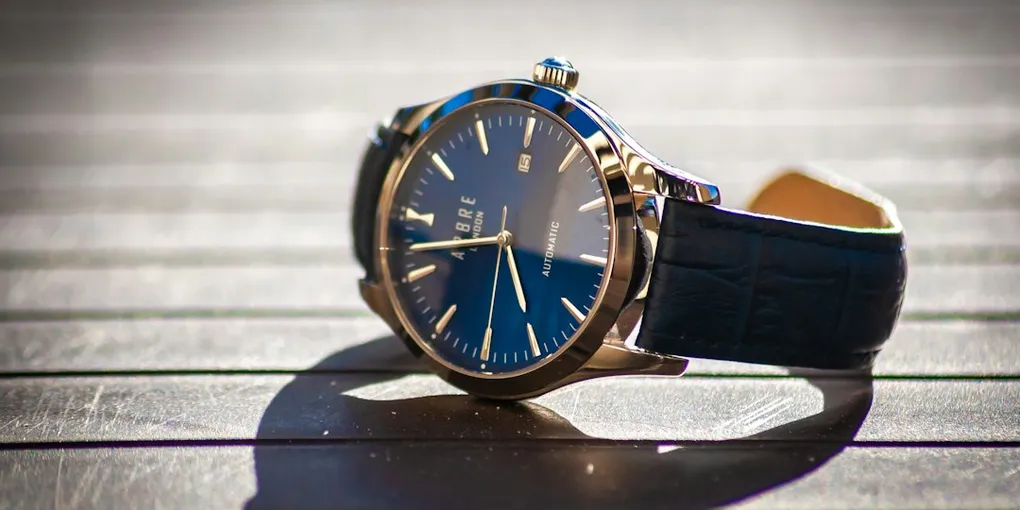
Why Watch Crowns Have Ridges: Grip, Design, And Grooves
In this article
Run a fingertip over the side of almost any watch crown and you’ll feel it: a series of fine ridges, grooves, or facets running around the metal. That texture is not decoration by accident. Watch crown ridges exist above all to provide grip — they turn a tiny, slippery cylinder of polished steel into something your fingers can actually turn, whether you’re winding a movement or pulling the crown out to set the time.
The Grip Problem Of A Very Small Cylinder
A crown is a difficult object to handle. It is small, round, and usually made of smooth metal, and the tasks it performs — winding a mainspring, setting hands, adjusting a date — all depend on rotating it against a sealed stem. A perfectly smooth cylinder would be maddening to turn, especially with cold fingers, wet fingers, or in a hurry.
The ridges solve this by giving your fingertips something to key into. Grooves make a crown easy to grip because the skin of your fingers catches on the edges rather than sliding over them, so the force you apply goes into rotation instead of slipping. Anyone who has tried to set the time on a dive watch with a large, deeply grooved screw-down crown knows how satisfying that purchase feels — the crown responds to a light twist instead of demanding a pinch-and-pray grip. If you have never gone through the full routine of unscrewing, setting, and locking one down, our walkthrough on how to set the time on a diver watch shows exactly where the crown’s texture earns its keep.
There is a physics angle here too, though you don’t need equations to feel it. Grip depends on friction and on the area where friction acts. Ridges effectively increase the effective diameter of the crown and add edges that bite into skin, which is why a ridged crown of modest size can feel easier to turn than a larger, polished one.
Knurling, Fluting, And The Ridged Majority
Ridges are by far the mainstream choice. Most watch crowns have ridges of some kind, and the ridged crown is the most common crown you will encounter across the industry, from entry-level quartz pieces to haute horlogerie. The practice is so widespread that it has its own vocabulary and its own family of styles — coarse knurling, fine fluting, coin edges, faceted flanks — which we break down in depth in our piece on why watch crowns are knurled.
The variations you see from one brand to another come down to how the grip is delivered. Fine, closely spaced grooves give a subtle, elegant texture that still catches the fingers. Deeper, chunkier knurling screams tool watch and works even with gloves or after a swim. Faceted fluting, cut like a series of flat planes, can look almost gem-like under light while still doing the same fundamental job. The engineering goal never changes; only the styling of it does.
Conical Crowns: Grip Is Not Optional
Some crown shapes simply cannot function without their texture. A conical crown — one that tapers like a truncated cone rather than standing as a straight cylinder — needs ridges to provide any grip at all. The taper itself offers nothing for fingers to hold; without grooves or facets cut into its sloped flank, twisting it would be like trying to turn a polished metal top by hand. On these shapes, the ridging is structural to usability, not an accent.
That is worth remembering when a seller presents a conical or tapered crown as “clean” or “minimalist” after polishing the texture away. On most designs, smoothing those grooves doesn’t refine the crown — it breaks it.
The Deliberate Exception: Smooth And Shiny
And yet not every crown follows the rule. Some watch crowns are made smooth and shiny, polished to a mirror finish with no ridges at all. This is a conscious design decision, and it tends to appear where the priority shifts from workmanlike utility to elegance: a perfectly round, gleaming dome catching the light can be the quiet finishing note on a refined case.
Smooth crowns trade practical grip for visual calm, which is why they suit certain aesthetics better than others. On a formal piece meant to slip under a cuff, the polished crown reads as jewellery. On a tool watch, the same smoothness would read as a mistake. This tension between grip and polish is one of the visible dividing lines in watch design, and it maps neatly onto the broader split between tool and dress pieces — something we explore in our guide to dress watches versus sport watches.
Grooves As A Design Signature
Here is the interesting second act of the ridged crown: a functional feature became a design language. Because most crowns carry ridges, the pattern of those ridges now helps define a watch’s design. A deeply knurled crown signals ruggedness before you ever read the dial. A finely fluted one suggests refinement. A smoothly polished one whispers dressiness.
In other words, the texture does double duty. It still grips, but it also tells you what kind of watch you’re holding at a glance — the crown participates in the same visual storytelling as the bezel, the hands, and the case finish. Some of the most recognisable crowns in the industry are identifiable from their ridging alone, the way a bezel’s pip at 12 o’clock can identify a dive watch family from across a room. Once you start noticing crown treatments, you’ll spot the differences everywhere, and you’ll wonder how you ever lumped them all together as “little knobby things on the side.”
If you enjoy exactly this kind of detail-spotting — identifying watches from small cues like crown shape, dial text, or hand design — the daily game at Watchdle turns it into a puzzle: give it a play and see how much a single crown silhouette can give away.
A Small Detail Worth Handling
Next time you try on a watch, spend a moment just turning the crown. Feel whether the ridges are sharp or soft, wide or fine, cut into the cylinder or running up a taper. Notice whether the texture actually helps or whether it’s mostly theatre. A crown is one of the few parts of a watch you are meant to touch regularly — it is the interface between your fingers and the movement — and its ridges are the oldest, simplest answer to a real problem: how do you turn something small, round, and smooth without thinking about it?
The answer, it turns out, is to give it edges.
FAQ
What are the ridges on a watch crown for?
They provide grip. Because crowns are small cylinders of smooth metal, the ridges and grooves give your fingertips edges to catch on, making it easy to rotate the crown for winding and setting.
Do all watch crowns have ridges?
No. Ridged crowns are the most common, but some crowns are deliberately made smooth and shiny, trading the practical grip of grooves for a polished, elegant look.
Why does a conical crown always have ridges?
A conical crown tapers, and that sloped shape offers nothing for fingers to hold on its own. It needs ridges to provide grip, so on this design the texture is essential rather than decorative.
Can ridges affect how a watch looks, not just how it works?
Yes. Since the ridged crown is the industry’s dominant style, the specific pattern of grooves or facets has become part of a watch’s design identity, helping signal whether a piece leans rugged or refined.