Tissot PRX History: From 1978 Seastar to 2021 Revival
In this article
The Tissot PRX began in 1978 as a Swiss steel watch with an integrated bracelet, and after a long absence it returned in 2021 as a modern reissue of that original design. The revival moved quickly from a quartz 40 205 to an automatic Powermatic 80, turning a forgotten 1970s shape into a full family of models.
Seastar Beginnings and the Royal Oak Effect
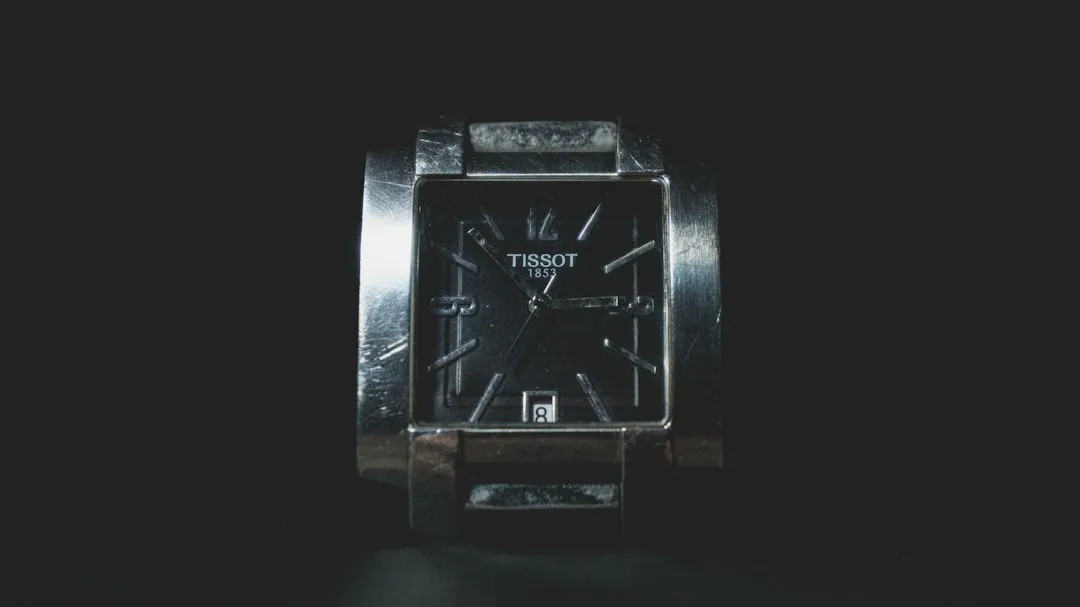
The first PRX did not carry the PRX name on its dial. It was sold as the Seastar, and it used a quartz movement—a fitting choice for a watch entering a decade when battery power was rewriting expectations. Its case was a flat barrel shape with sharp facets, and the bracelet was not a separate strap bolted between lugs. Large flexible links flowed directly out of the case, creating the integrated look that defines the line today. The facets run along the top of the case, and the links articulate to follow the wrist, so the watch reads as one continuous object rather than a case with a strap attached.
That architecture arrived after the Audemars Piguet Royal Oak debuted in 1972, and the influence is hard to miss; the Royal Oak had already shown what a steel sports watch with a case-and-bracelet architecture could be. The Seastar’s proportions were dressier than a traditional diver, but its construction placed it in the era of the dive watch as a style template. The flat case and articulated bracelet gave it a profile that was both technical and elegant, a combination that would later make the design ripe for revival.
Why the First PRX Disappeared
The original PRX had a short commercial life. It was discontinued several years after launch, pushed aside by Japanese digital watches that came to dominate the early 1980s. That dominance was a major shift in the market, and the PRX was not alone in feeling the pressure. Its disappearance meant the design sat unused for decades. The same wave that swept away many quartz analog watches of the 1970s also helped create new icons, from the Casio G-Shock to the broader digital boom. For Tissot, the result was a gap between the original run and the modern line, one that would only be closed when the company looked backward.
A CEO, an Archive, and a 2020 Rediscovery
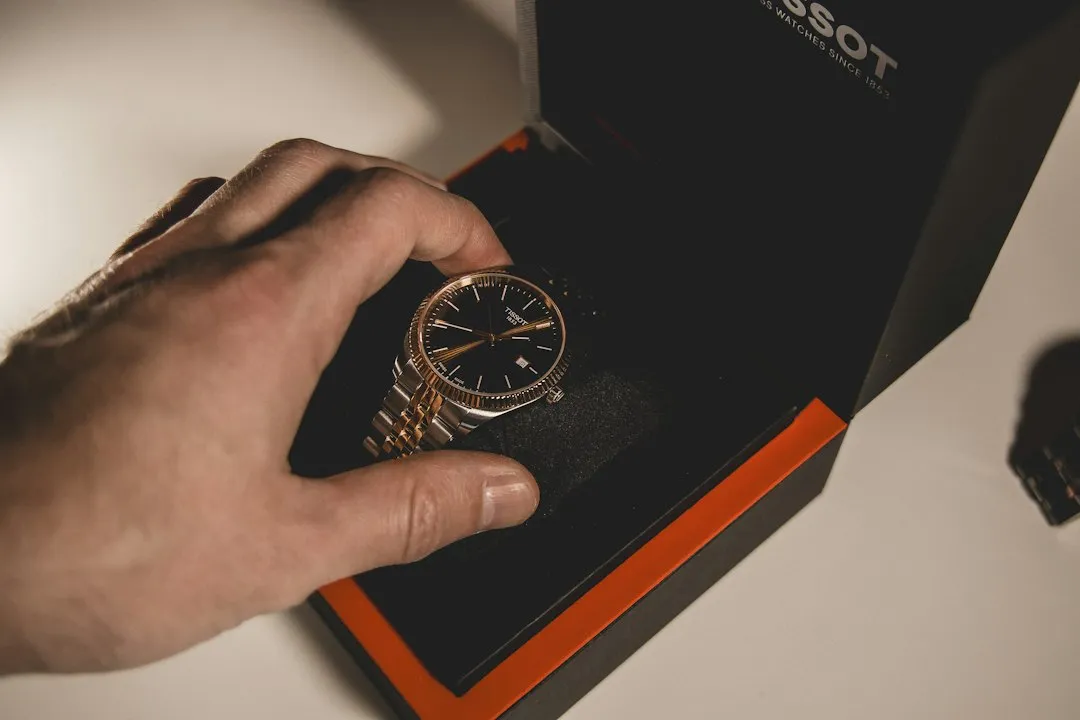
Tissot’s archive became the starting point for the revival. During his first week as CEO, Sylvain Dolla found a 1970s original PRX in the archive. The rediscovery is dated to 2020, the same year planning for a relaunch began. That sequence matters: the modern PRX was not dreamed up in a marketing meeting but pulled from an existing object, then scaled up for contemporary wrists. The archive provided a physical reference for proportions, which helped the reissue stay close to the source. The 1970s original was the reference point, and Dolla’s early find gave the project a concrete starting point.
Tomography and the PRX 40 205
To keep the original proportions while enlarging the watch, Tissot used tomography. The result was the PRX 40 205, launched in February 2021. Its case measures 40mm across, 10.4mm thick, and 44.6mm from lug to lug. A sapphire crystal protects a dial with a sunburst finish, and the movement is a quartz ETA F06.115. The model brought the shape back in quartz form, with a specification set that balanced everyday wear and the original’s visual code. The 40 205 was the first modern expression of the design, and it set the template for everything that followed. The proportions were not guessed; they were measured from the archive.
The Automatic PRX Powermatic 80
The revival did not stay quartz-only for long. Tissot started with quartz and then immediately added an automatic, a sequence that reflected the market’s appetite for mechanical movements. The PRX Powermatic 80 arrived a few months after the quartz 40 205. Its movement is the automatic Powermatic 80.111 developed by ETA, and the dial carries a waffle texture. The waffle texture gives the automatic a different visual signature from the sunburst quartz model. The caliber’s frequency was reduced from 4 Hz (28,800 vph) to 3 Hz (21,600 vph), and a Nivachron hairspring is part of the specification. For buyers weighing the two approaches, the distinction between battery and mainspring is explored in Automatic Vs Quartz: The Real Difference. The automatic gave the PRX a mechanical option without abandoning the case and bracelet that made the design work.
Chronograph, Smaller Case, and Material Experiments
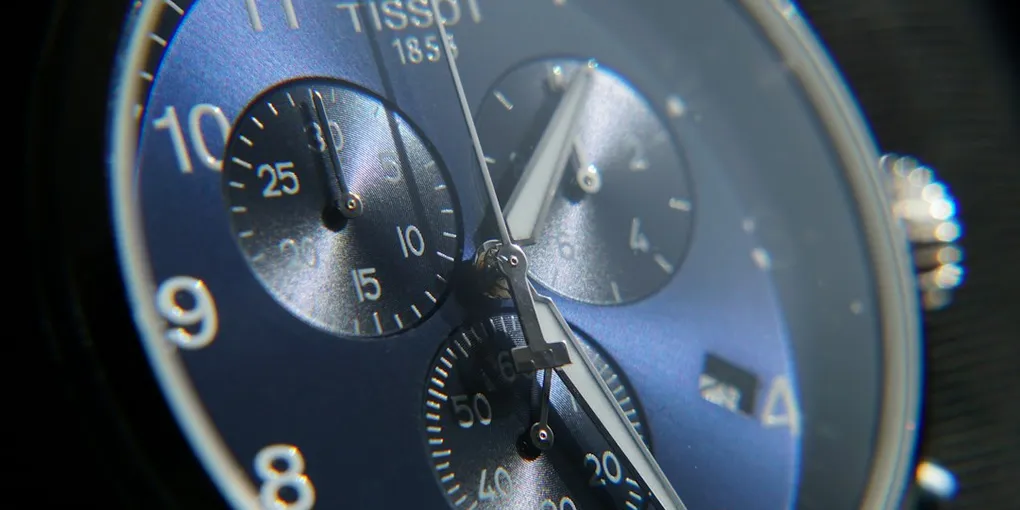
The PRX grew into a family. A Chronograph model joined the line. A 35mm version was released alongside the Chronograph as a nod to the original. The 35mm version and the Chronograph represent two directions: one smaller, one more complex. Beyond sizes, the collection expanded across finishes such as PVD gold and titanium, with dials ranging from mother-of-pearl to damascus steel. That variety turned a single reissue into a platform. If you want to test how well you can place the PRX among other iconic shapes, the watch guessing game at Watchdle offers a quick challenge. The range now covers different wrists and tastes while keeping the same basic silhouette.
What the PRX Represents
The PRX story is a case study in how a discontinued object can return without becoming a pastiche. Its revival depended on three things: an archive reference, a design method that preserved proportions, and a product strategy that moved from one model to many. None of those elements guarantees success on its own, but together they explain why the PRX feels connected to its past rather than merely retro. The watch’s identity rests on a shape that was once pushed aside and later recovered, not on a single movement or finish. It also shows how a brand can use its own history as raw material without simply copying an old reference. That continuity is why the PRX can be discussed alongside other integrated-bracelet designs without feeling like a copy.
FAQ
What does the PRX name stand for?
P and R stand for “precise and robust,” while the X is the Roman numeral ten. That ten refers to ten atmospheres, or 100 meters of water resistance.
How many historical watches does the Tissot archive hold?
The Tissot archive contains 7,000 historical watches.
What size is the PRX Chronograph?
The PRX Chronograph uses a 42mm case.
How long does the Powermatic 80 caliber run?
The Powermatic 80 movement has an 80-hour power reserve.