Open-Heart Watches: Why a Cutout Shows the Balance Wheel
In this article
An open-heart watch uses a deliberate cutout in the dial to expose the balance wheel, the oscillating component that regulates mechanical timekeeping. The aperture exists because that single part tells the story of the movement: when it is visible, you can watch the mechanism keep time rather than merely trusting that it does.
A Window Cut Into a Conventional Dial
Open-heart design is not about removing the dial. The rest of the dial remains intact, and the watch keeps a mostly solid, standard face with a small cutout usually positioned to reveal the balance wheel. That cutout frames the balance wheel rather than the whole movement. The rest of the movement stays hidden behind the dial, so the visible mechanism is a deliberate exception, not the rule.
The result is a controlled peek rather than a full reveal. The dial still does its main job: showing the time. The opening interrupts only enough to display one moving part. That means the watch can remain readable at a glance, while the aperture rewards a closer look. It is a secondary feature, but it changes how the watch feels on the wrist.
Shapes vary: round, teardrop, asymmetric. Each changes how the window sits on the dial and how much attention it demands. A round aperture feels like a porthole. A teardrop can guide the eye inward. An asymmetric opening can make the dial feel less formal. These are design effects, not mechanical ones. The point is that the watch remains legible as a watch. You still get a conventional dial, but with a small stage built into it.
The Anatomical Comparison That Named the Style
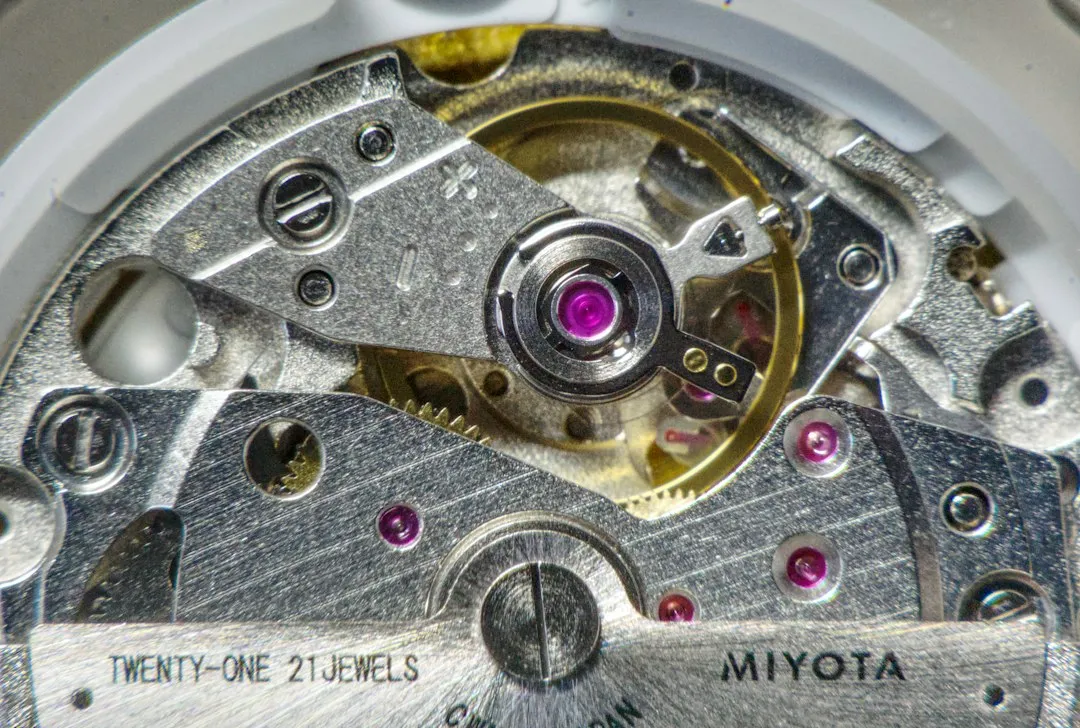
The style’s name comes from a visual coincidence. The cutout creates a small window roughly where a heart would sit on the human body. Through that window, the balance wheel’s continuous back-and-forth motion is visible almost like a heartbeat. It is not a literal heart, of course. It is a regulator doing its job in the open, and the aperture makes that job readable at a glance.
The balance wheel swings back and forth at a consistent rate, so the comparison is easy to accept. That consistency is what makes it a timekeeping regulator. The cutout turns that steady repetition into a visible pulse. You see rhythm rather than chaos. A heartbeat is also a repeated pulse, which is why the metaphor sticks. The watch’s pulse is mechanical, but the effect feels alive.
The name is not just marketing poetry. It describes what the eye sees. A small opening sits where a heart might sit, and behind it a part keeps moving. The dial around it stays still. That contrast between stillness and motion is the core of the design.
Open-Heart Is Not the Same as Skeleton
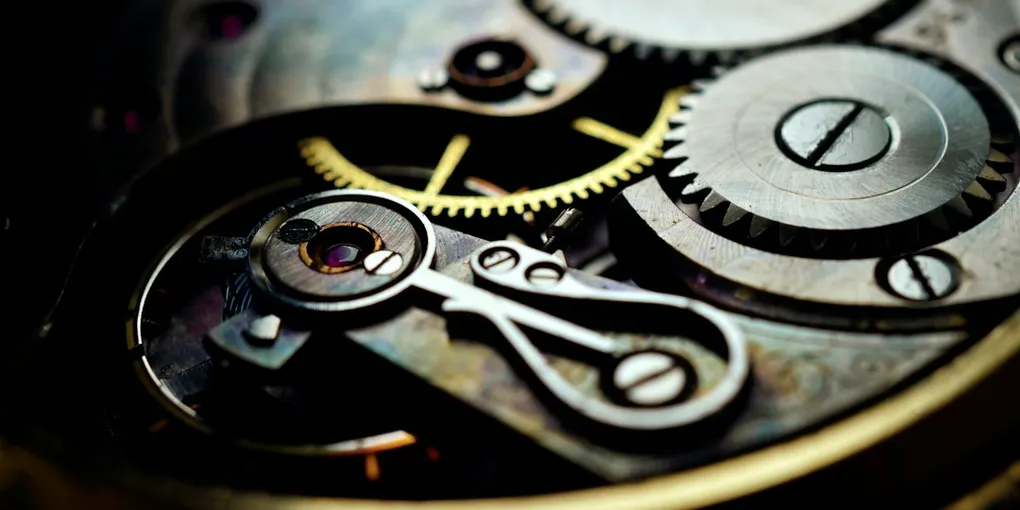
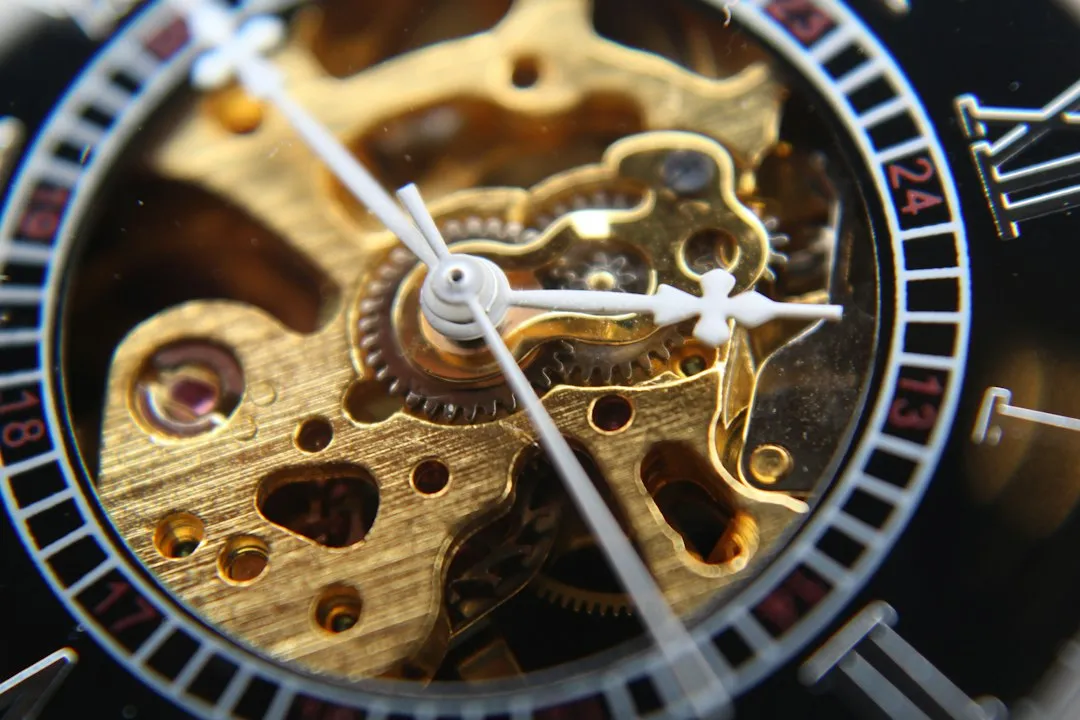
The two terms get mixed up because both put movement on display. Scale separates them. A skeleton watch removes most of the dial and bridges to reveal the entire movement. It cuts away most or all of the dial to expose the majority of the movement underneath. An open-heart watch reveals one component, typically the balance wheel, through a small cutout in an otherwise standard dial. A skeleton watch reveals most or all of the movement with the dial largely or entirely removed.
The effects are different. A skeleton watch exposes complexity. It shows structure, depth, and the architecture of the movement. An open-heart watch exposes function. It shows one part doing one job. A skeleton can feel architectural; an open-heart feels focused. One turns the movement into the dial. The other keeps the dial and adds a window.
The confusion is understandable. Both are mechanical displays, and both invite you to look closer. But the scale changes everything. A small aperture leaves room for conventional indexes and hands. A skeleton dial often makes legibility a secondary concern. An open-heart watch tries to keep both: a readable watch and a visible pulse.
Materials That Keep the View Clear
An open-heart watch can use a case in stainless steel, rose gold plating, or titanium. Those choices affect weight, color, and wear, but they do not change the basic idea. The crystal matters more for the view. Sapphire crystals resist scratching, which helps the aperture stay clean over time. A clear window is the entire point of the design, so a material that holds up to daily contact makes sense.
Case material sets the tone. Stainless steel feels practical, rose gold plating adds warmth, and titanium suggests a lighter, more modern presence. None of that changes the cutout itself, but it changes how the watch sits in a collection. The crystal, however, is directly tied to the feature. A scratched crystal would blur the one detail you bought the watch to see.
The dial around the cutout matters just as much. A busy dial competes with the aperture. A calm dial lets the balance wheel lead. The finish, color, and texture of the dial determine whether the window feels integrated or simply punched out. When the opening looks intentional, the watch reads as designed rather than modified.
The Trade-Off Between Mystery and Display
An open-heart watch does not try to explain every gear. It selects one moving part and asks you to watch it. That selectivity is the style’s strength. The dial remains a conventional background, so the hands still lead. The aperture becomes a secondary timekeeper: not something you read, but something you notice.
On the wrist, your eye catches the motion and then returns to the hands. The aperture is not a time-telling device. It is a sign of life. It gives the watch a face with a pulse. The rest of the movement remains a mystery, and that mystery is part of the appeal. You do not need to see every bridge to appreciate the mechanism.
To see the small details up close, a watch loupe helps.
If you want to train your eye for that kind of detail, the daily puzzles at Watchdle offer a low-pressure way to look closer at watches and movements. The exercise is simple: notice what is shown, what is hidden, and why the designer made that choice.
The best open-heart watches resist the urge to show too much. They trust the balance wheel to carry the drama. A small opening can be more powerful than a full skeleton because it focuses attention. It says: this is the part that matters. The result is a watch that remains a watch, but with a heartbeat you can see.
FAQ
Is an open-heart watch the same as a skeleton watch?
No. A skeleton watch exposes the mainplate, bridges, gear train, and often the balance wheel, plus the winding rotor on automatic models. That is a broader reveal than a small dial aperture.
Does an exhibition caseback do the same job?
An exhibition caseback lets you view the full movement from the rear. That is a different viewpoint from a dial cutout, which is meant to be seen from the front while wearing the watch.
Can the cutout ever show something other than the balance wheel?
Yes. The cutout can technically be positioned to reveal other components depending on the specific design.
As an Amazon Associate we earn from qualifying purchases.