How To Use A Tachymeter: Chronograph Scale Explained
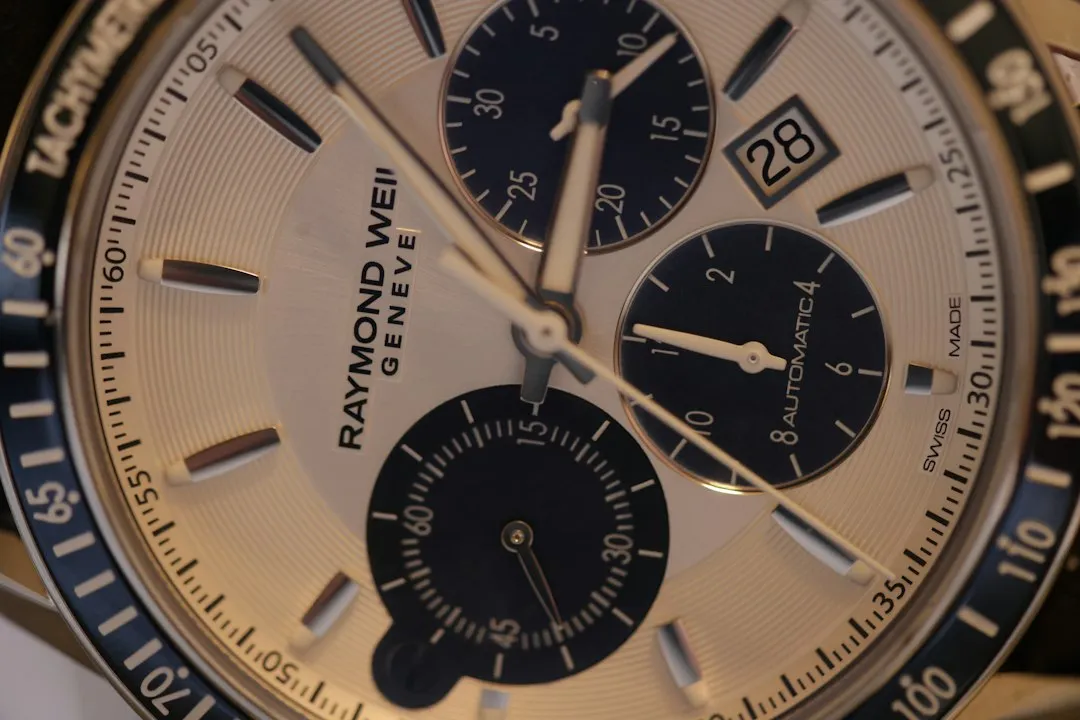
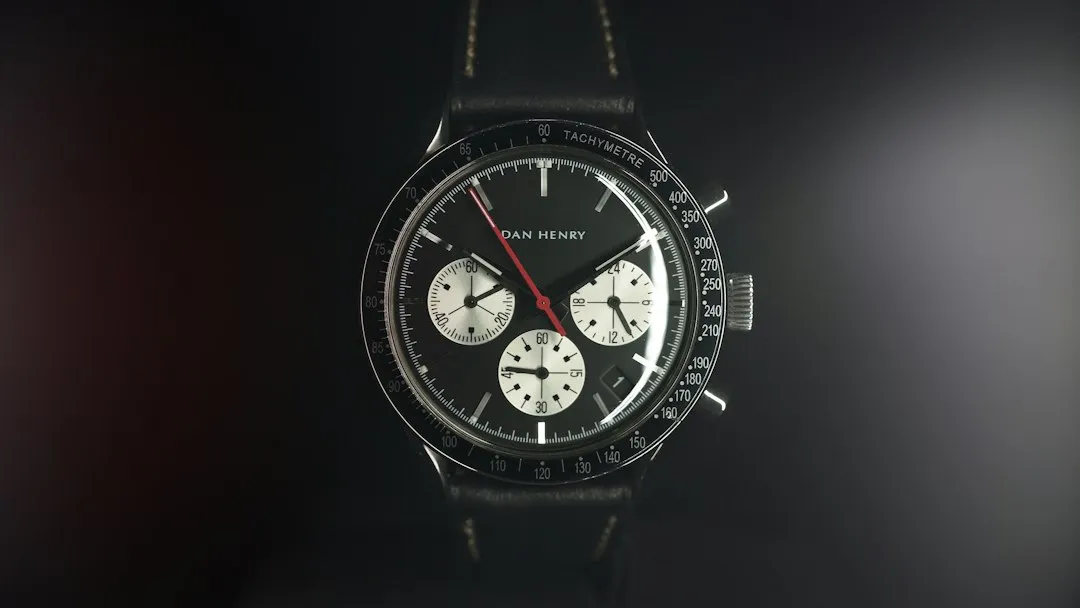
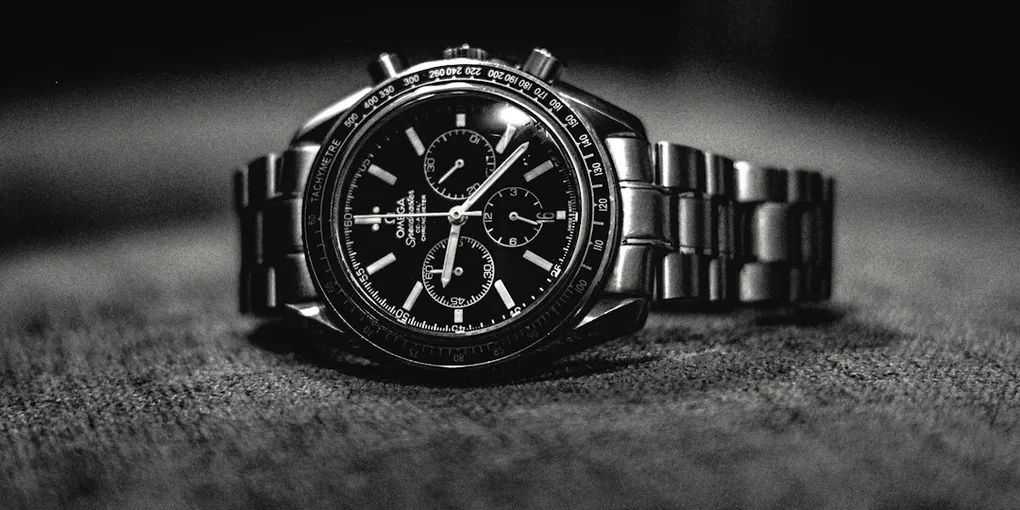
A tachymeter is a scale on a chronograph watch that converts elapsed time into an hourly rate. Start the chronograph, stop it at a known marker, and read the number under the chronograph hand to get average speed. Its busy-looking ring, often inscribed around an analog chronograph’s rim, is a simple rate calculator rather than a random set of numbers.
The formula is T = 3600/t, where T is the tachymeter value, t is elapsed seconds, and 3600 is the seconds in an hour. The scale is a fixed table of seconds-per-unit converted to units-per-hour, effectively a shortcut for that division. Because it is a specialized function, it qualifies as a complication; What Counts As A Watch Complication, Explained provides the wider definition.
Numbers and dashes run anticlockwise from 60 to about 500, following a chronograph hand that begins at 12 o’clock. If you are new to chronographs generally, the Chronograph Buying Guide For First-Timers covers layout and features.
For speed, choose a start and finish point. Start the chronograph with the second hand at 60 as you pass the first marker, then stop it at the second; the scale point beside the hand shows distance between markers per hour. That stop freezes the reading. The method works because the dial maps seconds per unit to units per hour. The movement side is explained in How A Chronograph Actually Works.
Within the first minute, the hand indicates the rate for a one-mile or one-kilometer distance. If the measured distance is longer, multiply the tachymeter figure by that distance. For slower readings, divide by distance traveled; for faster readings, alter the distance and multiply by it. These adjustments extend the clean one-unit case.
The scale can also reverse the calculation: when speed is known and distance is unknown, time the travel while maintaining that speed. Start the chronograph at the beginning, then stop when the scale number matching your speed appears; the hand then points to distance covered.
The scale appears only on watches that also have a chronograph, never on a simple three-hand watch. For the stopwatch-to-wristwatch story, see The Birth of the Chronograph. A signature use is the Breitling Navitimer: The Wrist Calculator. When finished measuring, Watchdle turns watch details into a quick game.
FAQ
Can a tachymeter measure events longer than a minute?
No. Its useful window is short: events lasting up to 60 seconds, with readings under roughly 10 seconds becoming hard to resolve.
Does the distance unit have to be miles?
Not at all. You may use miles per hour, nautical miles per hour, or kilometers per hour. The scale itself does not care, provided the same length unit is used throughout.
Can the tachymeter scale move on the watch?
Sometimes. A rotating, indexed bezel can align the start point differently from a fixed bezel or dial-printed version, but the conversion remains the same.
What other measurement can the scale handle?
It can measure the frequency of any regular event in occurrences per hour, so it works as a general rate converter for repeated events rather than only speed.