How To Change A Leather Watch Strap Without Scratching Lugs
In this article
Changing a leather watch strap without scratching the lugs comes down to preparation and controlled compression: shield the metal before the tool appears, use a spring bar tool rather than an improvised pick, and keep the tool from skating across the case. The care you take before and during the swap is what keeps the lugs clean.
Set the Case on a Stable, Soft Surface
A watch should be placed face-down on a microfiber cloth before you start. The cloth keeps the crystal and case from resting directly on a hard table, and it gives the watch enough grip that it does not skid when you press against a spring bar. Work at a table with both hands free. Before the tool comes out, clear the table; a rolling spring bar is easy to lose, and a watch that shifts at the wrong moment can turn a simple compression into a scrape. The microfiber cloth also gives you a place to set the strap once it is free.
Most watches use spring bars to hold the strap in place, so the task is usually a matter of compressing one small spring per side. If you want a broad refresher on the order of operations, How To Swap A Watch Strap In Two Minutes walks through the basic rhythm without the extra caution this job deserves. Read it first, then come back and slow down.
Tape the Outer Lug Edges Before You Touch the Spring Bar
Painter’s tape is applied to lugs for protection, and it is the cheapest insurance you can buy. Place tape on the outer edges of the lugs, the exact spots where a fork tip or spring bar end tends to land. Scotch tape applied around the lugs goes a long way too, especially if that is what you have within reach. The purpose is simple: tape prevents accidental tool slips from touching the case.
It does not need to be pretty or cover the whole watch. A small strip over each lug edge is enough. Press it down so it does not bunch, and avoid covering the spring bar groove itself. Tape is especially useful on polished lugs, where even a light touch from a metal tool can leave a bright mark. Apply one strip per side and press the edges flat. If you are using Scotch tape, keep it narrow and neat; the goal is a barrier, not a cocoon. When the strap is on and you are satisfied, tear the tape off when done.
If you are working on a watch with unusual lug geometry, Why Watch Lugs Are So Long Or Short explains why some edges are easier to protect than others.
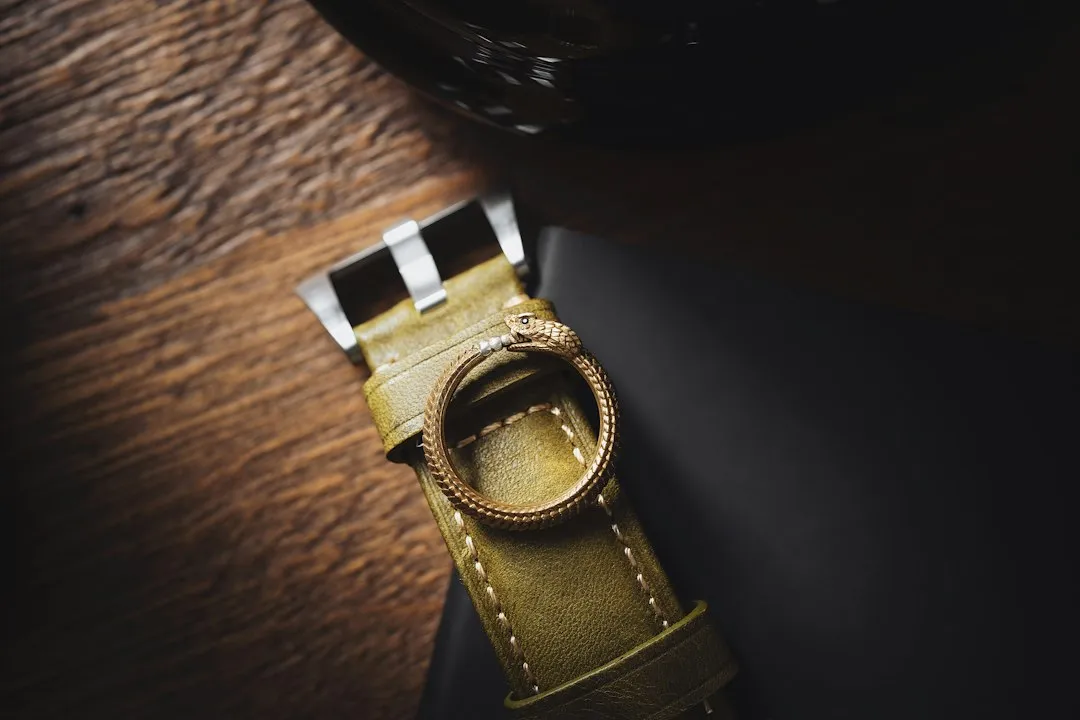
The Spring Bar Tool Does the Precise Work
A spring bar tool lets you compress the spring bar cleanly and precisely. That precision is the whole point. A proper spring bar tool has a fork tip for the spring bar groove, and on a leather strap you insert that fork tip between the lug and the strap, catch the groove on the spring bar, compress the spring bar inward, and gently pull the strap away from the lug.
Do not rush the first movement. Keep pressure steady and pull the strap away smoothly. If the strap has been mounted for years, a slow pull is better than a sharp tug. Keep the watch low, your elbows supported, and your movements small. If the fork tip does not catch the groove on the first try, reset and try again rather than adding force. Once one side is free, the rest of the removal usually goes quickly.
Hold the watch steady with your free hand, and keep the fork tip seated in the groove as you compress. The goal is to move the spring bar, not to pry against the lug.
Installing the New Leather Strap
Installation is the same sequence in reverse, but it has its own small traps. Insert one end of the spring bar into the lug hole, compress the other end using the tool, slide it into position, and wiggle the strap gently until you feel a click. Repeat on the other side. After installation, tug lightly afterward to confirm the strap is seated correctly. The click is important: it tells you the spring bar has expanded into the lug hole. If you do not hear or feel it, compress again and reseat. Repeat the tug test on both sides before you wear the watch.
If the strap resists, stop and check that the spring bar is aligned with the lug hole. Once the strap is secure, How to Care for a Leather Watch Strap: A Collector’s Guide covers the long-term habits that keep leather supple. For routine maintenance, How to Clean a Leather Watch Strap Safely explains how to remove sweat and grime without drying out the hide.
Coming From a Bracelet? Handle the Rigid End First
If you are swapping from a bracelet to leather, the risk profile changes. A watch bracelet is rigid, spring bars are often tight, and both sides need to be compressed evenly. That combination is why bracelets can feel more stubborn than a leather strap. A leather strap is more forgiving because it flexes, but a bracelet leaves less room for error.
For OEM bracelets, a bracelet removal tool compresses both sides evenly and reduces slips. Adjust the tool to the lug width, line up the tool heads with the spring bar grooves, pinch, and the bracelet pops off clean. The even compression supplied by the bracelet tool is what keeps the spring bar from launching or the tool from slipping. Once the bracelet is off, the leather strap can go on with the spring bar tool method above. If you also rotate in a NATO, How To Change A NATO Watch Strap covers a different retention system altogether.
A Quick Break for Watch Eyes
Strap changes are satisfying because they change the whole character of a watch, but they also demand attention. When you want to rest your eyes and test your watch knowledge instead, Watchdle is a browser game built around identifying and comparing watches. A few rounds can sharpen your eye for case shapes, dial layouts, and strap combinations, which makes the next real-world swap more deliberate.
FAQ
Why do scratches still happen when I use a spring bar tool?
Most scratches happen when the tool slips while compressing the spring bar. Under pressure, the tip can pop out of the groove and slide across the lug.
Which improvised tools should I avoid?
A knife, pin, scissors, or screwdriver are common mistakes that cause scratches. Worn or cheap tools slip easily, so they are not worth the risk.
Can I change the strap while the watch is on my wrist?
No. Changing straps while the watch is on the wrist is a mistake to avoid.
What if my strap has quick-release spring bars?
Quick-release spring bars are tool-free. Skip the tools and slide the built-in tab.