Casio G-Shock DW-5000C: The First G-SHOCK's History
In this article
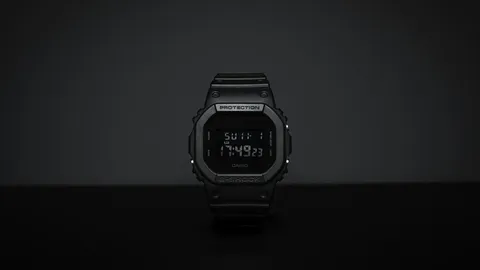
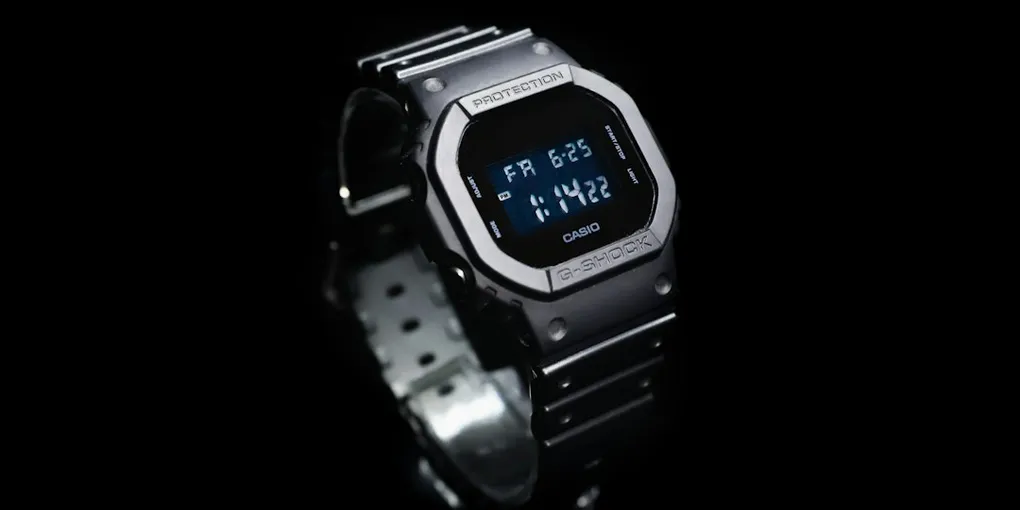
The Casio G-Shock DW-5000C, released in 1983, was the very first G-SHOCK, and it remains the reference every later model is measured against. Casio returned to it on November 28, 2024 with the DW-5000R, a re-creation of that original.
A Team Named Tough, and Two Years of Prototypes
The project existed before the watch did. Project Team Tough was formed in 1981, and what the group produced first was not a product but a sequence of attempts: over 200 prototypes built across about two years. That figure is the most revealing number in the entire story. Development teams routinely work through a dozen mock-ups before committing to tooling; two hundred implies the problem was never styling or feature count. Each round of testing must have exposed something the previous round had missed — a stress point, a joint, a seam — and the only way forward was to build another one and break it too.
The team’s chosen name is not incidental. “Tough” describes behavior under load rather than appearance, and a two-year prototype period reads like a group holding itself to that word until the results stopped surprising them. When failures become predictable, a design is close to finished. You can trace the same insistence on punishment over polish through the wider origin story of the G-Shock line, where it recurs again and again.
1983: The DW-5000C Becomes the First G-SHOCK
When the watch finally reached the market in 1983, it was the DW-5000C. No successor can take its place in the sequence — it stands at the front. The reference that converted a research project into a product family also set the pattern against which everything afterward would be judged, which is a stranger kind of inheritance than it first appears. A founding model doesn’t just come first; it defines what counts as a deviation.
Red, Blue, and Yellow on the Original Face
The DW-5000C’s face was colored in red, blue, and yellow. That combination deserves more attention than it usually gets, because it cuts against the visual conventions of rugged equipment. Serious tool watches tend toward restraint — a single accent, plenty of black, nothing competing for the eye. Casio went the opposite direction and used all three primaries at once, giving the watch a graphic boldness that reads from across a room. It also made the model impossible to mistake for anything else in a display case, no small thing for a new product trying to establish a name.
November 2024: The DW-5000R Re-Creates the Original
Decades later, Casio went back to the source. The DW-5000R was released on November 28, 2024, and its brief is stated plainly: it exists to re-create the DW-5000C. The verb matters. A reissue can get away with borrowing a name and a silhouette; a re-creation is a claim about fidelity — an argument that the original design is still strong enough to be rebuilt rather than merely nodded at. That is a harder standard to meet, and it puts the 1983 watch back at the center of the conversation whether or not you ever handle one.
Manufacturers rarely revisit their own first model without a reason. Doing so is an admission that the early version got something right that later refinements did not fully replace, and it forces a brand to compete with its own past rather than with a rival.
A Stainless-Steel Center Case
For the DW-5000R, Casio specifies a stainless-steel center case. The center case is the structural spine of a watch, the component around which everything else is organized, so a choice made there shapes how the finished object behaves rather than only how it looks. It is the kind of specification that separates a re-creation from a costume.
Two Words on the Case Back
The DW-5000R’s case back is engraved with two words: Shock Resistant. That is the entire premise of the line compressed to its smallest possible statement. Case backs are where makers tend to be most honest, since an engraving is only visible when the watch is off the wrist and cannot sell anything from across a counter. Placing the defining claim there is an act of identity rather than decoration.
Built at Yamagata Casio
Production of the DW-5000R takes place at Yamagata Casio. Facility names rarely surface unless someone wants them noticed, and enthusiasts pay attention for exactly that reason — knowing where a reference is assembled is part of knowing what it is meant to be.
What the First Reference Still Does for the Family
A founding model performs a job no later model can: it establishes the terms. The DW-5000C set the expectation that a G-Shock is defined by what it survives, and everything afterward has been a variation on that promise rather than a break from it. That is why the DW-5600’s own long history reads as a continuation rather than a reset, and why current G-Shock releases can push the formula in fresh directions while keeping the connection intact.
If you enjoy testing how well you actually read a watch — bezel, dial layout, hand shape — the daily challenge at https://watchdle.com/play/ is a quick way to find out where your eye gets lazy. And for readers who think about how watches are driven rather than only how they are styled, automatic versus quartz lays out the trade-offs in plain terms.
FAQ
How many prototypes did Project Team Tough build before the first G-Shock shipped?
The team built over 200 prototypes across a period of roughly two years, beginning with its formation in 1981. The scale of that effort suggests the obstacle was endurance rather than appearance.
What does the engraving on the DW-5000R’s case back say?
It reads “Shock Resistant.” Those two words carry the core claim of the entire line, placed where only the wearer sees them.
Which colors appeared on the DW-5000C’s face?
The original face was colored in red, blue, and yellow — all three primaries together, a palette far louder than the usual rugged-watch restraint.
Where is the DW-5000R produced, and what material does its center case use?
Assembly happens at Yamagata Casio, and the watch uses a stainless-steel center case. That combination of place and material is part of how the re-creation signals its seriousness.