How To Wind An Automatic Watch After It Stops
In this article
- An Automatic Watch Still Needs A Wound Mainspring
- Start With The Watch Off Your Wrist
- Deal With A Screw-Down Crown Before You Wind
- Use Steady Turns, Not Fast Ones
- Why A Fully Wound Automatic Does Not Snap
- If The Seconds Hand Is Slow To Wake
- Set The Time And Date Once It Is Ticking
- Make Restarting A Routine, Not A Rescue
- FAQ
To restart a stopped automatic watch, wind the crown until the small seconds hand begins to move, then set the time and date. A controlled hand wind and a short wait are usually enough to get it running again.
An Automatic Watch Still Needs A Wound Mainspring
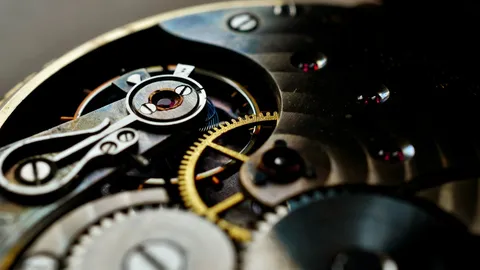
Automatic watches are designed to self-wind as you wear them, and daily wrist movements keep them powered. The mainspring stores energy; the rotor is a semicircular weight free to pivot with wrist movement; and the rotor transfers energy to the mainspring via gears. When an automatic stops, the mechanism has not forgotten how to work. It has simply given back the energy it held, often because it sat still long enough to run down. That is why an automatic may need a manual wind if it has not been used for a while. If you want the broader context of how this differs from other movement types, see manual, automatic, or quartz movements.
Start With The Watch Off Your Wrist
Remove the watch from your wrist before winding. This gives you a stable grip and keeps the crown action deliberate instead of hurried. It also makes it easier to see the seconds hand and feel what the crown is doing. If you are new to hand-winding an automatic, the practical steps in how to wind an automatic watch without breaking it are worth reading before you develop a habit.
Deal With A Screw-Down Crown Before You Wind
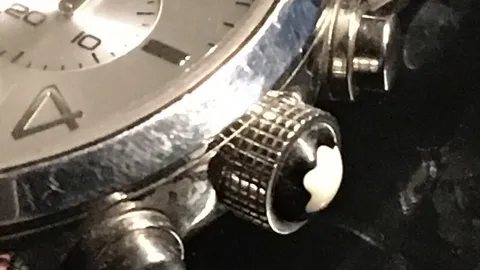
A screw-down crown must be turned counterclockwise to disengage before winding. Once you have finished operating it, lock it again. Skipping either step is the sort of small oversight that turns a simple restart into unnecessary wear. Some crowns, such as those on certain Seiko watches, wind clockwise slowly and cannot be wound by turning counterclockwise. If the crown feels blocked in one direction, do not force it; check the crown type and winding direction first.
Use Steady Turns, Not Fast Ones
Manual winding is best done smoothly and evenly, with steady, controlled movements. Aggressive or rapid winding may place unnecessary strain on other components over time. As the mainspring approaches full tension, you may feel slight resistance followed by a subtle ease of rotation. That transition is normal. It is the feel of the spring reaching its practical limit, not a signal to crank harder.
Why A Fully Wound Automatic Does Not Snap
Modern automatic watches incorporate a slipping clutch mechanism to protect against damage from excessive winding. When the mainspring is fully wound, further winding does not increase tension; the winding mechanism slips. The slip-clutch mechanism sits within the mainspring barrel and ensures that once the mainspring reaches maximum tension, additional energy input is safely absorbed. In practice, turning the crown further on a fully wound watch will not break the spring. The design is meant to tolerate the extra input rather than pass it through the movement as damage.
If The Seconds Hand Is Slow To Wake
A stopped watch with an unwound mainspring will not always start immediately when the mainspring is wound with the crown. That can be disconcerting if you expect instant life from the first few turns. Swinging the watch from side to side to forcibly turn the balance can start it sooner. The balance is the part that governs the back-and-forth rhythm, so a gentle side-to-side motion can help it overcome inertia. For a closer look at that component, read the balance wheel explained. Give the watch a moment after winding before assuming something is wrong.
Set The Time And Date Once It Is Ticking
After the watch is running, pull the crown out gently to the appropriate position and rotate it to set the time. Do this only when the movement is already alive; setting a stopped watch first and winding second just adds confusion to the restart. If your watch has a screw-down crown, make sure the crown is locked again once you have finished setting it. The watch can then go back on the wrist, where normal motion will take over the winding duties.
Make Restarting A Routine, Not A Rescue
If an automatic sits unworn for days, a watch winder keeps it running.
A watch that is not worn on the wrist should be wound fully every day at a fixed time. That simple routine keeps a sitting automatic from becoming a recurring rescue job. If the watch lives in a drawer more than on your wrist, the question of whether you need a watch winder for automatic watches is worth answering before you build a ritual around it. A quick round on the Watchdle play page is another low-stakes way to keep your eye tuned to how different watches wear and wind.
FAQ
How long will a fully wound Seiko automatic run?
A fully wound Seiko automatic watch operates for about 45 hours. That figure is movement-specific, so treat it as an example rather than a universal automatic rule.
What power reserve does the Swatch Sistem51 offer?
The Swatch Sistem51 has a 90-hour power reserve, and it is an automatic watch powered by the movement of the wearer’s body. It can also be manually wound.
How does a Seiko automatic movement wind when worn?
A Seiko automatic watch winds its mainspring automatically through normal wrist movement when worn. The Seiko 8R46/8R48 is an automatic mechanical watch with a manual winding mechanism, and a Seiko automatic can also be wound by turning the crown.
As an Amazon Associate we earn from qualifying purchases.