How To Remove Condensation From Inside A Watch
In this article
- What fog on the inside of the crystal tells you
- The first moves: dry, rest, and leave the crown alone
- Desiccant drying: slow, safe, and mostly about waiting
- Controlled warm air, at arm’s length
- Finding the way in: seals, crowns, and ratings that erode
- What trapped moisture does to an automatic movement
- FAQ
A fogged crystal means the watch has taken on moisture, so treat it as a drying job rather than a heating job: wipe the outside with a soft cloth, leave the case at room temperature, and give a desiccant a day or two to draw the vapour back out. Keep the crown and pushers untouched while the watch is wet, and keep every form of direct heat well away from it.
What fog on the inside of the crystal tells you
Condensation behind the glass is not a quirk of cold weather. It means moisture is present inside the case, and the haze you see is water vapour that has condensed against a surface colder than the air around it. The crystal usually shows it first: it is thin, it faces the outside world, and it loses heat faster than the case and dial sitting behind it. A light film that clears by itself after a few minutes is vapour finding its way back into the air inside the case; droplets that hang around, or fog that keeps coming back, are a different problem and belong on a watchmaker’s bench.
The first moves: dry, rest, and leave the crown alone
Get the watch out of the water straight away, dry the exterior carefully with a soft cloth, and let it sit at normal room temperature. That is the whole of the first response — no shaking it, no spinning the crown to “let some air in”. Working the crown or the pushers while a watch is wet is one of the fastest ways to push water past a gasket and into the movement, which turns a nuisance into a repair bill. Direct heat is just as unhelpful: an oven, a radiator, or a hairdryer held close will heat the case faster than the moisture can escape.

Desiccant drying: slow, safe, and mostly about waiting
The methods that genuinely work are the dull ones, and they all rest on the same principle: seal the watch in a small volume of very dry air, and the vapour inside the case will migrate outward toward the desiccant.
Silica gel packets in an airtight container
Take the leather strap off first — leather holds moisture and works against you — then place the watch in an airtight container with several silica gel packets, seal it, and leave it for 24 to 48 hours. Removing a strap takes two minutes once you know the lug setup, and here is how to swap a watch strap without scratching the case.
Uncooked rice in a sealed box
Dry rice is the kitchen-table version of the same trick. Fill an airtight container with uncooked rice, wrap the watch in a soft, clean cloth so the grains cannot scratch the case or crystal, and leave it for one to two days. The cloth earns its place: rice is abrasive, and a scratched crystal is a permanent souvenir of an otherwise temporary problem.
Silica crystal cat litter in a zip-lock bag
A zip-lock bag of silica crystal cat litter needs even less equipment — watch in, bag closed, a couple of days of walking past it. Whichever desiccant you pick, the seal does half the work, because an open container simply lets the room’s humidity return.
If an automatic sits unworn for days, a watch winder keeps it running.
Waiting is the hard part, and a round or two of the daily watch guessing game fills the gap without tempting you to open the lid early.
Controlled warm air, at arm’s length
Warm air can help, but only in a version so gentle it barely counts as a method. Set a hairdryer or a fan to low warm air — not hot — hold it at least 30 cm (about 12 inches) from the watch, and let the air pass over the case for 15 to 20 minutes at a stretch. Then let the watch rest and repeat if fog remains. Distance and duration are the two controls; bring the nozzle closer or crank up the heat and you are back in the territory of hardened gaskets and warped seals.
Finding the way in: seals, crowns, and ratings that erode
Moisture rarely appears without a reason. The usual entry points are an incorrectly closed crown, seals that are worn or damaged, a damaged crystal, a case back that no longer seals correctly, or exposure to greater water pressure than the watch was designed to withstand. Seals are wear parts, and water resistance degrades over time rather than holding at whatever number is printed on the dial — which is why a watch that survived years of swimming can start fogging after a routine hand-wash. The rating sets the limit: 30m to 50m resists small splashes and rain only, with no swimming and no showers, while 200m to 300m is built for diving and professional underwater work. This explanation of water resistance ratings sorts out the difference between lab pressure and real diving depth, and if you are buying for actual diving rather than the occasional pool dip, the dive watch buying guide is the sensible starting point.
What trapped moisture does to an automatic movement
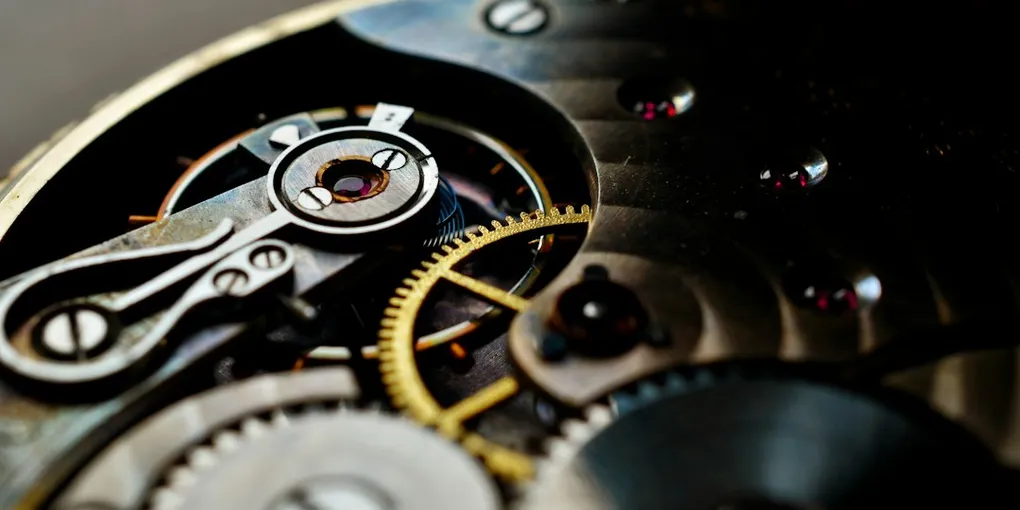
Left alone, water inside a case does not evaporate politely. It oxidises metal and, mixed with the oils that keep pivots and gear trains running smoothly, it rusts them. In an automatic watch the damage reaches the moving parts directly: the rotor and the mainspring can seize, which is a service rather than a drying exercise. That is why recurring condensation, or droplets you can actually see on the inside of the crystal, should reach a watchmaker as soon as possible. The distinction between movement types matters here, since the automatic’s weak point is the gear train and the quartz alternative fails in its own ways — but in both cases the clock starts the moment moisture gets in.
FAQ
Does a 100m rating make a watch safe for diving?
No. A 100m rating is intended for surface swimming or snorkeling, and diving and hot water sit outside what it covers. Watches made for real diving begin at the 200m to 300m end of the scale.
Why does the crystal fog up right after I come in from the cold?
Water vapour inside the case condenses against the colder crystal, and the effect is set off by moving quickly from a cold environment into a warmer one. Nothing new entered the watch at that moment; you are seeing vapour that was already sealed inside.
Can moisture wreck a quartz watch?
It can. Water reaching the circuit board or the battery terminal can short-circuit them, a different failure from the rust and seizing that threaten a mechanical movement. Both outcomes argue for dealing with fog early rather than waiting for it to clear.
As an Amazon Associate we earn from qualifying purchases.