Gaskets And Seals: What Preserves Watch Water Resistance
In this article
Healthy gaskets and seals preserve watch water resistance; replacing hardened, flattened, or cracked parts matters more than the depth figure on the dial. These hidden barriers rely on compression, so inspection and careful handling are the real routine.
How Compression Protects The Case
A gasket blocks water, air, dust, and debris by being slightly squeezed between two solid surfaces; that pressure fills microscopic gaps to create a physical barrier. Rubber, silicone, and other materials appear in watches, though the seal sits out of sight. An intact set also reduces corrosion, lubricant breakdown, and wear on gears and pivots during handwashing, rain, sweat, or splashes. A watch need not go underwater for its seals to matter.
Materials That Age Differently
Rubber is common and affordable but hardens with age. Silicone remains flexible and resists drying, while PTFE—Teflon—serves higher-end or professional uses for stability and chemical resistance. Any gasket can dry, flatten, or crack; temperature shifts, sweat, skin oils, cleaning chemicals, and soaps speed that decline. Without elasticity, compression cannot hold, making seals part of case performance rather than only movement protection.
Seals At Crown, Case Back, Crystal, And Pushers
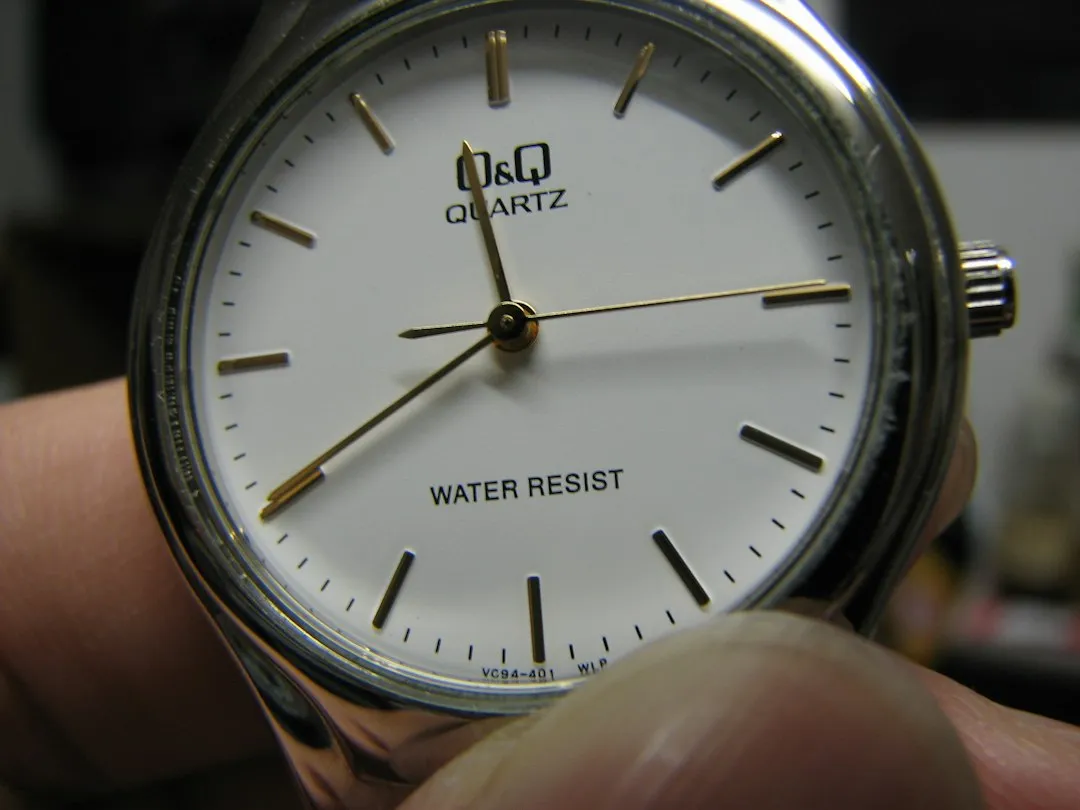
Water-resistant seals surround the case back, crystal, crown, and chronograph pushers if present. The crown fails most often. Crowns and pushers integrate sealing mechanisms that resist water when properly screwed down or locked. An incorrectly sealed case back, an unlocked crown, or a pusher moved at the wrong moment can undo the protection the rest of the watch provides.
When Ratings And Gaskets Fail
Ratings like 30 m, 50 m, or 100 m come from controlled laboratory tests that assume proper assembly, healthy gaskets, and fully sealed crown and case back. They are not permanent properties of metal and glass. Once a gasket dries, flattens, or cracks, the rating no longer reflects real protection; a watch can lose resistance without ever being submerged. See why water resistance ratings are laboratory pressure results, not literal diving depth and what the numbers mean for daily wear after years of use. Fogging is the earliest common sign: moisture condenses under temperature changes. A failed gasket may be brittle, flattened, or stuck in its groove rather than torn, and it can crumble when removed. Service requires deep cleaning of the grooves, and replacement is necessary if the seal is compromised.
Maintenance, Cleaning, And Service
Inspect yearly and after hard impacts or water exposure, replacing gaskets as needed. Most watches need gasket inspection or replacement every 2–5 years, depending on use and environment; sweat, sunscreen, chlorine, and crown use shift that interval. Limit high-impact pressure activities such as jet skiing or diving beyond the rating. Avoid abrupt shifts in temperature, hot water, steam, and saunas, because expansion or contraction can affect seal integrity. Rinse with fresh water after saltwater or chlorine, then dry with a soft cloth to remove residue and protect finishes. Leather absorbs water and degrades quickly, while silicone or metal tolerates moisture better. Keep the watch away from harsh chemicals. Confirm the crown is fully locked after use, and treat those pushers as sealed openings. A watchmaker can open the case, examine gaskets, and replace any that fail inspection. After a battery change or movement service, check the seal before returning the watch to rotation. For home battery swaps, replacing a watch battery without ruining the seals covers care around the case back. The goal is to keep gasket material elastic enough to do its job, because a depth rating is only as good as the seals supporting it.
To read more about the story behind watches, try a watch history book.
Crown, Pushers, And Professional Testing
Avoid operating the crown or pressing buttons underwater; even a strong rating depends on seated, undisturbed seals. A pulled crown, depressed pusher, or loose screw-down crown creates an opening. Water-resistant watches undergo laboratory pressure tests; professional testing seals the watch in a pressurized chamber and slowly increases pressure to locate water ingress before daily wear reveals it. Read more about how water resistance actually gets tested. Professional dive watches under ISO 6425 use tighter tolerances and stronger seals based on gasket design and material quality, but regular inspection remains necessary. A dive watch buying guide helps separate tool-watch features from marketing language; maintenance rules still apply after purchase. For case-detail practice, try the daily puzzle at Watchdle.
FAQ
How often should watch gaskets be inspected or replaced?
Use the service window in the maintenance section, adjusting for personal exposure and operating habits. Replace any seal that no longer compresses correctly.
What are the warning signs that a gasket has failed?
A common early clue is moisture gathering beneath the glass when temperatures shift. The seal may also lose its springy feel, remain compressed in place, or break apart as it is taken out rather than showing an obvious rip.
Can I press the chronograph pushers or operate the crown underwater?
Do not. Those controls form sealed openings, and moving them while wet can let moisture past the gasket. Leave them alone until the watch is out of the water and secured.
Do all water-resistant watches use the same gasket materials?
No. Rubber ages differently from silicone, and advanced or professional designs use more stable compounds. Dive-watch standards also place extra demands on seal design and material quality, yet those seals still require eventual checking.
DETECTED PROBLEMS: phrase repeated 3 times: “annually or after significant impact or”
As an Amazon Associate we earn from qualifying purchases.