Fob Watch: Why Pocket Watches Had A Chain And Fob
In this article
A pocket watch’s chain kept the watch tethered to the wearer’s clothing, while the fob made the end of that tether useful and visible. Together they turned a loose precision object into something worn, retrieved, and displayed.
A Chain Was Insurance Before It Was Jewelry
The primary job of a pocket watch chain was not ornament. It allowed the watch to be secured to a waistcoat, lapel, or belt loop, and it prevented the watch from being dropped. In an era when a watch was a costly precision object, that tether mattered as much as the movement inside. A chain turned a loose object into something worn on the body, less likely to slip from fingers or vanish in a crowd. It also made retrieval easier: instead of fishing blindly in a pocket, the wearer could follow the chain to the case. A dropped pocket watch was not just a broken object; it was a lost instrument, a damaged case, and a repair bill. The chain reduced that risk without requiring the wearer to grip the watch constantly. The same logic applies to modern watches, where how watch movements differ often gets the attention, but the way a watch attaches to a person still decides whether it feels secure.
Waistcoats Created The Pocket Habit
The watch fob developed in Europe in the 16th century, when Charles II of England introduced waistcoats. That garment gave the watch a dedicated place to live. Carrying a watch in a waistcoat pocket kept it safe from exposure to the elements and potential risks. It was a simple form of protection: cloth instead of open air, a pocket instead of a hand. Pocket watches evolved rounded and flattened shapes with no sharp edges so they could slide smoothly into a pocket. The design and the garment shaped each other. A watch that was too thick, too angular, or too fragile would have made the daily ritual awkward. The pocket was a controlled environment compared with a hand, a table, or a coat pocket open to rain and dust. The smooth profile of the watch made the pocket a natural home rather than a forced one. The waistcoat also belonged to a dress tradition that still echoes in the split between formal and casual watches, a distinction explored in dress watch versus sport watch.
The Fob Was The End You Could Touch
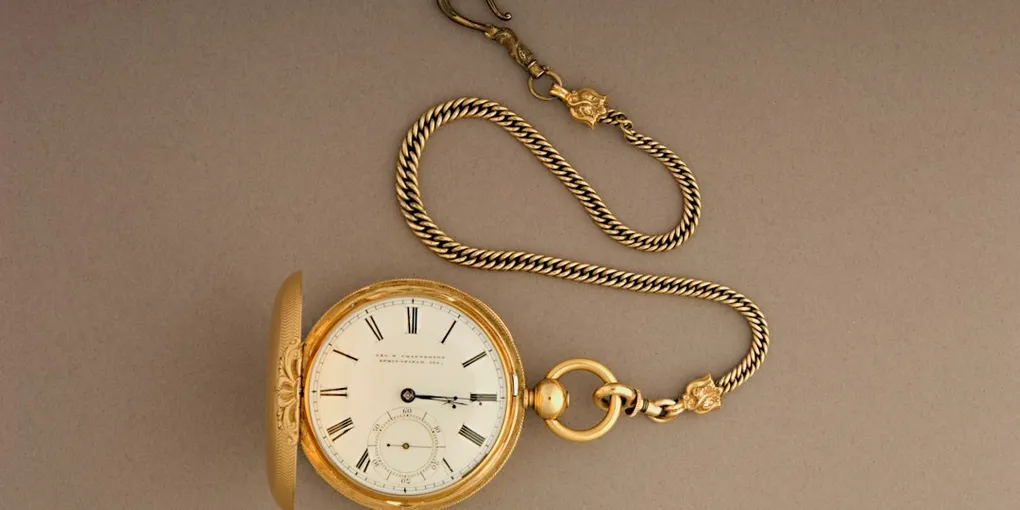
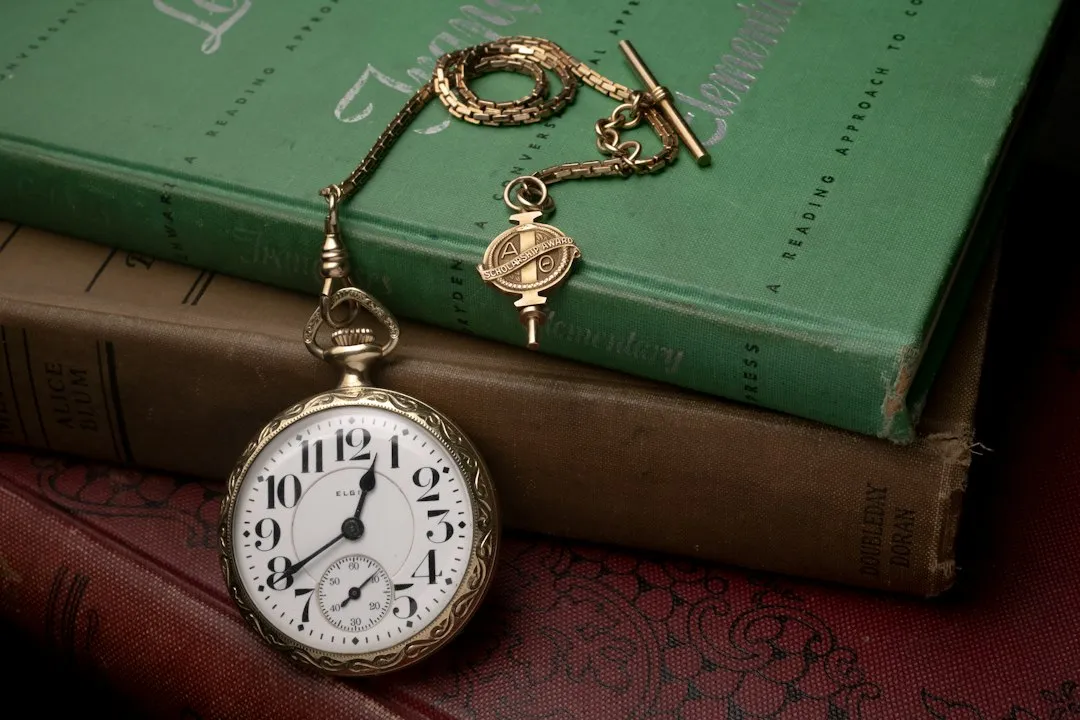
A watch fob was a short ribbon or chain attached to a watch and hanging out of the pocket in which the watch was kept. The word also described ornaments hung at the end of such a ribbon or chain. This is the part most people picture: a bright length of ribbon, a metal chain, a trinket catching light against a vest. Because the watch itself sat inside, the fob was the only visible part during normal wear. It served as a handle, a marker, and a small stage for decoration. Pulling the fob brought the watch out; letting it hang kept the watch close. The fob was not an afterthought. It was the interface between pocket and hand. The fob could be simple or elaborate, but its position was consistent. It lived at the edge of concealment.
Pendants, Club Arms, And Borrowed Names
Watch chains were frequently decorated with a silver or enamel pendant, often carrying the arms of some club or society. By association, that pendant also became known as a fob. The vocabulary drifted from the hanging chain to the ornament at its end. That drift tells you something about priorities: the visible emblem could be as important as the hidden watch. A man’s affiliations, lodge, regiment, or club could hang at his waist, not as a shout but as a detail for those close enough to notice. Silver and enamel gave the fob a material life beyond utility. It could be polished, worn, gifted, or inherited. The chain held the watch, but the pendant held a story. The pendant could be a badge, a token, a memento, or simply a beautiful object. Its meaning was flexible, which is why the same word covered so much.
What “Fob Watch” Actually Means
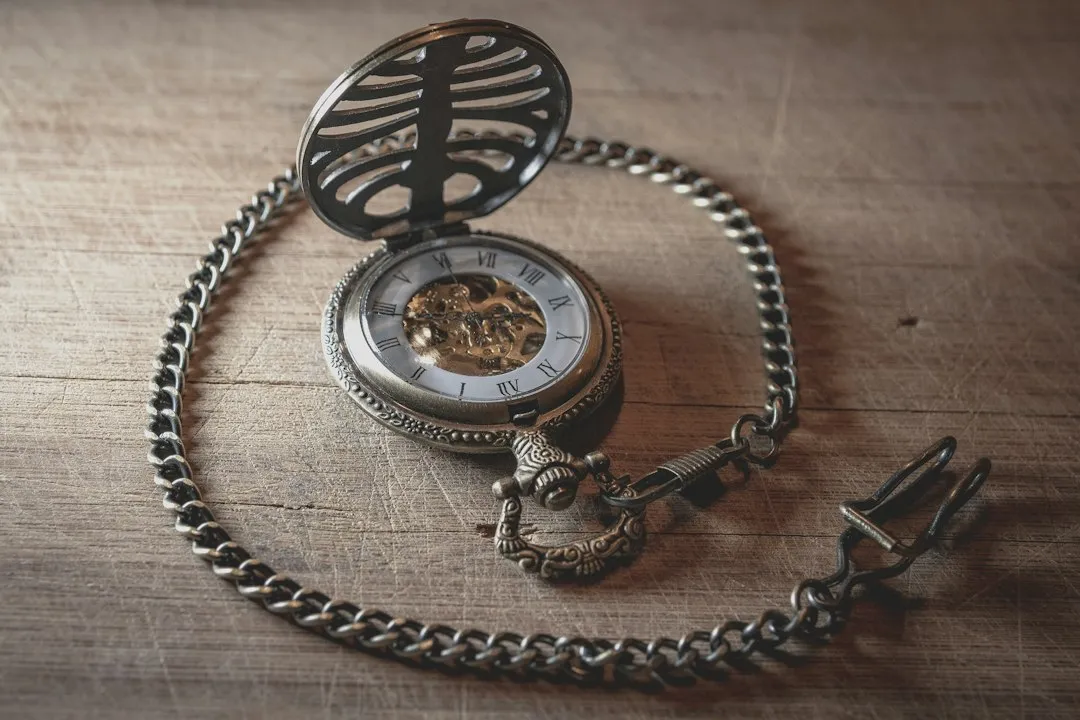
A fob watch is another name used for a pocket watch and its chain. The phrase does not describe a distinct movement or case style. It describes a system: a watch, a tether, and often a decorative end. That is why two fob watches can look completely different. One might have a plain chain and a simple case. Another might carry a silver pendant, enamel work, or a ribbon that matches a waistcoat. The term groups them by how they were carried, not by what they were. For collectors, that is a useful distinction. You can admire the case, the dial, or the chain, but the fob watch is the whole assembly. The phrase survives in auctions, antique descriptions, and family stories, often describing a watch that no longer has its original chain. Knowing the term helps separate a complete carried set from a loose watch.
When The Chain Was Too Much
Not every situation suited a long chain. A short leather strap or fob was used when a long chain would have been cumbersome or likely to catch on things; it could provide a protective flap over the face and crystal. This is a reminder that pocket watch carry had practical variations. Work, travel, and clothing all shaped the choice. A shorter connection reduced snag risk and shielded the dial. The same watch could move between a formal chain and a rougher strap depending on the day. A short strap might be less formal, but it was not less intelligent. It answered the same problem with less metal and more protection. Even the crystal covering the dial could benefit from protection; modern watchmakers still refine transparency with anti-reflective coating, though the old flap solved a more physical problem.
Taking one along? A watch roll keeps it protected in the bag.
The Fob As A Collecting Clue
Part of the appeal of fob watches is that they compress several stories into a small area. There is the watch, the chain, the pendant, and the person who wore them. The watch might be plain while the fob is ornate, or the reverse. That balance is part of the hunt. Bronze watches and the beauty of patina might seem distant, but both fobs and cases age into personal objects: metal records touch, use, and time. A fob with a club crest can be read as a social document. A simple ribbon can be read as a practical choice. The chain itself can be read as a response to gravity and loss. The fob is a reminder that watches were not always isolated objects. They were worn, pulled, pocketed, and shown. If you want to test that eye in a lighter way, Watchdle’s daily game at https://watchdle.com/play/ turns watch details into a guessing challenge.
FAQ
Where did the name “fob” come from?
The name originates from the German word fuppe, meaning a small pocket. That fits an object designed to hang at the opening of a pocket.
What besides a watch might hang from a watch chain?
A watch winding key, a vesta case, a seal, and a cigar cutter also appeared on watch chains. Together they turned the chain into a compact personal kit.
How long were pocket watches the common choice?
They were the most common type of watch from their development in the 16th century until wristwatches became popular after World War I. That long run explains why chains and fobs became so deeply associated with pocket carry.
As an Amazon Associate we earn from qualifying purchases.