How To Spot A Fake Watch: Red Flags By Brand
In this article
Buying a pre-owned luxury watch is part research, part forensic exam. A single flaw rarely proves anything on its own, but a cluster of small errors usually does. The most useful red flags often come from the brand itself. A detail that is wrong on a Rolex can be completely normal on an Omega or Panerai. The trick is knowing what each maker actually builds, then comparing the watch in hand to those standards.
Rolex: The Submariner as a Reference Point
The Rolex Submariner debuted in 1953. The classic formula is steel, automatic, Swiss. Those basics matter because fakes often get the broad strokes right while missing the details. A genuine steel Submariner typically weighs around 150 grams. If a steel Submariner feels hollow or featherlight, that is a red flag. Authentic luxury watches use real, substantial metals: solid steel such as 316L or 904L, gold, or platinum. The weight should feel consistent with the material.
Cyclops, Caseback, and Crystal
Check the Cyclops lens. On a genuine Rolex, it should magnify exactly 2.5 times, not 1.5x. If the date window looks barely enlarged, the lens is wrong. Rolex casebacks are typically plain solid. An exhibition caseback on a standard Submariner is a red flag. The crystal should be scratch-resistant sapphire. A quick water droplet test helps: on sapphire, the drop beads tightly; on mineral glass, it flattens and spreads. If the drop loses tension, the crystal may not be sapphire. Lume should be high-grade, such as Super-LumiNova or Chromalight. Weak or uneven glow deserves suspicion.
Serial Numbers and Engravings
Rolex often places the serial number between the lugs or on the rehaut. Authentic serial and model numbers are unique. They are engraved in precise, consistent typography, and they should match original paperwork or a manufacturer database. The engraving itself should be deep and clean, not acid-etched or printed. If the numbers look shallow, laser-printed, or inconsistent, walk away. Finish is another tell. Genuine luxury watches have sharp, precise lines, immaculate brushing, and mirror-polished surfaces. Soft edges, uneven brushing, or polished areas that should be brushed are classic red flags. The movement should be in-house or certified Swiss, and the Submariner is automatic.
Richard Mille: Price, Weight, and Materials
Richard Mille watches rarely drop below $50,000, and most models climb into six or seven figures. That price band is not just market positioning; it reflects the materials and finishing inside. Genuine Richard Mille cases use Grade 5 titanium, Carbon TPT, or TZP. Common fakes use stainless steel or aluminum. If a watch is offered as a Richard Mille but the case material feels generic, or if the price is far below the genuine band, the odds are bad. The RM 011 titanium weighs around 90 grams. A claimed RM 011 that feels dramatically different from that figure, or that uses stainless steel or aluminum instead of the genuine materials, does not match the real watch.
Edge Finishing and Crystal
Run your fingers along the case edges. Genuine Richard Mille finishing shows micro-tolerances and seamless bevels. Fakes often show rough joins and visible marks. The crystal should be pristine sapphire. Scratches or distortions are red flags. Because Richard Mille watches are often display-heavy, the crystal is a major part of the experience. Any haze, warping, or visible flaw should make you pause.
Movement Visibility and Straps
A genuine Richard Mille movement is visible through a fully skeletonized dial or case back, often featuring a flying tourbillon. Counterfeits often use a quartz or generic ETA automatic movement under a faux skeleton dial. Look for the balance wheel visible beneath a sapphire plate. On the RM 035 prototype, that balance is a lightweight magnesium-aluminum alloy, oscillating at six hertz. If you cannot see real mechanical depth, or if the skeleton is just a printed plate, be suspicious. Case back engravings should include the reference number, serial code, and hallmarks. Missing, shallow, or poorly cut engravings are red flags. Original straps use high-tech elastomer or custom-woven Velcro. Cheap rubber or generic fabric does not match the original specification.
Omega and Panerai: Caseback and Clasp Clues
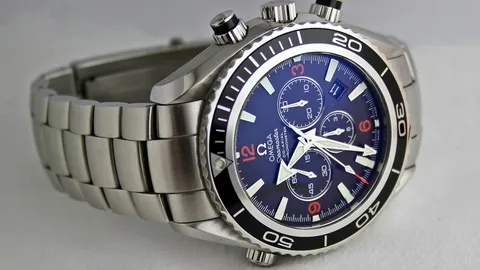
Omega often engraves serial and model numbers on the caseback or inside the bracelet clasp. If those numbers are missing, shallow, or poorly aligned, treat it as a warning. Panerai and Omega casebacks may use exhibition casebacks with detailed inscriptions. Those inscriptions should be deep and clean, not acid-etched or printed. Because these brands sometimes show the movement, a fake has to fake that view as well. Look for precise typography and consistent serial and model numbers that match paperwork or a manufacturer database.
Cross-Brand Red Flags
Materials and Finish
Authentic luxury watches use real, substantial metals: solid steel such as 316L or 904L, gold, or platinum. Finish should have sharp, precise lines, immaculate brushing, and mirror-polished surfaces. Fakes often fail at transitions between brushed and polished areas. They may look bright in photos but muddy in hand. If a watch is supposed to be steel but feels too light, or if the case has rough joins and visible marks, be cautious.
Engravings and Serial Numbers
Authentic luxury watch serial and model numbers are unique and engraved in precise, consistent typography. They should match original paperwork or a manufacturer database. Engravings are deeply and cleanly cut, not acid-etched or printed. Rolex often places serials between the lugs or on the rehaut. Omega often puts numbers on the caseback or inside the bracelet clasp. Shallow, misaligned, or repeated numbers are classic fake tells.
Crystal, Water Droplet, and Lume
Luxury watches use scratch-resistant sapphire crystal. The water droplet test is a simple field check: on sapphire, a drop beads tightly; on mineral glass, it flattens and spreads. If a watch is sold as high-end but the drop spreads, the crystal may not be sapphire. Authentic lume is high-grade, such as Super-LumiNova or Chromalight. If the glow is weak or uneven, that is another red flag.
Movements
Luxury brands use in-house or certified Swiss movements. The Rolex Submariner is automatic. Richard Mille movements are visible through skeletonized dials or case backs, often with a flying tourbillon. Counterfeit Richard Mille watches may use quartz or generic ETA automatic movements under faux skeleton dials. If the movement does not match the brand’s known architecture, or if a supposed skeleton watch hides a plain movement, walk away.
Final Checks
No single tell catches every fake. But brand-specific red flags narrow the field quickly. Start with weight and materials. Then check engraving depth, serial placement, crystal behavior, lume quality, and movement visibility. When a watch fails more than one of these checks, the answer is usually clear. The best approach is not to memorize every fake, but to understand what the genuine brand actually does—and to notice when the watch in front of you does not.
Think you know your watches? Test yourself in today’s challenge at Watchdle.